Swixx BioPharma: Journey to Ecovadis Silver
September 10, 2026


“A strong EcoVadis submission reflects how the company operates every day. It does not begin with uploading documents.”
How to get EcoVadis certification is a common question among suppliers facing a customer requirement. The terminology needs one clarification: EcoVadis assesses sustainability management and awards medals or badges. It does not certify a management system in the same way as an ISO certification body.
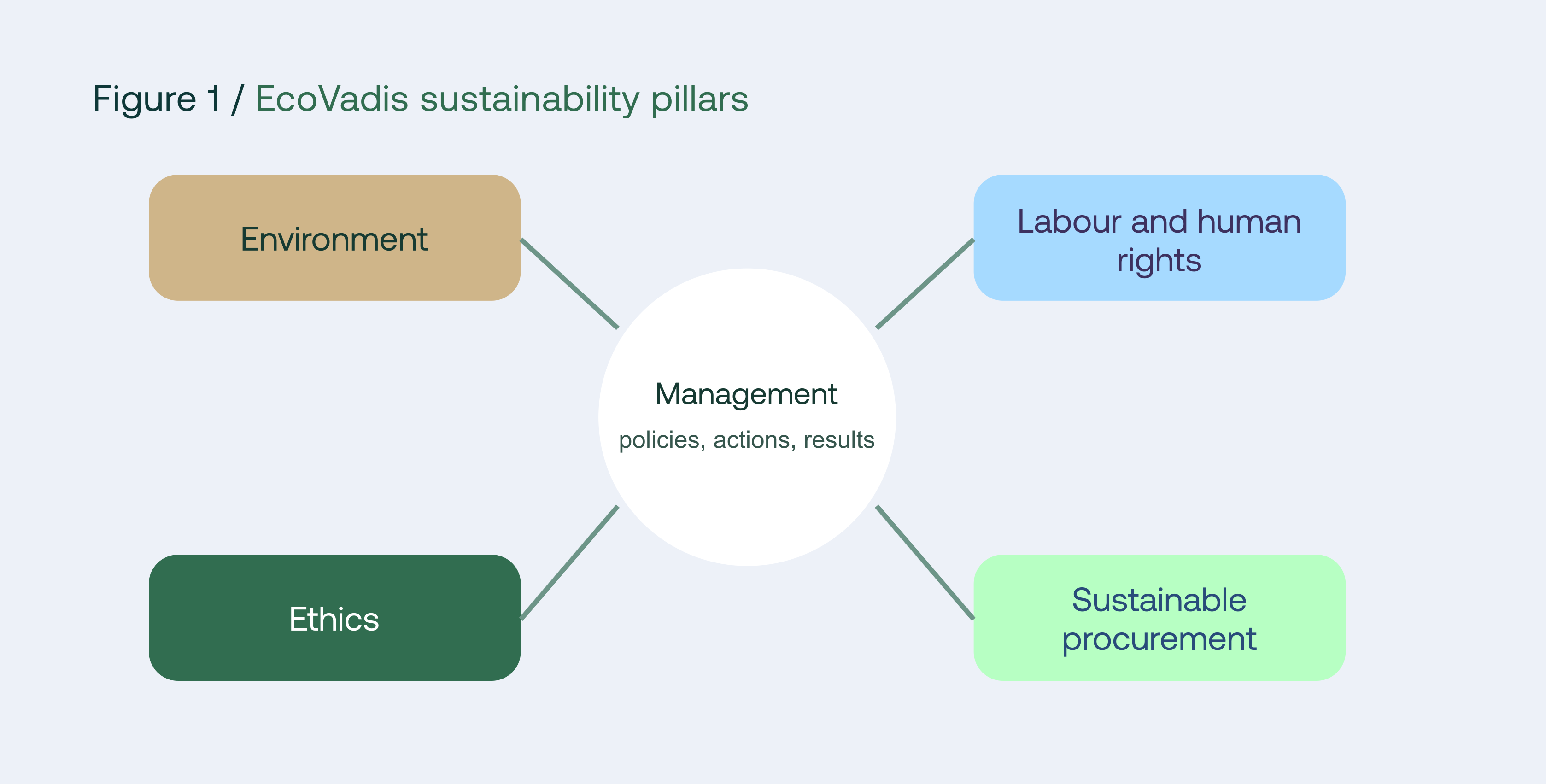
EcoVadis evaluates four core themes: Environment, Labour and Human Rights, Ethics, and Sustainable Procurement. The assessment examines policies, actions, results, and supporting evidence. [1]
EcoVadis builds an assessment around the company’s size, industry, and operating context. The questionnaire therefore differs between companies.
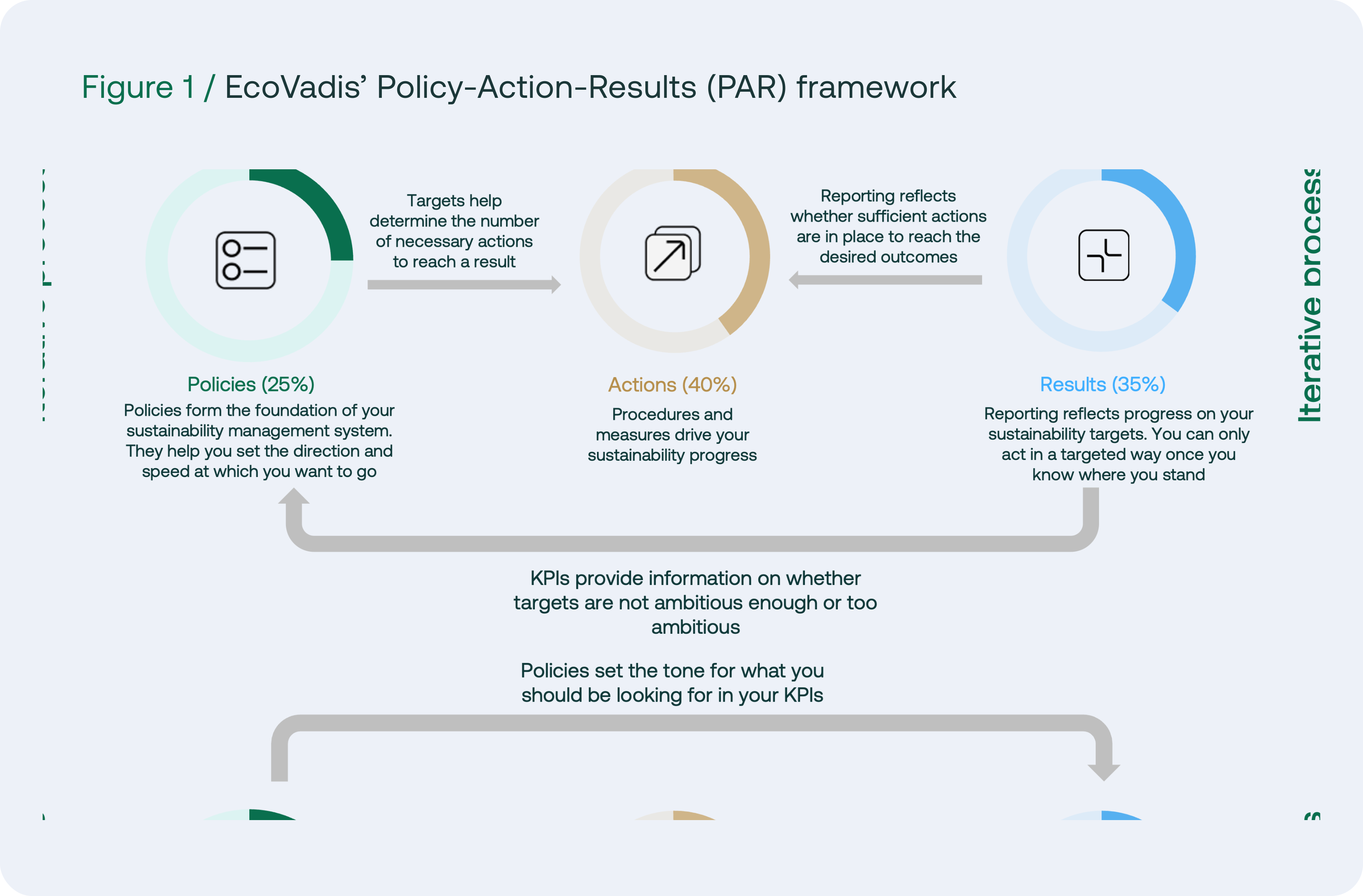
The assessment looks for a management system. That system should connect commitments to implementation and measurable results. A policy without actions has limited value. An action without evidence is difficult to verify. A result without a defined method is difficult to interpret.
The current EcoVadis recognition model includes medals and badges. Recognition depends on relative performance and eligibility conditions, including the overall score and theme performance. [2] The result should therefore be treated as a performance signal, not as a permanent status.
Read EcoVadis essentials: a guide for beginners and reassessed companies for an overview of the assessment structure.
Start with the policies that define responsibility, quantitative and qualitative objectives, scope, and governance. A policy should be foward-looking, approved, dated, communicated, and relevant to the assessed entity.
Avoid creating a policy solely for the questionnaire. Policies should demonstrate your company’s commitment to mitigating risks, reducing negative impacts, and enhancing performance. It should match the strategic direction of the company.
Actions show how the organisation implements its commitments. Examples include training, supplier screening, grievance mechanisms, environmental controls, risk assessments, and corrective action plans. Identify supporting documentation that demonstrate actions the organisation has implemented to address certain sustainability criteria.
Results help demonstrate whether actions are working. Choose Key performance indicators (KPI) that match the material issue. Record the boundary, reporting period, calculation method, baseline, target, and trend.
EcoVadis supporting documents should be current and specific. The assessment guidance available to Nexio Projects teams stresses that evidence must demonstrate implemented measures rather than plans written for the assessment. [3]
“The fastest route to a stronger score is usually better evidence of an existing system, followed by targeted improvement where the system is weak.”
EcoVadis introduced methodology changes during 2026, including adjustments to scoring, document review, improvement management, and carbon related assessment elements. [4] Confirm the current questionnaire and guidance in the EcoVadis platform before preparing your response.
Three preparation principles remain useful:
Your evidence library should include policies, procedures, training records, audit results, management reviews, targets, performance data, and corrective actions.
Store documents by theme, process owner, entity, reporting period, and review status. Give each document a short description that explains the practice it supports. Keep the approved version separate from drafts and expired material.
A useful evidence register can include five fields: assessment question, practice, owner, supporting document, and gap status. This helps the team prepare for the next cycle while the current assessment is still fresh.
EcoVadis evidence should be grounded in what is actually implemented and used in practice, rather than created solely for the assessment. The same evidence can, and should, serve multiple purposes. For example, should support EcoVadis, customer questionnaires, procurement reviews, and internal risk discussions. One well-governed source can therefore reduce repeated work.
Request the re-assessment in your company profile on EcoVadis, confirm the assessed entity, company size and assessment scope. Review the previous scorecard if one exists. Map each question to updated and available evidence and identify gaps.
Prioritise gaps that affect several questions. A clear environmental policy may support multiple responses. A supplier risk process may strengthen sustainable procurement and risk management evidence.
Complete missing actions that are feasible within the timeframe. Prepare evidence and validate documents with process owners. Check that records cover the assessed entity.
Ask a reviewer to test the submission. The reviewer should check whether every claim has sufficient evidence, whether the document matches the entity, and whether the explanation answers the question directly.
Our guide to moving from EcoVadis Gold to Platinum in 2026 provides a useful example of how improvement actions can be prioritised. The EcoVadis 2026 unlocked guide can help your team track changes in the assessment context.
Treat the scorecard as a prioritisation tool. Start by reviewing the theme scores, strengths, improvement areas, and comments. Then compare the findings with your internal evidence register.
Separate quick corrections from structural and long-term improvements. A missing date or incomplete document may be easy to resolve. A weak supplier risk process may require procurement ownership, segmentation, training, and follow up over several months.
Share the action plan with the people who control the relevant process. The sustainability manager can coordinate the plan, but procurement, human resources, compliance, operations, and leadership should own the actions within their remit.
The most effective teams connect EcoVadis preparation to existing management routines. Procurement reviews supplier risk. Compliance reviews policies and incidents. Operations reviews environmental performance. Human resources reviews workforce indicators.
Assigning evidence to these routines reduces the pressure on one sustainability manager. It also keeps the information current between assessment cycles. This is especially important when a customer request arrives with limited notice.
Use the assessment to create a repeatable improvement cycle: understand the result, confirm the root cause, assign an owner, implement the action, and record the result.
The practical answer to how to get EcoVadis rating is to build a credible sustainability management system and document it clearly. The assessment rewards consistency between policies, implementation, results, and evidence.
Use the scorecard as a management tool. It can show where customer expectations, operational controls, and sustainability performance need to connect.
“Your EcoVadis result is most valuable when it tells the business what to improve next.”
We help suppliers prepare evidence, interpret scorecards, and turn assessment findings into practical action plans. Recognised among leading sustainability advisory firms by MT/Sprout and as a Top Brand in sustainability by EUPD, we are here to help you strengthen your EcoVadis assessment and protect important customer relationships. Contact our EcoVadis team.
Subscribe to our newsletter for more EcoVadis tips, first-hand experience and ESG trends.
[1] EcoVadis. Sustainability assessment methodology and themes. https://ecovadis.com/suppliers/sustainability-assessment/. Accessed August 2026.
[2] EcoVadis. Medals and badges: recognition rules and eligibility. https://support.ecovadis.com/hc/en-us/articles/360025755393-Medals-and-Badges. Accessed August 2026.
[3] Nexio Projects. EcoVadis scorecard debrief and supporting evidence guidance. Internal Operations source, accessed August 2026.
[4] EcoVadis. 2026 methodology updates and assessment guidance. https://ecovadis.com/news/ecovadis-methodology-updates-2026/. Accessed August 2026.
[5] Nexio Projects. EcoVadis essentials: A guide for beginners and reassessed companies. https://nexioprojects.com/ecovadis-essentials-a-guide-for-beginners-and-reassessed-companies/. Accessed August 2026.
[6] Nexio Projects. How to move from EcoVadis Gold to Platinum in 2026. https://nexioprojects.com/how-to-move-from-ecovadis-gold-to-platinum-in-2026/. Accessed August 2026.
[7] Nexio Projects. Stay ahead of the rising standards: EcoVadis 2026 unlocked. https://nexioprojects.com/knowledge-centre/stay-ahead-of-the-rising-standards-ecovadis-2026-unlocked/. Accessed August 2026.