The CSRD requirements: Reporting on performance and goals
April 3, 2023


says Joy Stindt, Sr. Climate Consultant, as one of the first instances that comes to mind when thinking of scaling supply chain emissions, which tend to account for 60 to 90 percent of total corporate GHG emissions [1]. For companies in manufacturing, consumer goods, and chemicals, that figure is rarely a surprise. The harder question is what to do about it.
Engaging suppliers at scale involves more than distributing a data request template. In a live poll conducted during our July 2026 webinar on supply chain emissions, 44% of attendees cited lack of data from suppliers as their biggest barrier to meaningful engagement. Twenty-nine percent pointed to difficulty getting suppliers engaged at all [1]. These are structural challenges that require a structured response.
We are an international sustainability consultancy that has guided 400+ clients across 1,000+ projects in 20+ countries on their sustainability journeys [1]. With 40+ experts working across procurement, sustainability, and climate strategy, we bring a proven, audit-ready methodology to Scope 3 measurement and supplier engagement programmes. This article draws directly from a recent project in which we engaged 60+ suppliers across multiple purchasing categories at a multinational consumer goods company.
Scope 3 Category 1, purchased goods and services, is the dominant emission category for consumer goods and manufacturing companies. Global supply chain emissions total approximately 22 billion tonnes of CO2e, according to the OECD [2]. Most companies have a clear line of sight on Scope 1 and Scope 2 reduction. Scope 3 is where the structural complexity begins.
The mechanics are fundamentally different. A company cannot directly control what happens at its suppliers. It can only influence, request, and incentivise. That requires a different skillset, one that sits closer to procurement than to traditional sustainability management.
Supplier engagement sits at a specific point in the corporate climate transition process: after baseline measurement, target-setting, and decarbonisation roadmap development [1]. For companies working towards Science Based Targets, the link is direct. SBTi requires companies to set Scope 3 targets where supply chain emissions are material, and to demonstrate progress against them [3]. Even for companies without SBTi targets, the commercial pressure is growing. Suppliers can expect to be asked for Scope 3 data more frequently, because more of their customers are committing to SBTi targets and will need detailed supply chain data data to meet them [1].
For a broader view of how supply chain sustainability pressures are developing across regions, see our recent article on building sustainability resilience in North American supply chains.
Before the first data request goes out, five things need to be in place [1]:
The project detailed here involved 60+ suppliers across multiple purchasing categories at a multinational consumer goods company. We worked directly with procurement teams by category, rather than through a single centralised sustainability channel. The standardised output — one supplier action plan per supplier, comparable across the full portfolio — was the design principle that made scale possible [1]. As our climate expert Joy Stindt has mentioned,
“Standardisation across the portfolio is what makes scale possible without losing quality.” .
Supplier outreach only works when the people making the request understand what they are asking for. Before any data request went out, we equipped each procurement team with a standardised question list adapted by product category, guidance on handling supplier pushback, and clear criteria for what constitutes usable data [1].
This phase is completed before outreach begins. Its goal is to prevent repeated follow-up loops between sustainability teams, consultants, and suppliers, and to ensure procurement can lead the conversation with confidence.
For companies that also use EcoVadis as part of their supply chain engagement toolkit, the same principles apply directly. Read more on how to improve supply chain transparency with EcoVadis.
Standardised data request templates were adapted by product category and material type, not rebuilt per supplier. Suppliers received structured support throughout the collection window, routed through the existing procurement relationship rather than a new point of contact [1].
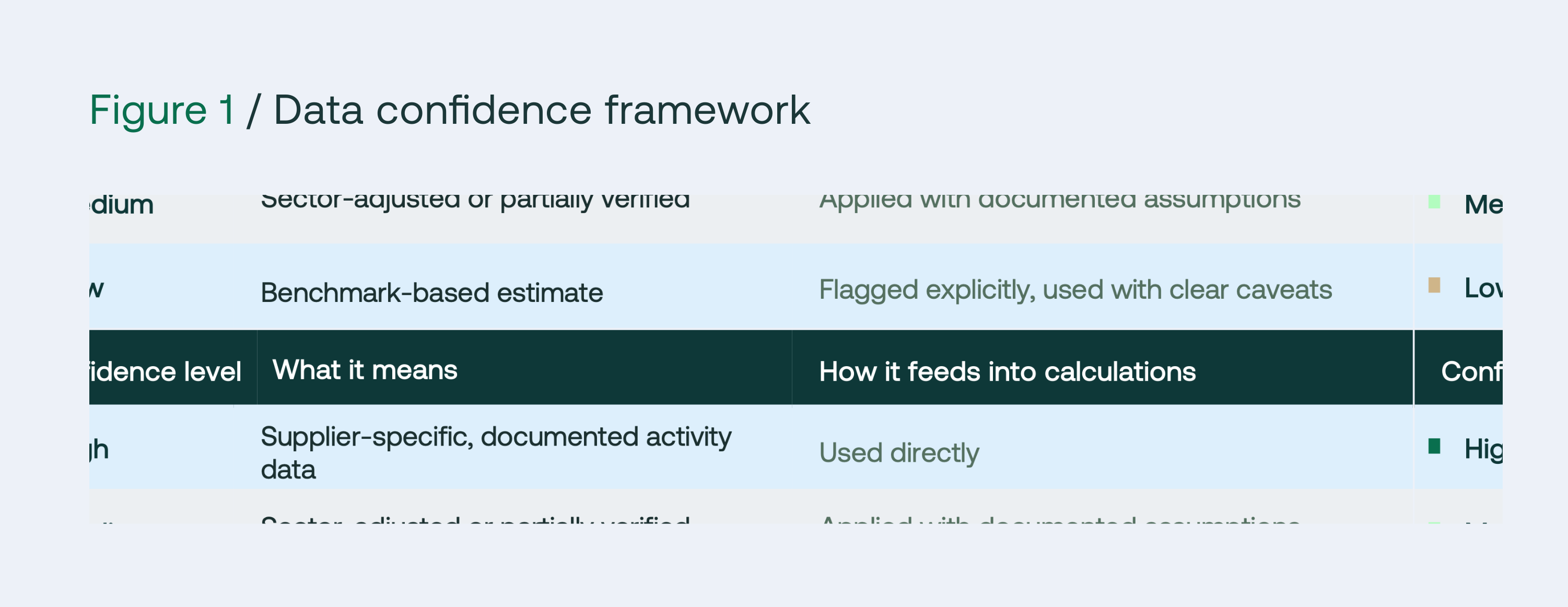
The output of this phase is a full set of supplier datasets, each graded by data confidence before any calculation runs. A response confirming that no data exists is more useful than silence. It signals where to invest in data improvement next year, and it keeps the supplier relationship active.
Rather than treating all incoming data as equivalent, we grade every dataset at intake using three tiers [1]:
Every dataset carries a full audit trail. Every number is linked to its source, assumption, and confidence level. At this stage of supply chain emissions maturity, most responses will fall in the medium range. That is a starting point, not a failure condition.
In this project, we calculated product-level GHG emissions — product carbon footprints (PCFs) — for each supplier in scope. Where suppliers provided verified PCFs, these were used directly. Where they did not, emissions were calculated from energy data, input data, and processing information [1].
Calculations were calibrated across all 60+ suppliers to maintain comparability. Outputs identified emission hotspots at material, supplier, and geography level. Two suppliers producing the same product from different regions may carry substantially different carbon footprints, depending on local energy mix and upstream sourcing [1]. This kind of granularity is what makes reduction planning actionable.
For a detailed explanation of the product carbon footprint methodology behind this work, see our article on making product carbon footprints work at scale.
Calculating emissions per supplier and per product group is the foundation. The real value comes from what you do with those numbers next [1].
For each supplier in scope, we developed an initial set of reduction levers derived directly from the hotspot view produced in Phase 3. Each lever was assessed on three dimensions: its directional relevance for reducing emissions, its practical feasibility given the supplier’s context and available data, and its priority for further investigation and follow-up [1].
Geography matters as much as material inputs here. Two suppliers producing the same product may face very different reduction pathways depending on where they operate. A supplier in a region with a coal-heavy energy mix has fundamentally different decarbonisation options than one with access to renewable infrastructure. Sourcing region, transport routes, and upstream input choices all shape what is actually achievable for each supplier [1].
Every lever is documented with an audit trail covering the assumptions and confidence levels behind it. This allows procurement teams to walk into a supplier conversation knowing not just what to suggest, but why, and how much weight the underlying calculation carries [1].
The output of Phase 4 is a ranked set of reduction opportunities per supplier, ready to feed directly into the supplier action plans in Phase 5.
All analysis was consolidated into one consistent-format supplier action plan per supplier [1]. Each plan included:
One format across all 60+ suppliers enabled portfolio-level comparison and steering. Procurement teams received the plans and used them directly in supplier conversations. Sustainability teams used the underlying calculations for their own target projections and emissions forecasting. The format was designed so that neither team needed external interpretation to act on it.
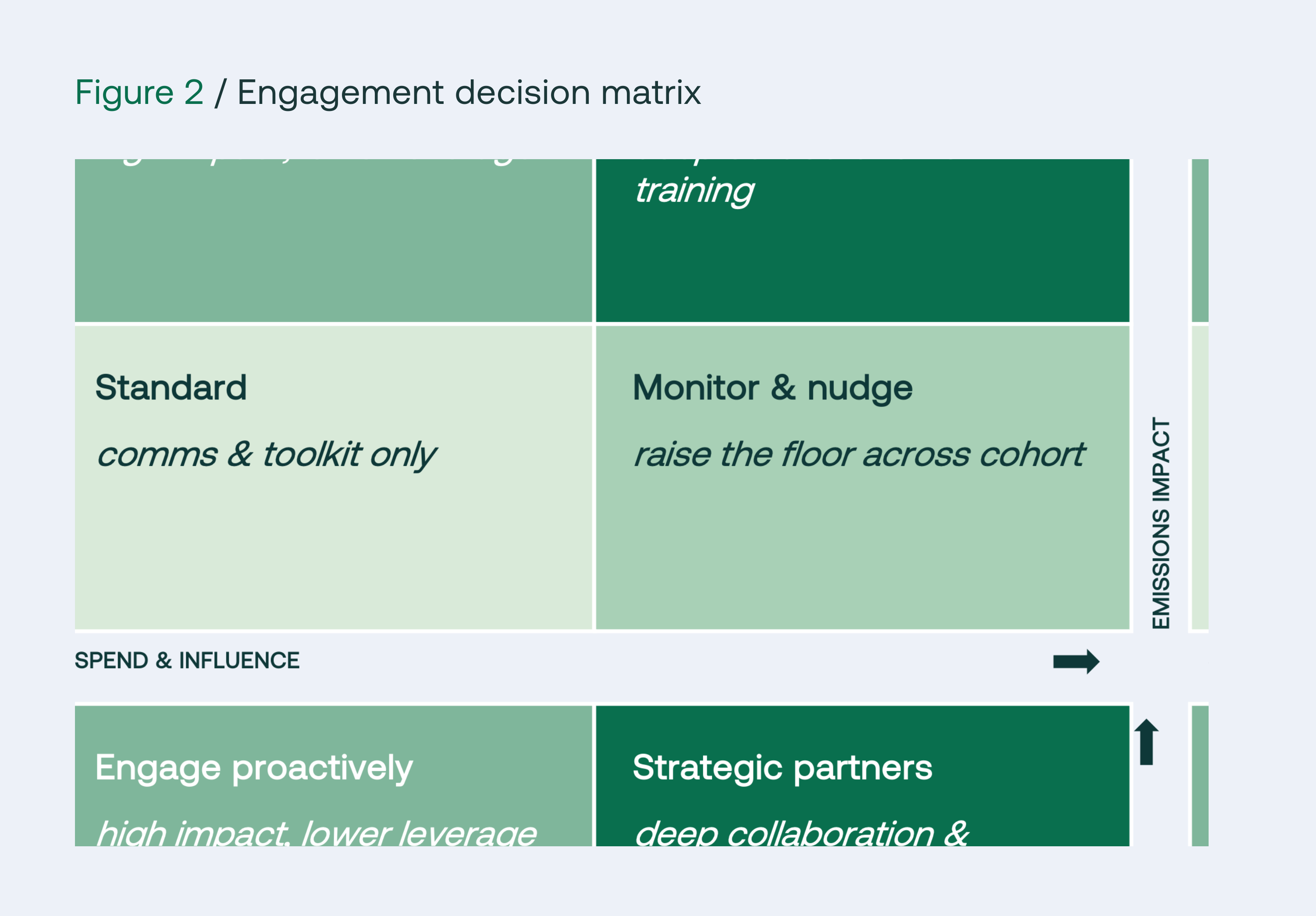
With hundreds or thousands of suppliers in a portfolio, choosing who to engage first is a strategic decision. We use an engagement matrix mapping suppliers on two axes: emissions impact (Scope 3 contribution) and spend and influence (annual purchase value and relationship strength) [1].
Four engagement tiers result:
Additional prioritisation factors include strategic importance (suppliers you plan to grow commercial volume with), risk exposure (regulatory, geographic, or ESG continuity risk), and data maturity, how well-prepared a supplier is to respond at all [1].
Running a programme across 60+ suppliers in multiple product categories generates insights that are difficult to access any other way. The five lessons that shaped our approach most directly [1]:
According to Joy Stindt, Sr. Climate Consultant at Nexio Projects: “Procurement teams are incredibly important to engage in this topic. They understand the context, so the conversations can be held better [1].”
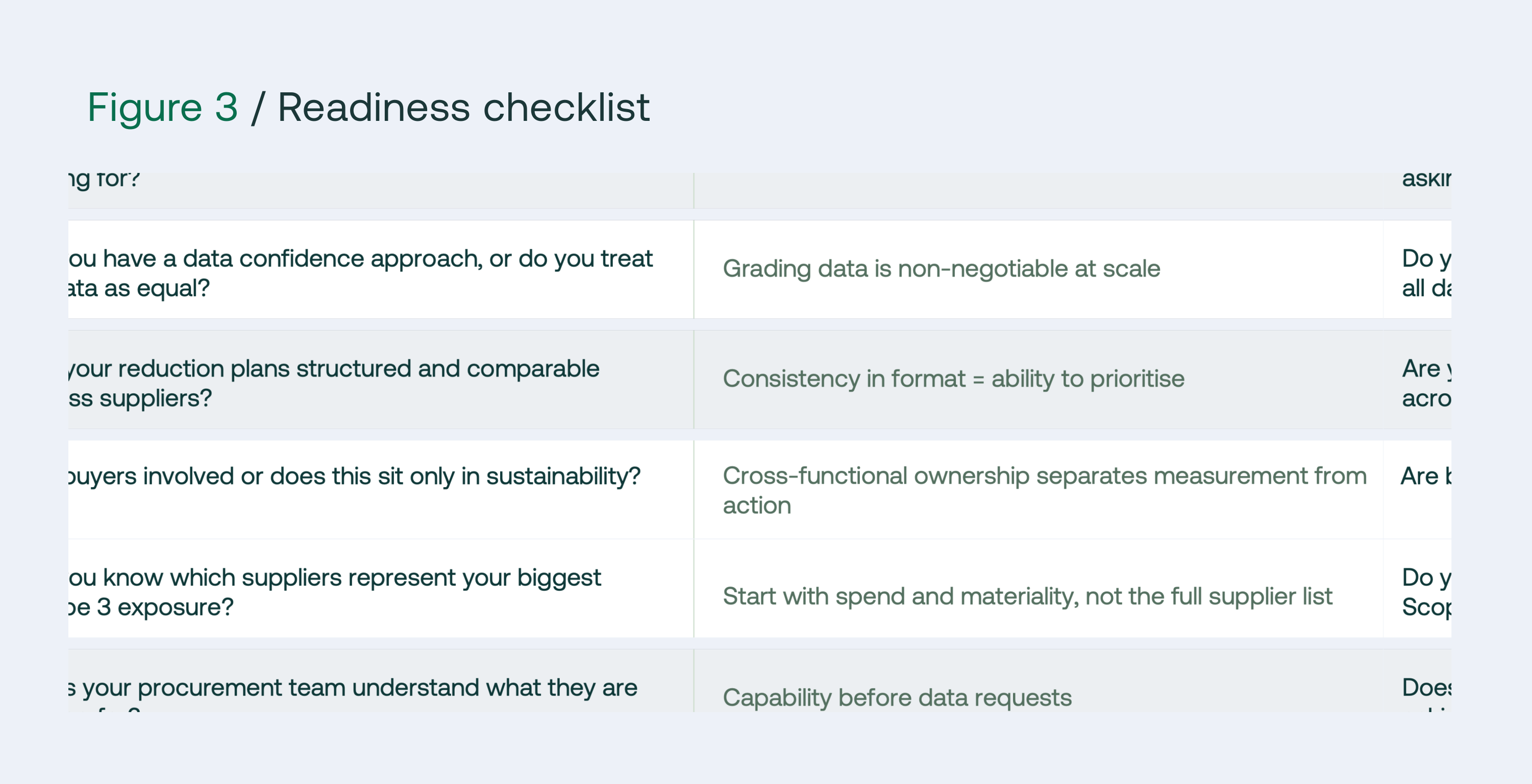
Before launching a supplier engagement programme, five questions help identify where to begin [1]:
For a comprehensive guide to structuring your supply chain emissions programme, download our free guide: Supply chain emissions: Unlocking supplier engagement for net zero.
Scope 3 supplier engagement is a programme that connects sustainability targets to commercial decisions. Over time, to measurable emission reductions in the value chain. The five-phase approach we use in practice reflects this sequence: starting with procurement readiness, building a standardised data process, grading data honestly, calculating what can be calculated, and delivering plans that procurement teams can act on without external interpretation.
The first year will not produce perfect data. It will produce a foundation, and a clear map of where to invest next. To summarise, Joy explains: “In the beginning, reducing emissions is about knowing where to start: Which topics to explore first, which suppliers to engage more deeply.”.
Nexio Projects is an international sustainability consultancy dedicated to guiding organisations on their journey from compliance to purpose. Our mission is to provide expert support across strategy development, climate solutions, decarbonisation roadmaps, and comprehensive supply chain emissions programmes. Ultimately, we help our clients achieve their sustainability goals with a pragmatic, step-by-step approach.
Recognised as a leading boutique ESG and sustainability strategy consultancy by Verdantix and as the best ESG consultancy in the Netherlands for 2025 by Consultancy NL, we are here to help you build a Scope 3 supplier engagement programme that creates lasting impact.
Ready to take the next step? Explore our supplier engagement programme or book a free consultation call with our climate team.
Start simple, especially if this is your first year of supplier engagement. A good starting point is asking suppliers whether they measure and report their Scope 1, 2, and 3 emissions, and whether they have reduction targets in place — including whether those are SBTi-aligned [1].
If your organisation is more advanced in its own emissions reporting and you want to go deeper, you can request product-level data: energy consumption, wastewater, and material inputs. This is a more technical exercise and works best when your own internal team already has the capability to process and use that data [1].
In terms of format: one action plan per supplier is the most targeted approach, but it is also the most resource-intensive. If you have a large number of suppliers in similar categories, grouping by material or supplier type is a practical starting point, and you can break it down further once you know where the hotspots are [1].
There is currently no regulatory requirement for suppliers to provide emissions data to their customers [1]. However, the commercial expectation is shifting. As more companies commit to SBTi targets, they will need Category 1 Scope 3 data to meet them, and that data comes from suppliers. Organisations that cannot or will not share this information may find it increasingly affects procurement decisions over the next few years [1].
The practical advice: do not wait for regulation to force the question. Start building the relationship and the capability now, at a level that is realistic for your suppliers, so that when the expectation becomes standard, you are already ahead of it [1].
The link is direct. If your organisation has an SBTi target, you almost certainly have Scope 3 targets embedded within it, and meeting those requires knowing what is happening in your supply chain [1]. Supplier engagement is the mechanism through which you collect that data and drive the reductions needed.
For suppliers who have not yet set their own SBTi targets: the likelihood is that at least one of your customers has. That means the data request will come from them. Building the capability to respond now, even at a basic level, positions you well for those conversations [1].
Two months is the recommended window in most cases [1]. Less than that risks creating unnecessary pressure on the supplier, especially if data needs to be pulled from multiple internal sources. More than two months risks the request being deprioritised or losing momentum internally.
The right timeline also depends on your own project schedule. The key is to set a clear deadline from the outset, for your suppliers and for your own team, so the collection phase does not drift [1].
Service suppliers tend to fall in the lower emissions impact quadrants of the prioritisation matrix, which means they are generally not the first group to target in a Scope 3 supplier engagement programme [1]. For most organisations, goods and materials suppliers are where the highest emissions concentration sits.
For organisations whose supply base is predominantly services, where there are few or no goods suppliers, the approach is the same in principle: identify the highest-spend categories first and work from there. On the specific question of AI-related emissions from service suppliers: this remains genuinely difficult to calculate accurately, largely because many AI companies do not publish the data needed to make reliable estimates. This is an area where transparency is expected to improve over the coming years, but at present any calculation should be treated as indicative [1].
[1] Nexio Projects. Supply chain emissions at scale: A real-world client story. Webinar, July 2026. https://nexioprojects.com/webinars/supply-chain-emissions-at-scale-a-real-world-client-story/
[2] OECD. Global supply chain emissions. Cited in Nexio Projects webinar presentation, July 2026. (Note: exact OECD report title and publication year not specified in webinar materials — verify precise source before publication.)
[3] Science Based Targets initiative. Corporate manual: Scope 3 target-setting. https://sciencebasedtargets.org. Accessed July 2026.
[4] Nexio Projects. Supply chains under pressure: Building sustainability resilience in North America. https://nexioprojects.com/supply-chains-under-pressure-building-sustainability-resilience-in-north-america/. July 2026.
[5] Nexio Projects. Improve supply chain transparency with EcoVadis. https://nexioprojects.com/improve-supply-chain-transparency-with-ecovadis/.
[6] Nexio Projects. Making product carbon footprints work at scale. https://nexioprojects.com/making-product-carbon-footprints-work-at-scale/. June 2026.
[7] Nexio Projects. Supply chain emissions: Unlocking supplier engagement for net zero. https://nexioprojects.com/knowledge-centre/supply-chain-emissions-unlocking-supplier-engagement-for-net-zero/.