

 Hiring an impact consultant: Support to become B Corp certified
September 1, 2025


“The best reassessment starting point is always your own scorecard and your own key sustainability issues.”
Sophia Grotz, Sustainability Consultant at Nexio Projects
Back to school season has arrived, and many companies are preparing for their EcoVadis reassessment before the year end. The goalposts have moved. Medal thresholds are moving quickly, while evidence that seems like a small detail can determine whether a score holds or slips.
That makes timing and prioritisation as important as ambition. Teams need to know which gaps matter most, which documents remain useful, and how long the review may take.
We recently held an interactive session with sustainability professionals preparing for EcoVadis reassessment. We combined practical guidance with live statements and questions, then tested the assumptions that often shape reassessment plans.
Here is what each answer reveals.
The answer is myth.
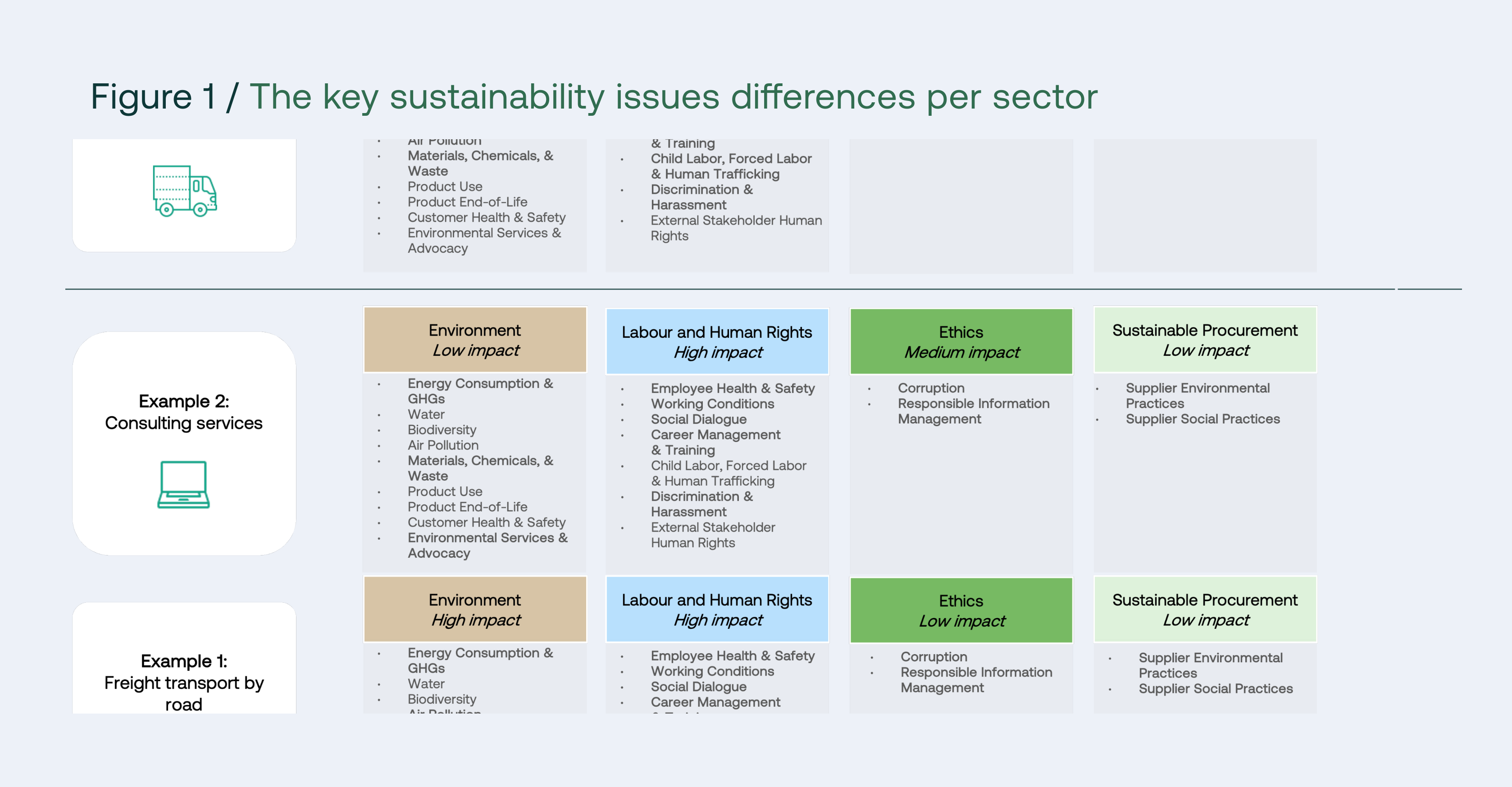
The Environment theme can be highly important for some sectors. It is not automatically the most heavily weighted theme for every company.
EcoVadis activates criteria and applies weightings based on factors such as industry, company size and operating locations. A freight transport company may face significant weighting for the Environment theme, particularly in relation to air pollution and energy consumption & GHGs. A consulting company may have a lower Environment weighting and a higher focus on Labour and Human Rights or Ethics. [1] [2]
The four sustainability themes are Environment, Labour and Human Rights, Ethics, and Sustainable Procurement. Each theme contains key sustainability issues that vary according to the company being assessed. [2]
The best starting point is therefore your own scorecard. Review the improvement areas, then assess the weighting of each theme and indicator.
A prioritisation strategy should answer two questions:
Feasibility also matters. Certifications may contribute to the assessment, but obtaining a new certification can take longer than the time available before reassessment. A policy improvement or stronger KPI dashboard may create more immediate value.
According to Sophia Grotz, Sustainability Consultant at Nexio Projects, ‘Definitely pay attention to the weight of the pillar, the weight of the indicator and also in considering feasibility.’ [1]
The answer is myth.
A reassessment is a new comparison with the market. It is not simply a renewal of last year’s score.
EcoVadis medals are based on percentile rankings. Platinum recognises companies in the top 1%, Gold the top 5%, Silver the top 15% and Bronze the top 35%. The ranking compares companies assessed during the previous twelve months. [2] [5]
This means your position can change even when your own management system remains unchanged. Other companies may improve, evidence may become outdated, and EcoVadis may update its methodology.
EcoVadis states that medal thresholds are not published as fixed scores because recognition is based on relative performance. Eligibility criteria may also be reviewed periodically. [5]
Maintaining a medal therefore requires ongoing improvement. Review your previous scorecard, update expired evidence, strengthen weaker indicators and demonstrate progress across the management system.
The answer is myth.
A sustainability report can make a valuable contribution to an EcoVadis Assessment. It can support policies, targets, governance information, performance data and reporting questions.
It is not automatically suitable for every question.
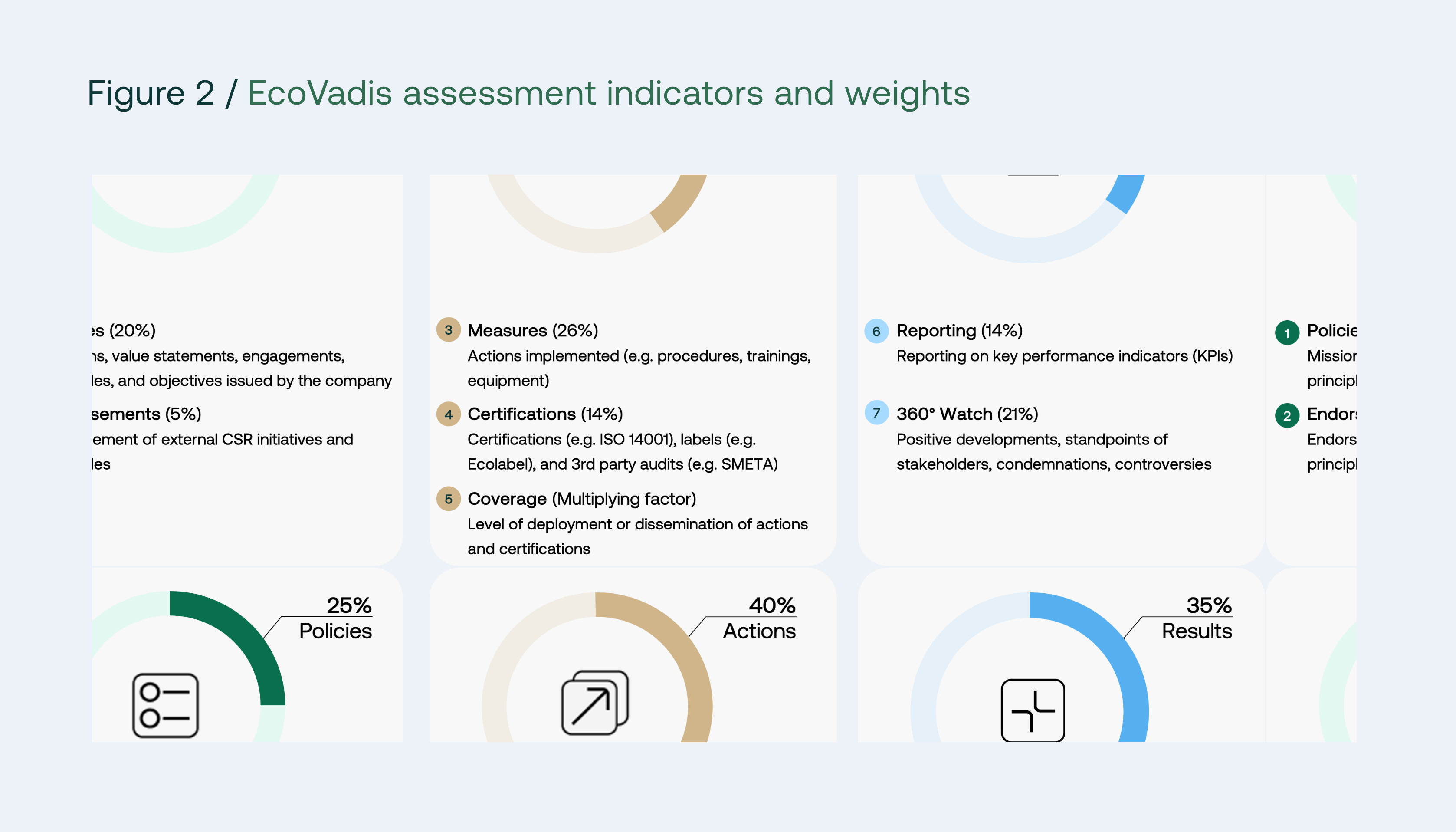
EcoVadis assesses different parts of a sustainability management system through separate indicators. Policies address commitments, objectives and targets. Actions address implementation through procedures, training, equipment and risk assessments. Results address performance through KPIs and other evidence. [1] [2]
A sustainability report may describe a training programme. That description alone may not prove that the training was implemented. Training records, attendance data, procedures or evaluation results may provide stronger evidence for an actions question.
A report can also present KPIs across multiple years. It may therefore support reporting questions, provided it meets the relevant requirements for coverage, credibility, verification and publication. [2]
The right document depends on the question. Evidence should show the policy, action or result being assessed.
For a broader perspective on the role of EcoVadis in continuous improvement, read our article on best practices to accelerate your EcoVadis journey.
The answer is myth.
A long list of KPIs does not automatically create a strong Reporting score.
The focus should be coverage, relevance, credibility and consistency. There are several elements that support stronger reporting evidence:
EcoVadis confirms that KPI reporting has a validity period of two years. Policies and actions generally have a validity period of eight years. [6]
Reporting 20 KPIs on energy consumption does not compensate for missing metrics on other material topics. A stronger approach is to identify the topics relevant to your business, then report the right indicators across those topics.
The reporting question should be: Are we reporting meaningful and credible KPIs across our activated criteria?
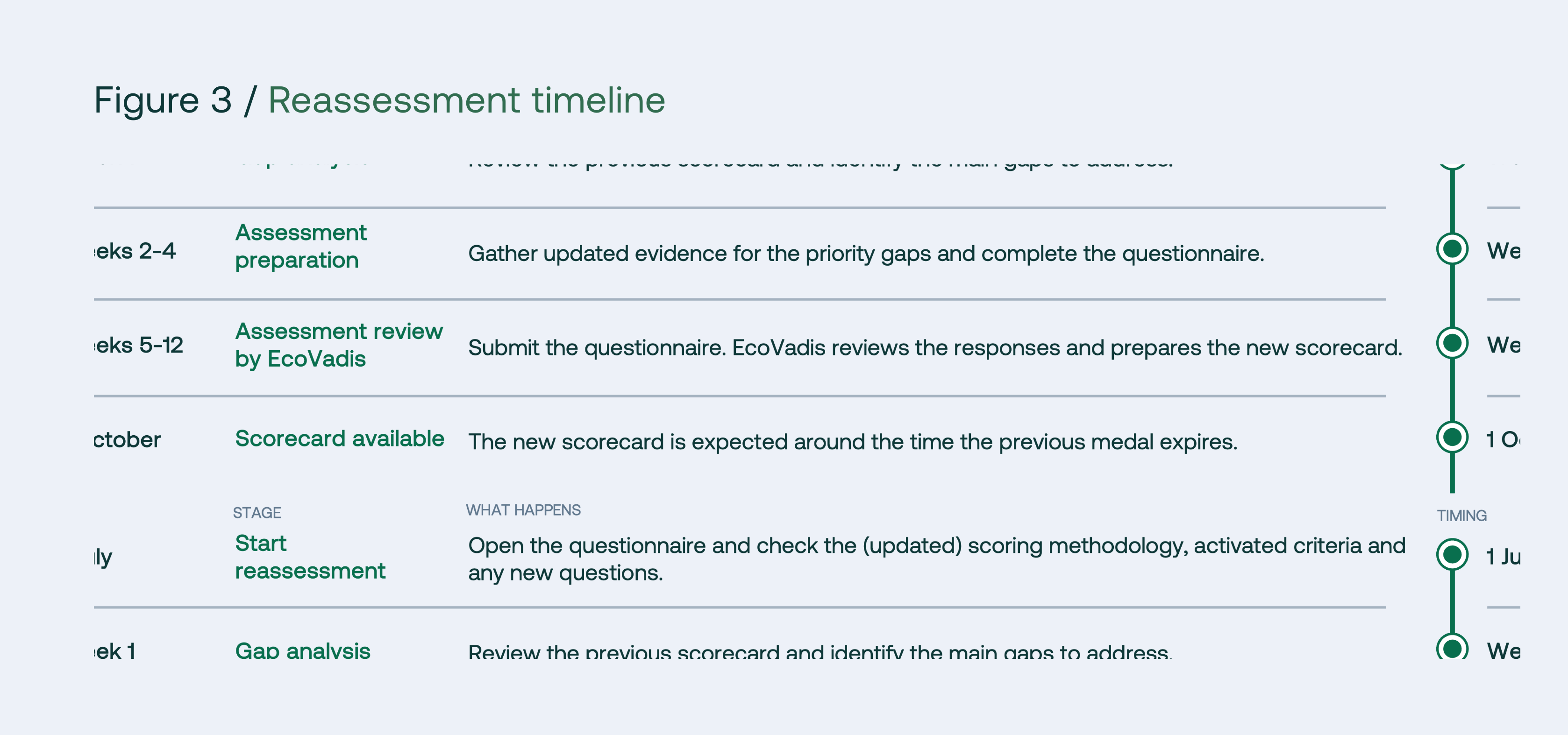
The best way to plan a reassessment is to work backwards from the date when the new scorecard is required.
The webinar recommends starting at least twelve weeks before the current medal expires. [2] A typical timeline includes:
Review may take six to eight weeks in a best case. It may take longer during busy periods, particularly towards the end of the year. [1]
EcoVadis states that scorecards remain valid for twelve months from the publication date. Companies can check the validity date in the EcoVadis platform. [3]
The earlier you start, the more options you retain. You can improve weak policies, collect missing evidence, assign internal owners and address questions before submission.
Open the questionnaire as soon as it becomes available. Check the key sustainability issues updated methodology and new questions.
Focus on high weighted improvement areas identified in your scorecard. Do not spread limited time across every possible gap.
You do not need to improve every indicator at once. Focus on the areas that can influence your score and are feasible within the available timeframe.
Connect Policies, Actions and Results. A commitment gains strength when it is implemented, measured and linked to positive performance.
Reuse previously accepted documents when they remain valid. There is no need to replace strong evidence simply because a new assessment has started.
EcoVadis allows up to 55 new documents per assessment. Select evidence that is relevant, current and capable of answering the intended question. [2] [7]
Use targets with a numerical component, baseline and target year. Review future dates before submission. A target for 2026 may no longer demonstrate future progress in a later assessment.
Update your KPI dashboard with current data, multi year trends, coverage information and positive results.
Make reassessment cross functional. Assign responsibilities to the teams that own policies, actions, data and evidence.
A medal can support commercial conversations. The stronger long term value comes from using the assessment to improve the sustainability management system.
Start with the scorecard. Review improvement areas, theme weightings and indicator weightings.
For short term progress, our experts recommend reviewing policies and reporting first. Policies can often be improved by clarifying commitments, scope, governance, responsibilities and quantitative targets.
Reporting may also offer practical opportunities. Review the KPIs already available, identify missing material topics and consider whether a concise public sustainability report could strengthen your evidence. [1]
Certifications are one of the seven EcoVadis indicators. Certifications have a 14% share within the illustrated indicator structure. [2]
They are therefore not automatically worth zero points. Their influence depends on the activated criteria and the evidence submitted.
A new certification may still be a long term priority. It may not be the most practical focus when reassessment is only a few months away.
These concepts are related, but they are not identical.
EcoVadis selects relevant criteria based on factors including industry, company size and geographical exposure. Companies can view their activated criteria and industry risk profile through the EcoVadis platform. [4]
Your own materiality assessment explains which sustainability topics matter most to your business and stakeholders. A strong sustainability report should explain how those topics were identified and connect them to relevant policies, actions and KPIs.
Use the key sustainability issuesto plan your EcoVadis response. Use your materiality assessment to explain the broader sustainability priorities of your organisation.
The methodology is complex because the questionnaire is customised, evidence requirements differ by indicator, and the methodology evolves.
Companies do not need to outsource the entire process. They do need clear ownership, a structured review of the scorecard and a practical evidence plan.
The EcoVadis platform includes methodology information and scorecard analysis. EcoVadis also provides customer support and guidance through its Help Center. [3] [4]
External support can help when internal teams lack time, specialist knowledge or a clear implementation roadmap.
Log in to the EcoVadis platform and open Subscription and Billing. Check whether an available reassessment appears in your account.
If one is available, confirm the current employee range and request the updated questionnaire. The company’s primary contact should receive an email when the questionnaire is ready. [3]
For some subscription plans, the reassessment must be purchased or requested through EcoVadis support.
EcoVadis medals are based on percentile rank rather than fixed score thresholds. Platinum recognises the top 1% of assessed companies, based on the relevant comparison group and period. [5]
There is no published statement that Platinum will reach 100 or that EcoVadis will continuously add documents to make the questionnaire harder.
Companies should expect methodology and eligibility criteria to evolve. The practical response is to strengthen the management system rather than optimise for one fixed score.
Start with the previous scorecard and its improvement areas. Then compare those areas with the current scoring methodology and activated criteria.
Reuse documents that remain valid. Policies and actions generally remain valid for eight years, while KPI reporting is generally valid for two years. The 55 document limit makes careful selection important. [6] [7]
For example, an internal training spreadsheet may remain useful. Strengthen it with the training scope, dates, participants, completion data, responsible owner and evidence of effectiveness where available.
The document format matters less than its relevance, credibility, completeness and link to the question.
Yes. September is within the recommended twelve week preparation window for a January expiry date.
Starting early gives the team time to review the questionnaire, identify gaps, collect evidence and allow for EcoVadis review. Build in additional time if your company has many stakeholders or expects a busy assessment period.
EcoVadis publishes its methodology principles and explains the main indicators. The assessment uses company specific activated criteria and weightings. [4]
There is no single simple formula that applies equally to every company.
The platform provides access to scorecard analysis and scoring methodology information. Use that information to understand which requirements separate your current score from the next performance level. [1]
For maximum points, KPIs should cover at least three consecutive years in one document, with the latest reporting period no older than two years. If three years of data is not available, you can still be scored with just one or two years of data. [2]
This is an evidence expectation for reporting. It is not a universal expiry date for the entire sustainability report.
The report should also be public, credible, aligned with a recognised reporting standard and supported by a materiality assessment. Selected metrics should be verified where possible.
Explain the boundary clearly. Identify which waste activities are controlled by your company and which are managed by the landlord or service provider.
Evidence could include your internal waste procedure, lease or service arrangements, supplier information, waste segregation instructions and available waste data. Avoid claiming direct control over services managed by another party.
The important point is to show how your organisation manages its responsibilities within the operating context.
The primary contact should receive an email when a reassessment questionnaire becomes available. [3]
Still, do not rely only on an email reminder. Log in to the platform and check the scorecard validity date, subscription status and available reassessment credits.
Medals recognise relative sustainability management performance. They do not measure which company needs the most support.
Companies with lower scores can still demonstrate progress through improvement, stronger management practices and consistent engagement with the assessment.
The assessment has value beyond recognition. It can help every organisation identify gaps and establish a sustainability improvement roadmap.
Public infrastructure does not remove the need to explain your management approach.
Describe which services are provided by the government or building owner. Then show how your company manages its own responsibilities, such as internal procedures, employee guidance, waste separation, procurement requirements and available consumption data.
The relevance of each topic depends on your activated criteria, industry and location. [4]
EcoVadis scorecards are valid for twelve months from publication. Annual reassessment is generally recommended, although subscription arrangements determine how credits and renewals work. [3]
You can check your scorecard validity and subscription details through the platform. EcoVadis may notify the primary contact when a questionnaire is ready, but companies should monitor the date themselves.
Starting the reassessment before the current medal expires is recommended. [1]
The most effective EcoVadis reassessment plans are selective. They focus on high impact gaps, current evidence and realistic implementation.
A scorecard should guide the organisation’s wider sustainability journey. It can reveal where policies lack ownership, where actions are not documented, and where performance data does not yet demonstrate progress.
The goal is to move from compliance to positive impact by connecting the needs of business and the planet. A medal can support a commercial objective, while a stronger management system creates value beyond one assessment cycle.
As Sophia Grotz, Sustainability Consultant at Nexio Projects, stated: “Definitely with every reassessment, it’s important to look at where you can close your gaps and improve your score.” [1]
We are an international sustainability consultancy dedicated to guiding organisations on their journey from compliance to positive impact. We provide expert support across EcoVadis assessment review, gap analysis, implementation support, training and sustainability management systems.
Recognised as a leading boutique ESG consultancy by Verdantix and as a leading ESG consultancy in the Netherlands by Consultancy NL, we are here to help you turn your next EcoVadis reassessment into a focused improvement plan.
Book an EcoVadis session with our team to review your scorecard, prioritise your gaps and prepare for reassessment with greater confidence.
[1] Nexio Projects. Webinar transcript: Goalposts moved for reassessment. 2026. Attached transcript file. https://nexioprojects.com/thank-you/webinar-ecovadis-the-goalposts-moved-for-reassessment/
[2] Nexio Projects. Webinar slides: Goalposts moved for reassessment. 2026. Attached PDF. https://nexioprojects.com/wp-content/uploads/2026/09/Webinar-Goalposts-moved-for-reassessment.pdf
[3] EcoVadis. Getting ready to start a reassessment. https://support.ecovadis.com/hc/en-us/articles/360031507871-Getting-ready-to-start-a-reassessment. Accessed September 2026.
[4] EcoVadis. What is the EcoVadis methodology? https://support.ecovadis.com/hc/en-us/articles/115002531507-What-is-the-EcoVadis-methodology. Accessed September 2026.
[5] EcoVadis. Understanding EcoVadis Medals and Badges. https://support.ecovadis.com/hc/en-us/articles/210460227-Understanding-EcoVadis-Medals-and-Badges. Accessed September 2026.
[6] EcoVadis. Understanding supporting documents. https://support.ecovadis.com/hc/en-us/articles/210460307-Understanding-supporting-documents. Accessed September 2026.
[7] EcoVadis. Why is there a limit to the number of documents that can be provided? https://support.ecovadis.com/hc/en-us/articles/115002646148-Why-is-there-a-limit-to-the-number-of-documents-that-can-be-provided. Accessed September 2026.
[8] Nexio Projects. Best practices to accelerate your EcoVadis journey. https://blog.nexioprojects.com/best-practices-to-accelerate-your-ecovadis-journey. Accessed September 2026.
[9] Nexio Projects. Behind the scenes of Nexio Projects’ annual EcoVadis assessment: Lessons, growth and commitment. https://nexioprojects.com/behind-the-scenes-of-nexio-projects-annual-ecovadis-assessment/. Accessed September 2026


