What’s the difference between a product carbon footprint and a product environmental footprint?
January 14, 2025


CDP season 2026 has started. The questionnaire and scoring methodology are published, the portal opens in June, and the submission deadline falls in the week of 14 September [1]. For organisations that disclosed in 2025, the changes in the 2026 version carry real scoring implications. For first-time disclosers, the framework has a learning curve that rewards preparation over speed.
The trigger for most organisations is external: a customer request, an investor inquiry, or a board mandate to disclose environmental data. Whatever the driver, the approach is consistent. Understand what changed, map the data requirements across your organisation, and begin coordination before the portal opens.
This article draws directly from Nexio Projects’ May 2026 webinar, Navigating the CDP season: New questionnaire decoded, hosted by Joy Stindt (Sr. Climate Consultant) and Emile Catillon (Climate Consultant). The session covered the 2026 questionnaire, the updated scoring methodology, and the practical steps organisations need to take now.
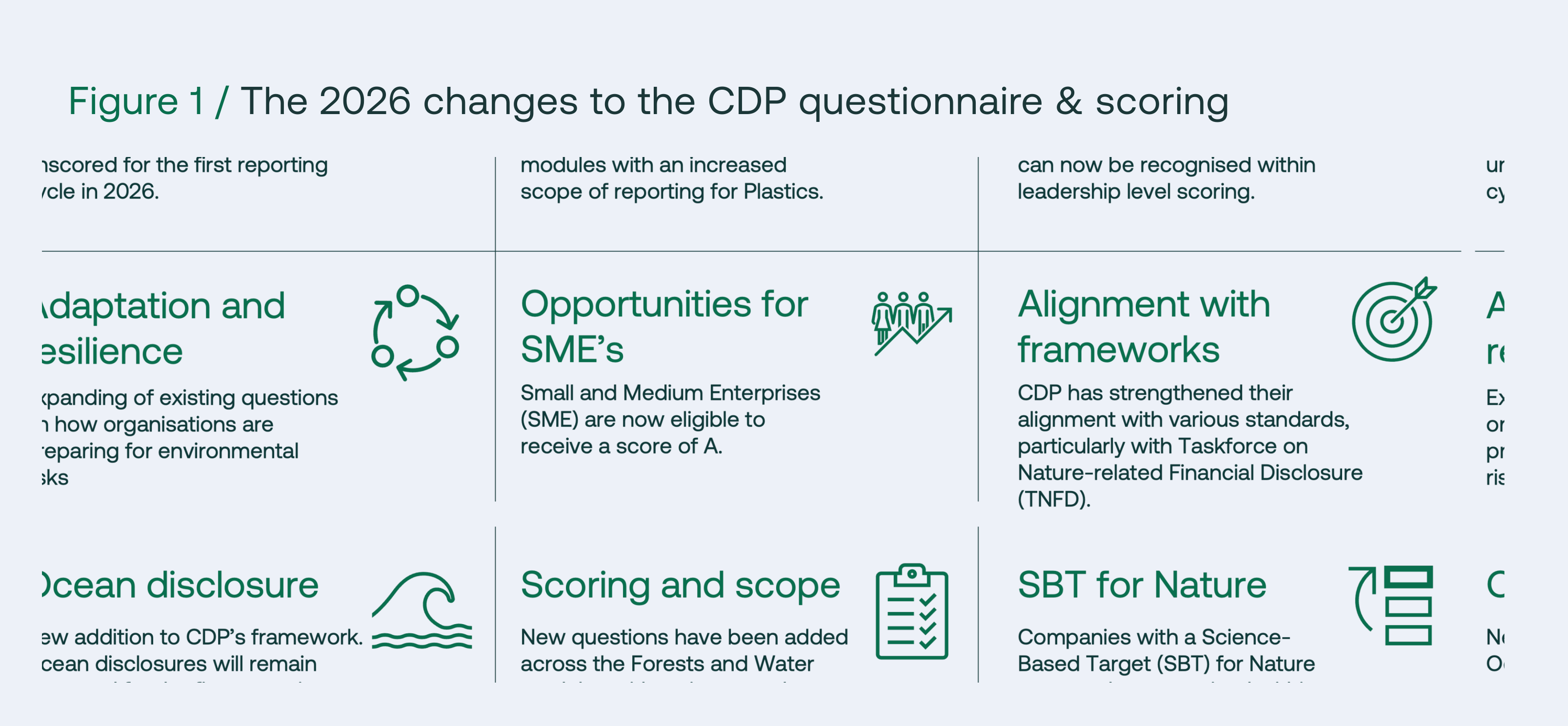
Six areas of change define the 2026 disclosure cycle. The most visible is the addition of ocean disclosure. Joining climate, water, forests, plastics, and biodiversity, ocean is now part of CDP’s framework. For this first reporting cycle, it remains unscored and voluntary. It does not introduce a standalone module. Instead, it adds response options to existing questions across modules 2, 3, 4, and 5, allowing organisations to attribute risks, opportunities, and data to ocean-related themes for the first time [1].
The forests and water modules carry new questions that expand the scope of reporting on science-based targets for nature. Previously, organisations with a Science-Based Target (SBT) for Nature had limited means to demonstrate this within CDP’s scoring. Leadership-level scoring now recognises SBT for Nature commitments [1]. The forests module also introduces newly scored commodities, including coffee, cocoa, and rubber, further broadening the scope of corporate accountability for nature-related impacts.
Two further changes affect most disclosers. Adaptation and resilience questions now place greater emphasis on the actions taken to address environmental risks, rather than the identification of risks alone. The energy questions in module 7 have been streamlined to improve alignment with the GHG Protocol, with recognition extended to low-carbon energy sources beyond renewables, including nuclear energy and carbon capture and storage [1].
For small and medium enterprises, there is a significant update: SMEs are now eligible to receive an A score. This was previously unavailable regardless of the quality of their disclosure [1]. For a deeper breakdown of these changes and their framework alignment implications, see CDP 2026: Key changes and strategic insights [2].
“Once you have checked four separate documents, you have the full picture of what changes actually took place. All of this takes real time, and that is exactly why now is the right moment to get started.”
The 2026 questionnaire signals when a question has changed, but reading the scoring methodology alongside it is the only way to understand what that change actually demands. Two areas illustrate this clearly.
How it worked in 2025
What is required in 2026
What this means for your submission: The question text looks similar to last year. The scoring has subtly shifted. This difference only becomes visible when the methodology is read alongside the questionnaire. It is the kind of detail that separates a B from an A. [1]
How it worked in 2025
What is required in 2026
What this means for your submission: The breakdown of your energy usage may look different from what you reported in previous years. Review each question in module 7 carefully and do not replicate last year’s data without checking it against the new structure. For first-time disclosers, this more targeted approach actually reduces ambiguity in the energy module.
CDP also publishes essential criteria: Minimum thresholds that gate access to each score band. An organisation missing one essential criterion, such as a verified science-based target, cannot reach the A band regardless of how well it scores elsewhere. Reviewing the essential criteria early in preparation allows organisations to set realistic score targets and allocate effort accordingly. ]
For a guide on how essential criteria work in practice, this article on CDP’s essential criteria is a useful reference [3].
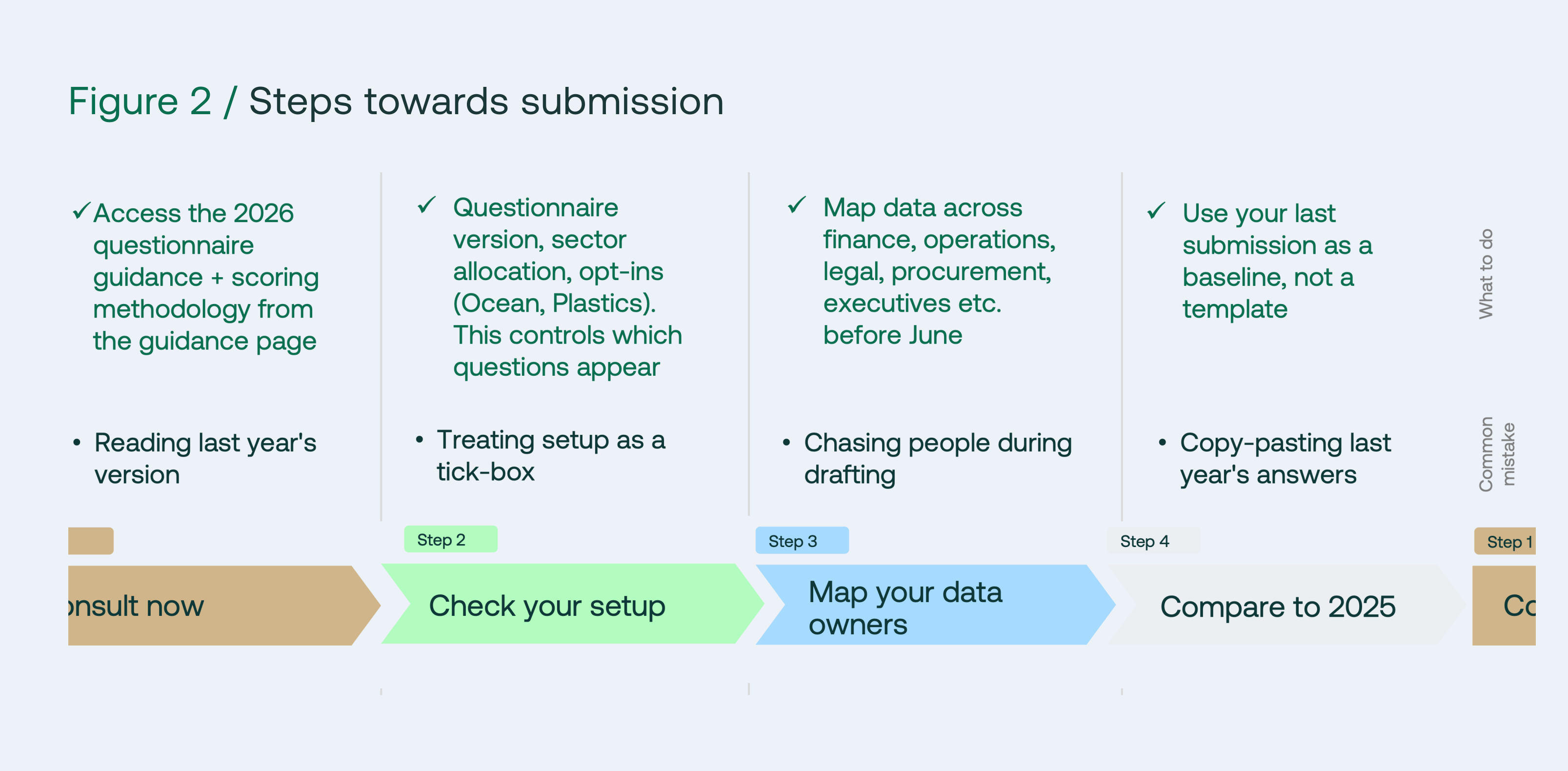
CDP structures preparation around four steps. The window to act on the first two is now.
Access both from the CDP guidance page to make sure you have the correct information in your desk to start with.
The questionnaire generates based on setup answers covering sector, company size, and opted-in modules. Treat that setup carefully. Selecting ocean or plastics, for example, will add questions across multiple modules and change the scope of your disclosure significantly.
Finance, operations, procurement, legal, and executive teams each contribute data to the submission. Engaging them before June, setting internal deadlines, and briefing them on what is required reduces the risk of chasing absent colleagues during the height of summer.
Treat last year’s answers as a baseline, not a template. Answers that were complete under 2025 scoring criteria may fall short under 2026 criteria. Identifying these gaps now prevents a scramble in August.
Once the portal opens, some previous answers carry over automatically from 2025. They are not reviewed or updated by CDP. Every answer must be checked individually, year-specific metrics (such as energy consumption figures) do not pre-fill and must be re-entered. For all other fields, there is the risk of submitting outdated data without realising it.
CDP disclosure is a five-month effort at minimum when preparation time is included. The portal is expected to open in the week of 15 June [1], with the submission deadline in the week of 14 September.
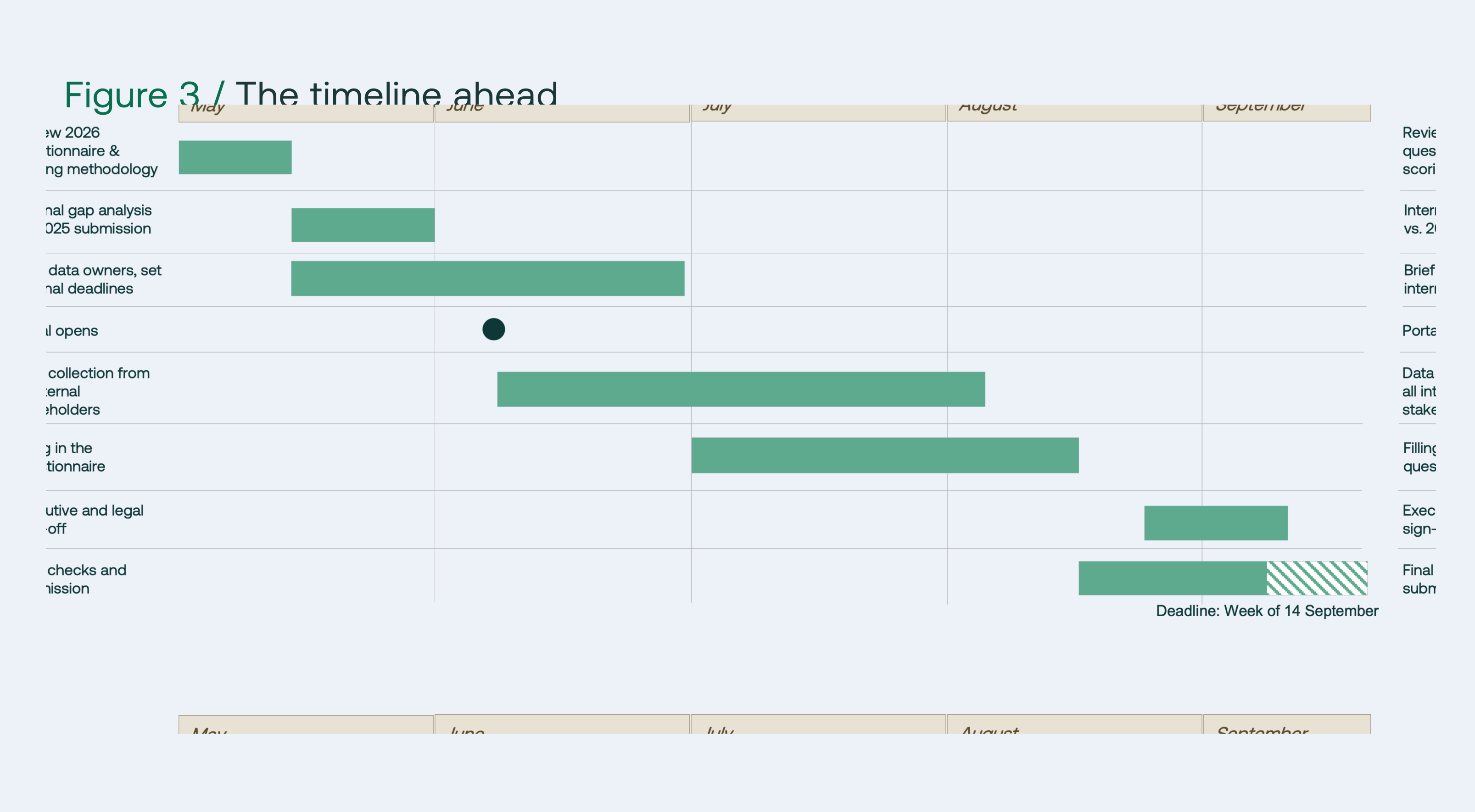
Nexio Projects recommends treating the week of 7 September as the working deadline, ahead of the platform congestion that typically builds in the final days. The organisations that reach that date without stress are the ones that mapped their data, briefed their stakeholders, and began gap analysis before the portal opened.
CDP is not a one-person task. Accurate, complete disclosure draws on data and sign-off from across the organisation. Identifying the right contributors now, before the portal opens,is the most effective preparation step available.
The scope of stakeholder involvement also depends on your sector and the modules you disclose on. Organisations in high-impact sectors may have additional modules activated automatically by the CDP Activity Classification System. Those sourcing forest-risk commodities above 5% face newly scored requirements for cocoa, coffee, and rubber this year [1]. Customer and capital market signatory requests can activate modules unexpectedly. Monitoring your existing CDP account now means no surprises in June.
The sustainability leader owns the process end-to-end. This role coordinates data collection, writes the responses, manages internal deadlines, and is accountable for the quality and completeness of the submission. For most organisations, this is the person who will spend the most time on CDP across the entire disclosure window.
Finance provides the financial figures that underpin several modules: revenue, CAPEX, and OPEX data required during setup, as well as any financial analyses quantifying the potential impact of climate-related risks and opportunities on the business. CDP’s risk and opportunity questions ask for financial impact estimates, and that data typically sits with finance.
This team supplies the primary environmental data for the submission. For climate disclosure, that means scope 1, 2, and 3 emissions, energy consumption broken down by source, and any site-level data required for accuracy. For organisations disclosing on water, operational teams also provide water consumption, withdrawal, and return figures.
Procurement holds the supply chain data that feeds into scope 3 reporting and supplier engagement questions. This includes information on whether supplier contracts include emissions data requirements, the status of any supplier engagement programmes, and the proportion of procurement spend covered by environmental assessments.
Legal and compliance review policy documents, support verification of governance-related answers, and may carry out a pre-submission check against any regulatory obligations that intersect with CDP disclosure.
Executive leadership responds to the governance questions in module 4, which cover board-level oversight of environmental topics, management incentives tied to climate performance, and strategic decision-making on climate risk. A submission signed off at CEO level receives additional scoring points compared to sign-off at a lower seniority [1]. Building this step into the timeline early, rather than treating it as a final formality, allows time to incorporate any feedback before the deadline.
For an overview of everything the 2026 disclosure season involves, download the Nexio Projects factsheet Ahead of CDP season: Guiding 2026 disclosures [4]. For organisations still building their emissions data foundation, Preparing for CDP: Early lessons and practical insights for climate disclosure success is the logical starting point [5].
Attendees submitted questions across a range of practical scenarios during the session. The five most broadly relevant are answered here by Joy Stindt and Emile Catillon.
The questionnaire is available to download in Word or PDF format only. There is no Excel version. To access it, visit the CDP guidance page and complete the setup questions covering your sector, company size, and the modules you wish to disclose on. The resulting download is tailored to your profile and excludes questions from modules you have not opted into.
Access the 2026 questionnaire and select water as a disclosure module during setup. The download will include both the water module and the climate questions you may already be familiar with from previous disclosures. New areas include water consumption volumes, water withdrawals, and water discharges, alongside water-related risks and opportunities that run parallel to the climate risk structure. Identify who in your organisation owns that data before June, and brief them ahead of the portal opening.
The request cannot be removed by the recipient from the CDP platform. The right step is to contact the requesting party directly and make the case that the topic is not material to your operations. If the relationship permits that conversation, and a formal materiality assessment supports the argument, the requesting party can retract their request. Where the request comes from a capital market signatory, such as a bank or investment fund, it carries a different status and may effectively require a response. If the module was activated by the CDP Activity Classification System rather than a customer, you can contact CDP directly to dispute the materiality classification. If you the request remains but you do not respond, this will have varying scoring implications depending on who the request comes from.
CDP does not publish scores at question level. The most granular breakdown provided is at section level, covering areas such as energy data or risk disclosure. Your previous submission remains visible in the portal, including all answers you provided, but the individual points awarded per question are not disclosed. Use the section-level score breakdown alongside the 2026 scoring methodology to identify where targeted improvements are most likely to shift your overall band.
A double materiality assessment that concludes water is not material to your business is a strong supporting argument, and one that is documentable. If a customer has activated the water module and the question of materiality is in dispute, your DMA outcome is credible and specific evidence for that conversation. If the module was activated by the CDP-ACS, the same DMA can support a formal dispute submitted directly to CDP. The outcome is not guaranteed, but a robust materiality assessment is among the strongest positions available to make that case.
The 2026 CDP questionnaire is more detailed than its predecessor, the scoring is more specific, and the coordination required across an organisation has grown. The disclosers who achieve strong scores do so because they read the methodology carefully, engage internal stakeholders early, and treat CDP as a six-month project rather than a summer task.
“Map your data owners now and start sending data requests before the portal opens. The last thing you want is to spend your final two weeks of the disclosure cycle chasing the right person, only to find out they are on holiday.”
— Joy Stindt, Sr. Climate Consultant, Nexio Projects
Nexio Projects is an international sustainability consultancy dedicated to guiding organisations on their journey from compliance to purpose. Their mission is to provide expert support across strategy development, ESG ratings, climate solutions, and comprehensive sustainability reporting, helping clients achieve their sustainability goals with a pragmatic, step-by-step approach. Recognised as a leading boutique ESG and sustainability strategy firm by Verdantix and as the best ESG consultancy in the Netherlands by Consultancy NL, we are here to help your organisation navigate CDP season with clarity and confidence.
Book a free CDP consultation call with the Nexio Projects team to discuss your 2026 disclosure, identify where your score can improve, and define the right level of support for your organisation.
[1] CDP. 2026 Climate Change Questionnaire and Scoring Methodology. https://www.cdp.net/en/guidance/guidance-for-companies. Accessed May 2026.
[2] Nexio Projects. CDP 2026: Key changes and strategic insights. https://nexioprojects.com/cdp-2026-key-changes-and-strategic-insights/
[3] Nexio Projects. What are CDP’s essential criteria and how can they help you secure a stronger score? https://nexioprojects.com/mastering-cdps-essential-criteria-how-to-secure-a-stronger-score-in-2025/
[4] Nexio Projects. Ahead of CDP season: Guiding 2026 disclosures. https://nexioprojects.com/knowledge-centre/ahead-of-cdp-season-guiding-2026-disclosures/
[5] Nexio Projects. Preparing for CDP: Early lessons and practical insights for climate disclosure success. https://nexioprojects.com/preparing-for-cdp-2025-early-lessons-and-practical-insights-for-climate-disclosure-success/