Leveraging your EcoVadis rating for market advantage
October 22, 2025


Companies preparing a science based target for 2027 face a decision with a fixed deadline and several valid routes. Version 1.3.1 remains available during the transition, while Version 2.0 changes the work required behind the target.
That choice affects Scope 1 and Scope 2 target design, Scope 3 coverage, assurance, transition planning, data systems, and internal ownership.
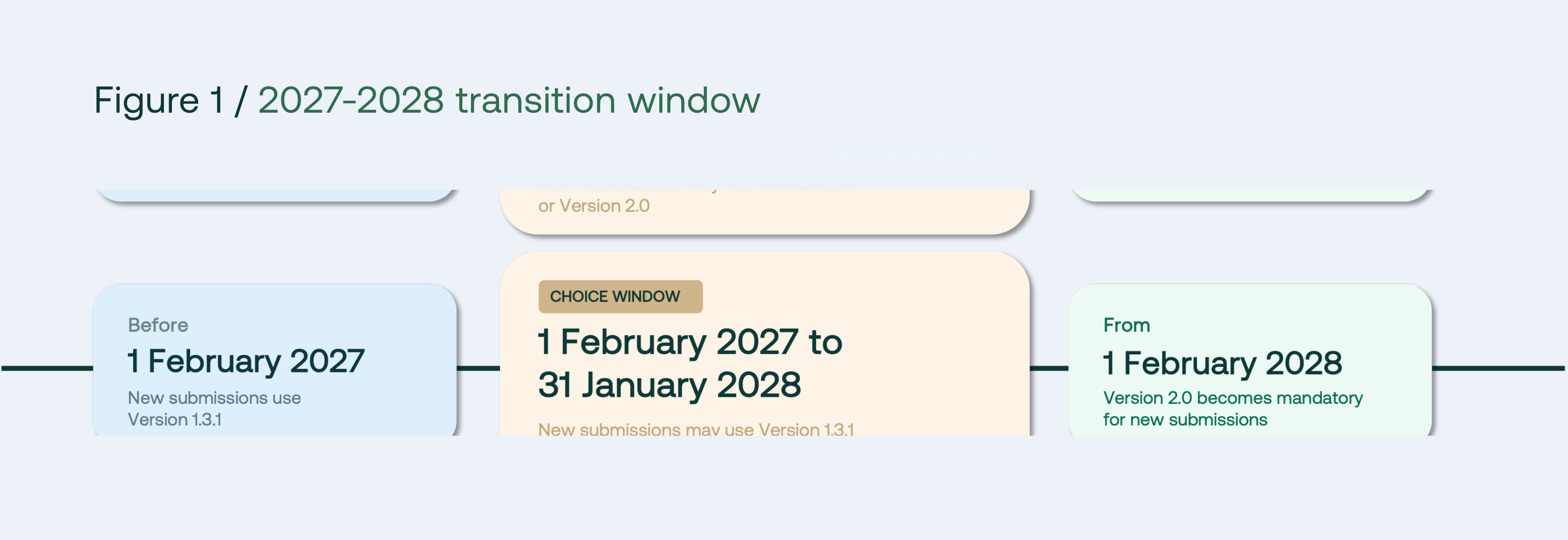
The SBTi’s current timeline creates three submission periods:
Existing validated targets remain valid through their current target cycle, subject to applicable review and update provisions. Under Version 1.3.1, companies must complete a mandatory review of their targets every five years. Version 2.0 replaces this review with fixed five year target cycles, each closed by an end-of-cycle assessment. [1][5]
This means the transition window creates a planning decision. It does not require every company to move immediately to Version 2.0.
Version 2.0 is a structural change. It places greater emphasis on implementation, evidence, reporting, and the conditions surrounding a company’s operations.
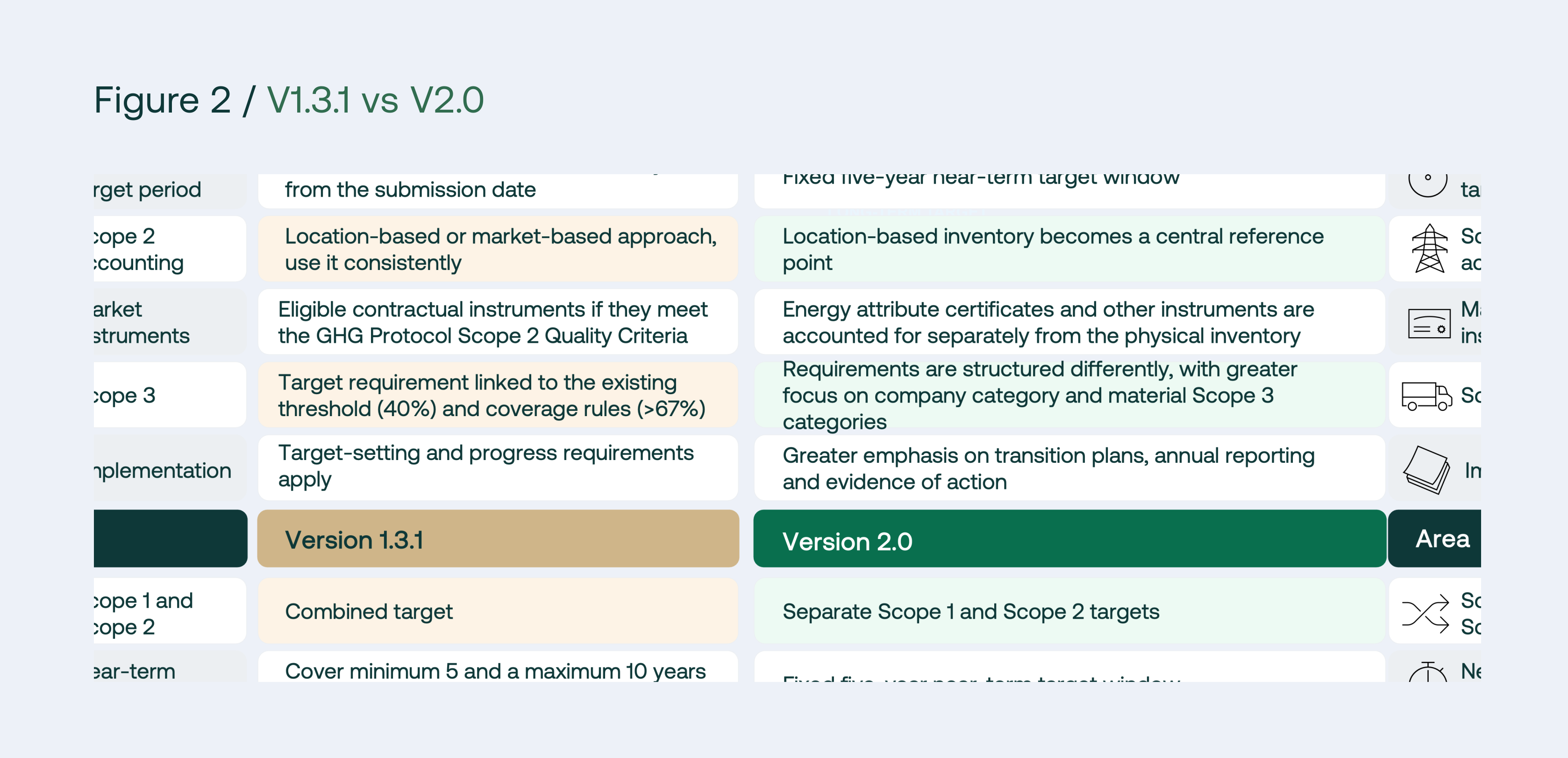
Version 1.3.1 allows companies to set a combined Scope 1 and Scope 2 target. Version 2.0 requires separate targets for these scopes. [2]
This reflects the different reduction levers involved. Scope 1 reductions may depend on fuel switching, process changes, or electrification. Scope 2 reductions may depend on efficiency, onsite generation, electricity procurement, and the way emissions are accounted for.
Version 1.3.1 allows a near term target period of between five and ten years from submission. Version 2.0 introduces a fixed five year near term target window, with a specific exception for a company’s first target under the new standard. [2]
Companies therefore need to consider their investment cycles and implementation capacity before choosing a submission route.
Under Version 1.3.1, companies can use a location based or market based approach, provided they apply it consistently. Under Version 2.0, the location based inventory becomes a central reference point. Energy attribute certificates and other instruments are accounted for separately from the physical inventory. [2][4]
This changes how companies should think about renewable electricity claims. Certificates may support certain low carbon electricity approaches, but they cannot replace physical emissions reductions in every target pathway. Under Version 2.0, qualifying instruments such as power purchase agreements and energy attribute certificates can still support target progress through the implementation hierarchy, provided they meet its integrity criteria, including geographic matching and a 15 year age limit for generation assets. [4]
Version 1.3.1 requires a Scope 3 target where Scope 3 represents at least 40% of total emissions, with near term targets covering at least 67% and long term targets at least 90% of Scope 3 emissions. Version 2.0 replaces these fixed coverage thresholds with a significance based approach. Category A companies must cover every Scope 3 category that represents 5% or more of categories 1 to 14 emissions, while Scope 3 targets are optional for Category B companies. [2][4]
The practical effect is greater attention to emissions sources that matter most for the company’s business model. This creates a strong reason to review Scope 3 boundaries, data quality, and category ownership before submission.
Companies can use Nexio Projects’ Scope 3 guidance to strengthen the link between emissions data and operational priorities.
Version 2.0 increases the emphasis on transition plans, annual progress reporting, and evidence of action. Category A companies face stronger requirements for transition planning, reporting, and limited assurance. Category B companies have more proportionate requirements. [2][4][6]
This is the central shift from target setting towards delivery. A target needs supporting governance, milestones, assumptions, dependencies, and evidence of progress.
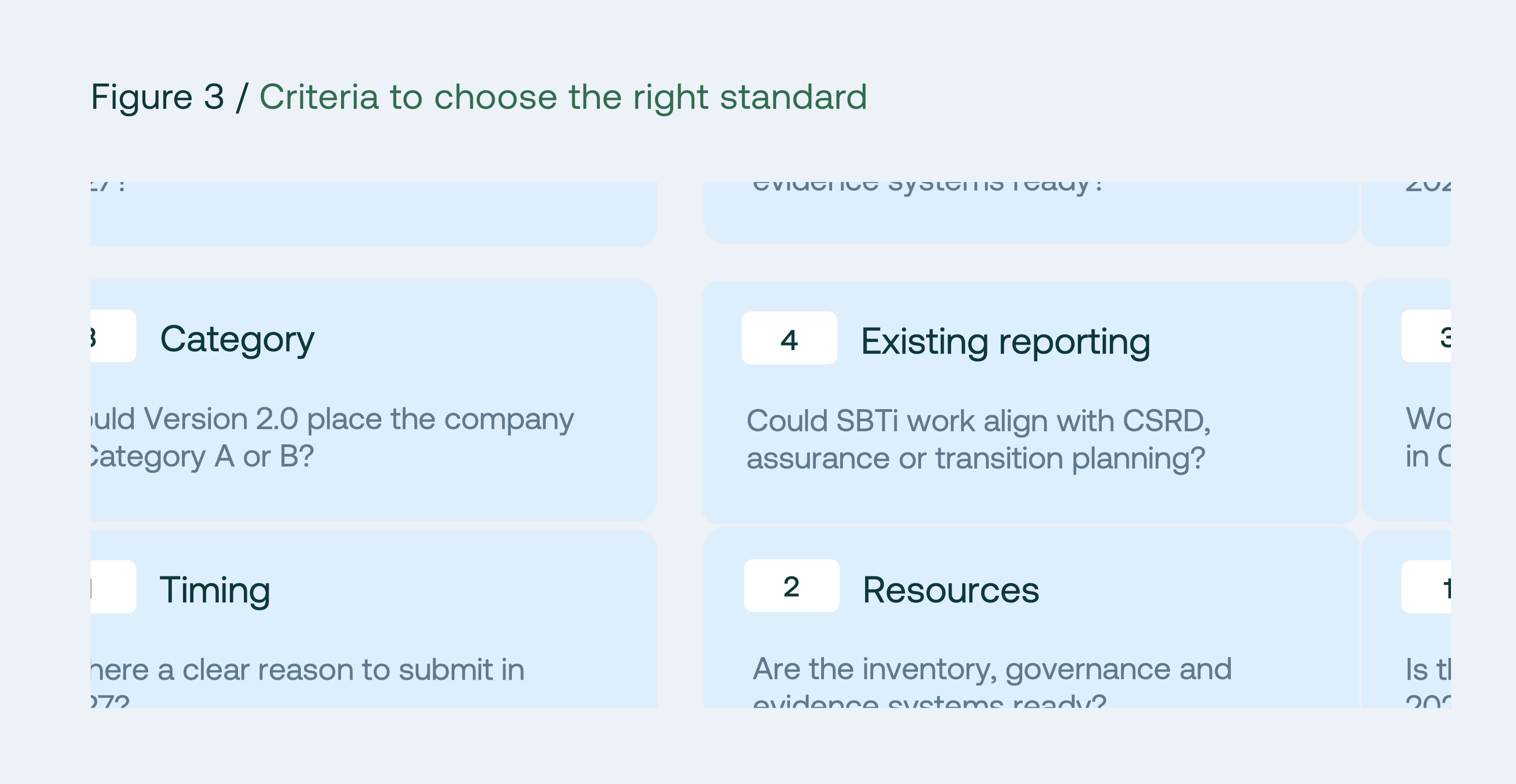
There are four areas that should guide the decision. These factors help companies choose a route based on their own readiness and future obligations.
Start with the business reason for submission.
Some companies face immediate pressure from banks, customers, investors, procurement teams, or commercial partners. Others have more flexibility and can use 2027 to build their baseline, governance, and evidence systems.
A clear submission reason may support Version 1.3.1 during the transition. A longer planning window may support Version 2.0.
Version 2.0 requires stronger internal capacity. Consider whether the company has:
A company with limited data and unclear ownership may face unnecessary rework if it submits before the foundations are ready.
Category A includes large companies in any country. It also includes medium sized companies in high income countries that meet relevant emissions, workforce, turnover, or balance sheet criteria.
Category B includes companies that do not meet the Category A criteria. This includes many smaller companies and certain medium sized companies in lower income or middle income countries. [2][4][6]
The category affects transition planning, annual progress reporting, assurance, Scope 3 expectations, and ongoing emissions responsibility.
A company should complete the Category A or Category B assessment before choosing its standard. Country context may change the outcome compared with the previous SME definition.
Companies already reporting under CSRD or similar requirements may have transition planning, governance, data controls, and limited assurance processes in place.
For these organisations, Version 2.0 may create useful alignment. The company can connect SBTi target setting with existing compliance processes and reduce duplicated work.
Companies without these systems may need to sequence their work differently. They can use Version 1.3.1 to meet an immediate need while building towards Version 2.0 over the current target cycle.
“Choosing Version 1.3.1 during the transition period does not remove the need to prepare for Version 2.0. It gives companies time to build stronger inventories, governance, assurance, and transition planning capabilities. This also means that you have a solid five years to become fully informed and prepared for the next review.”
Emile Catillon, Climate Consultant
Here are four scenarios to show how the decision may work in practice.
A medium sized company in a middle income or lower income country may qualify for Category B under Version 2.0, even if it did not qualify under the former SME route.
A textile manufacturer in Vietnam had 25,000 tonnes of Scope 1 and Scope 2 emissions, €120 million in turnover, 800 employees, and an €80 million balance sheet.
Under the Version 2.0 criteria, the company could qualify for Category B. The recommendation was to assess the company against the new criteria and consider Version 2.0 as a proportionate route. [2]
A company already reporting under CSRD or a similar framework may already have a transition plan, governance structure, data controls, and limited assurance.
In this case, Version 2.0 may fit the company’s existing processes. The additional requirements may be more manageable because the organisation has already invested in the relevant systems.
The decision still requires a detailed assessment. The company should check whether the existing transition plan and assurance approach meet the SBTi requirements.
A company without a complete GHG inventory, reliable baseline, transition plan, or assurance process may benefit from waiting for Version 2.0.
A rushed submission under Version 1.3.1 could create rework if the baseline changes later. New activity data, improved Scope 3 methods, acquisitions, or changes in calculation methods could require target recalculation and resubmission.
The recommendation would be to build the GHG inventory and internal capacity first, then submit under Version 2.0 in 2028. The SBTi itself encourages companies not to delay target setting, so this route should be a deliberate choice supported by a clear preparation plan, not a reason to postpone action. [4]
Companies starting this work can also use the SBTi: Your path to decarbonisation factsheet as a practical starting point.
A company may face pressure from a bank, investor, customer, procurement process, or market expectation.
If a validated target is needed before 2028, Version 1.3.1 may provide the faster route. The company can submit under the current standard while building assurance, transition planning, and implementation evidence.
This approach requires a clear plan for the next target cycle. A short term submission should not become a reason to delay the work required for Version 2.0.
An important exception is that a restructuring, merger, or similar material organisational change may affect the baseline and create a risk of resubmission. [2]
The experts explained that the SBTi remains a voluntary initiative. There is no general legal obligation for every company to set a science based target.
Business pressure can still make target setting necessary in practice. Banks, investors, customers, procurement requirements, and market expectations may create a strong commercial reason to submit. [1]
SBTi alignment also does not replace legal or regulatory compliance. Companies should assess their obligations in each applicable jurisdiction.
The live answer focused on three practical steps:
The experts explained that certificates alone cannot deliver the same result for location based electricity accounting. Companies need to examine the physical emissions profile and identify operational reduction measures. [1]
The experts answered that certificates would not be sufficient to prove renewable electricity under a location based approach.
They explained that certificates may support a low carbon electricity target framed around the percentage of low carbon energy consumed. They do not replace actual emissions reductions within the physical inventory. [1]
Companies should review the latest SBTi implementation guidance before finalising a target methodology.
The live example concerned a company that had set a target using a 2024 baseline and had since grown significantly through acquisitions.
The recommendation was to assess whether the acquisition creates a material organisational change. If so, the company may need to recalculate its emissions, establish a new baseline, and set a new near term target.
The company should also assess whether waiting to submit would reduce the risk of rework. [1]
The experts clarified that the baseline does not automatically change every five years.
The target is reviewed at the end of the target period. The company reassesses its progress, business conditions, and target requirements. The baseline remains unless a material change requires recalculation. [1]
This applies to targets set under Version 1.3.1. Under Version 2.0, each new target cycle starts from a fresh base year, using the most recent year with comprehensive emissions data. Companies moving to Version 2.0 for their next cycle should therefore expect the base year to be updated. [2][4]
The right SBTi strategy depends on the company’s timing, data maturity, category, existing reporting obligations, and stakeholder pressure.
Version 1.3.1 may suit companies that need a validated target during the transition. Version 2.0 may suit companies that are ready to connect target setting with transition planning, assurance, annual reporting, and implementation.
“Stakeholder, bank, customer, and market expectations can make target setting a business necessity. That is why companies should assess both the pressure they face today and their readiness for the requirements ahead.”
David Vazquez, Climate Principal Consultant
We are an international sustainability consultancy dedicated to guiding organisations from compliance to positive impact. We support companies with SBTi target setting, GHG inventories, validation, transition planning, and decarbonisation roadmaps.
Recognised in Verdantix’s Buyer’s Guide to Boutique ESG and Sustainability Strategy Services and named among the Netherlands’ best ESG consultancies by Consultancy NL, we are here to help you assess your readiness and choose a route your organisation can deliver.
Book a consultation with our climate team to review your baseline, category, submission timing, assurance readiness, and transition plan requirements.