

 The ROI Of Sustainable Practices
December 11, 2020


Most companies attempting their first CSRD disclosure find that internal capability runs out at exactly the wrong moment. The gap tends to appear not at strategy level, but at execution: when you need to translate a materiality map into ESRS-compliant disclosure language, or when your auditor asks for evidence trails your team hasn’t built yet.
That’s where the right consulting partner changes everything. But “ESG reporting support” means different things to different firms. Knowing what to ask for, and how to spot genuine end-to-end capability, protects you from discovering the gap halfway through a deadline-critical project.
“End-to-end” is an overused term. In genuine practice, it means a firm that stays with you from the first stakeholder interview to the moment your report clears assurance review.
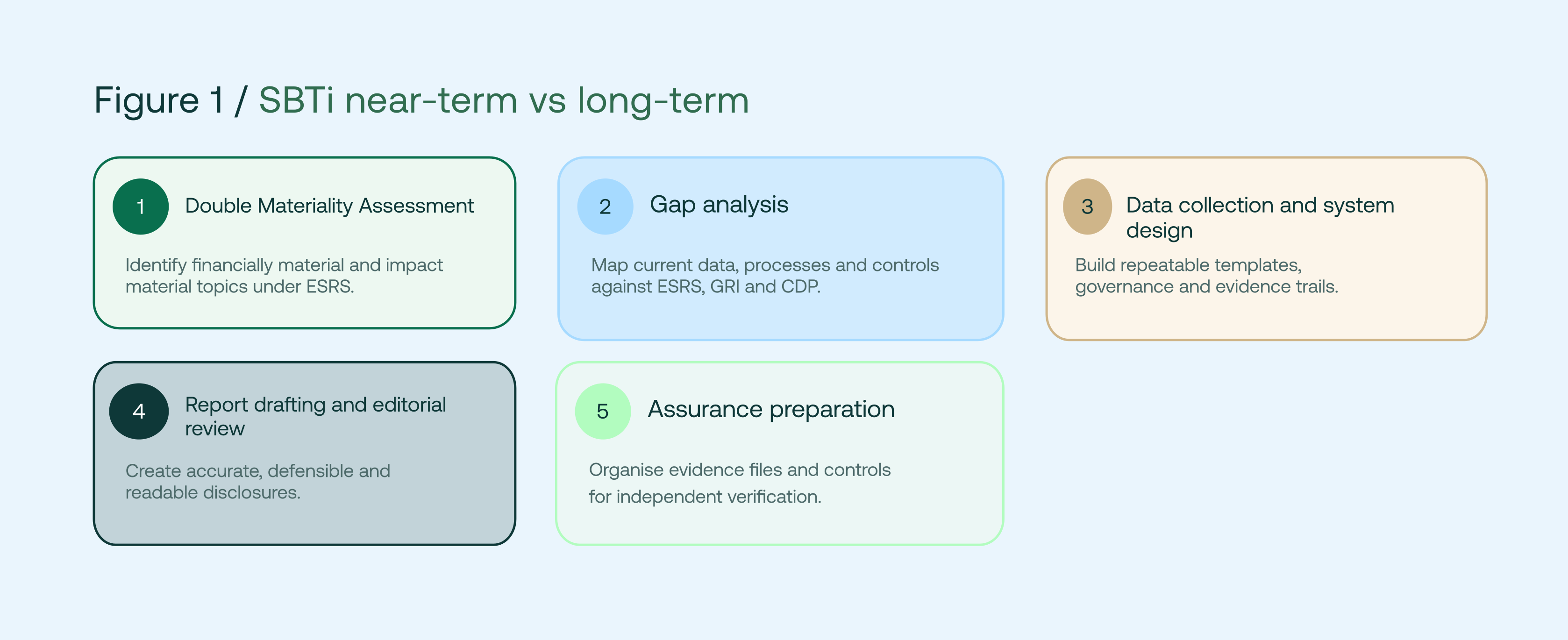
That covers five linked stages:
Identifying which sustainability topics are financially material and which are impact-material under ESRS. This is the statutory starting point for CSRD compliance.
Mapping your current data, processes, and controls against what each standard actually requires. A rigorous gap analysis identifies not only what’s missing but how long closing each gap will take.
Building the processes, templates, and governance structures your teams use to collect ESG data consistently across business units, geographies, and supplier tiers.
Writing the disclosure with language that’s accurate, defensible, and readable by investors and auditors alike.
Getting your data, evidence files, and internal controls ready for independent verification. This is where firms that only offer “advisory” leave you exposed.
Any firm can claim CSRD expertise in 2026. Here’s what distinguishes the ones worth engaging:
These questions cut through capability claims fast:
The current regulatory environment is shifting. CSRD’s Omnibus revision has deferred some requirements. The SEC has stepped back from ESG disclosure mandates. In the UK, investor groups are calling for lighter-touch TCFD requirements.
But investor, customer, and supply chain pressure has not retreated. Companies with clean, auditable ESG data attract better financing terms, retain customers who mandate EcoVadis scores or CSRD-aligned disclosure, and move faster when the next regulatory wave arrives.
The firms that treat today’s regulatory pause as an opportunity to build stronger data infrastructure will be the ones best positioned when the landscape firms up again. Read more in our reporting guide.
“Regulation may pull back, but investor expectation doesn’t. The companies investing in robust ESG reporting infrastructure now will be the ones best positioned when the next wave of requirements arrives.”
Nexio Projects completed 600+ projects across manufacturing, chemicals, pharmaceuticals, logistics, FMCG, and professional services since 2018. We cover the full reporting lifecycle: from DMA facilitation through ESRS gap analysis, data architecture design, report drafting, and assurance preparation.
Our senior consultants lead every engagement from scoping to sign-off. Because we work across GRI, CDP, CSRD, SBTi, and EcoVadis simultaneously, your data investment serves every disclosure you make.
It’s a consulting service covering the full sustainability reporting lifecycle: materiality assessment, data collection, drafting, assurance preparation, and stakeholder communication. It differs from point-in-time advisory, which typically addresses only one stage of the process.
Ask for completed CSRD implementation examples, specifically which ESRS standards they reported against, which assurance providers reviewed the output, and which sectors they’ve covered. Credible specialists answer with specifics.
Advisory shapes strategy and priorities. Reporting support translates strategy and data into regulatory-compliant disclosure that survives auditor scrutiny. You often need both, but they require different capabilities and should be scoped separately.
First-time reporters should budget 9 to 12 months for the full cycle. Companies with existing GRI or CDP processes can often compress this to 6 to 9 months.
Sector experience, multi-framework capability, transparent methodology, senior delivery team, named client references, and a clear assurance pathway.
If you’re preparing for CSRD disclosure or need to course-correct an existing project, Nexio Projects can assess your current position in a single working session. We bring the methodology, the sector knowledge, and the delivery track record to get you to assurance-ready on time.
Book your ESG reporting assessment with Nexio Projects today.


