

 Everything you wish you knew before writing a sustainability report
February 8, 2022


Welcome back to ‘Sustainability in Motion’. In this edition, we cover:

On 12 June 2026, the Science Based Targets initiative (SBTi) published the final version of its Corporate Net-Zero Standard V2.0. This is the most significant update to the standard since it launched in 2021. If your company has targets already, or is planning to set them, the timeline matters now.
42% of the new standard’s sections are entirely new. The remaining 58% represent modifications to the existing approach. Over 11,000 companies and financial institutions have adopted science-based targets since SBTi was founded in 2015.
The new standard introduces tiered requirements based on company size and geography.
Need help understanding what V2.0 means for your specific situation?

Connect with the Nexio Projects team →

We are at the halfway point of 2026, and EcoVadis submissions are gaining momentum. EcoVadis is one of those tools that looks straightforward until you are in it. The questions our community submitted ahead of the 16 June Help Desk session proved exactly that.
Zuzana Struharova and Nadia Scheepens answered your questions live and in writing, structured around the typical EcoVadis journey that Sustainability Managers go through. The full Q&A breakdown per step is in the article below. Here are some highlights.
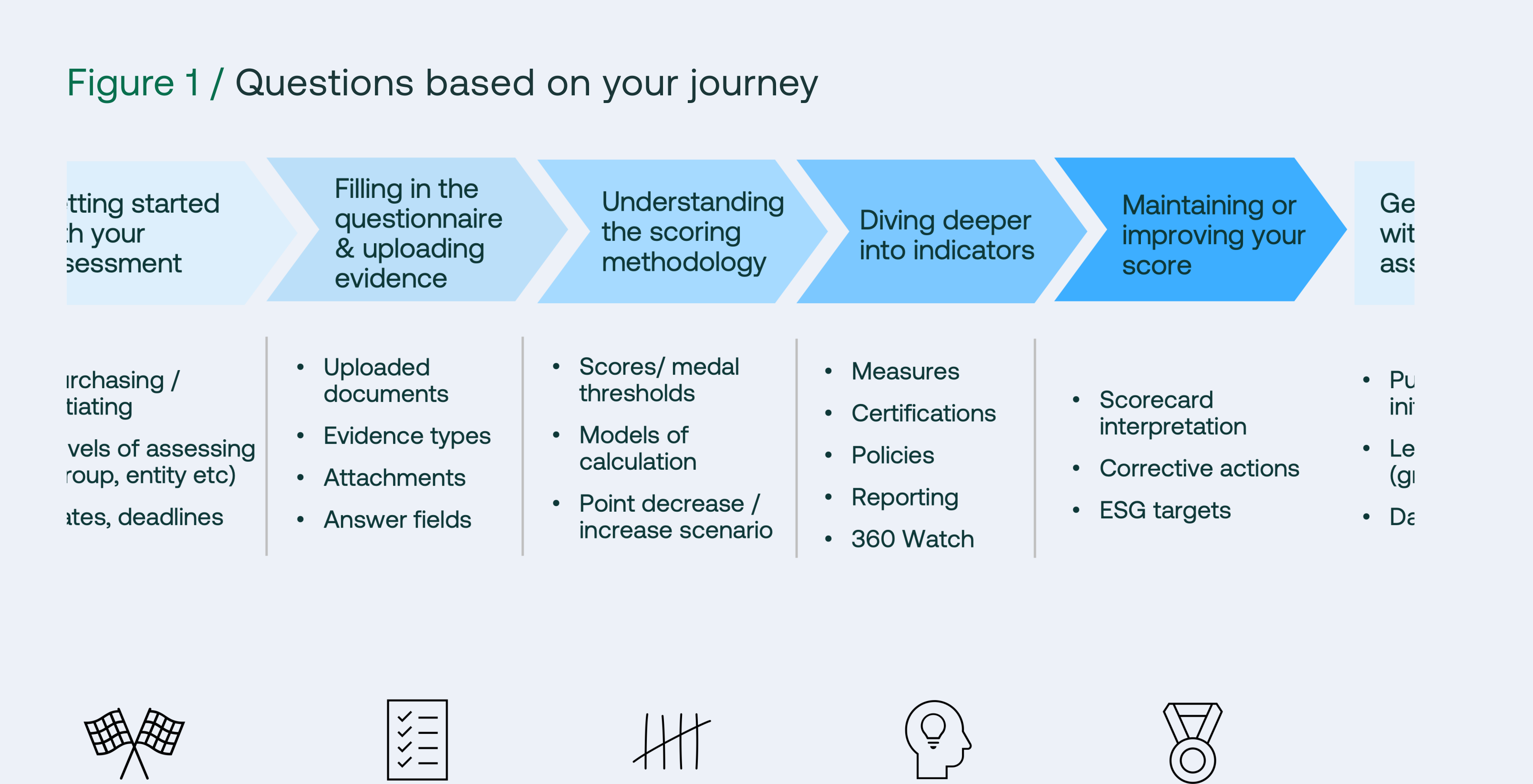
Read the full EcoVadis Help Desk Q&A →
Prefer to watch rather than read? The recording is now on demand: EcoVadis Help Desk: Live Q&A with our experts
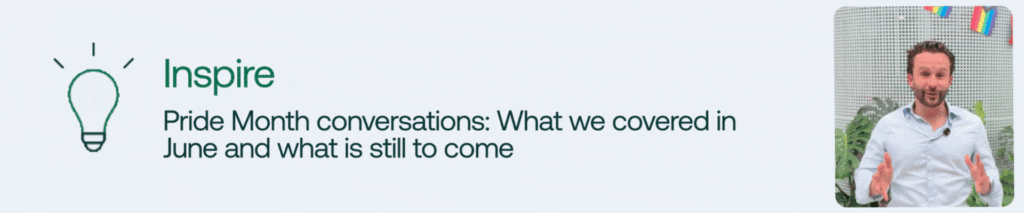
June at Nexio Projects was a month of speaking up. Across four videos published on LinkedIn, our team and leadership opened up on topics the ESG world tends to avoid: what inclusion actually costs when it is absent, what real allyship looks like from the inside, and why a company’s cultural footprint deserves the same rigour as its carbon one.
Marc Roodhuyzen de Vries, Co-CEO of Nexio Projects, opened the series with a personal reflection. Less than 1% of CEOs in the Netherlands are openly gay. Marc is one of them. He spoke about what it took to bring his full self to leadership.
Marc and David Vázquez explored the parallel between how companies measure environmental impact and how they measure human impact inside their organisations. The anchor: LGBTQ-inclusive companies outperformed the MSCI global equity benchmark by 3% per year over six years (Credit Suisse, via Marc’s LinkedIn). Markets are pricing inclusion in, the same way they learned to price carbon risk.
Watch the full discussion on YouTube.
The camera turned inward. Nexio Projects team members Joy Merle Stindt, David Vázquez, Cilia Keser Ingabire and Defne Yurddaş answered questions that actually matter: what Pride Month means to them personally. Around 40% of corporations planned to scale back Pride engagement in 2025, with zero planning to increase it. Nexio Projects went the other way.
Resilience in sustainability is a concept we revisit often. Biodiversity and diversity follow the same logic. In their short conversation, Marc and David explore this parallel — what it means for how organisations think about thriving systems, whether ecological or human.
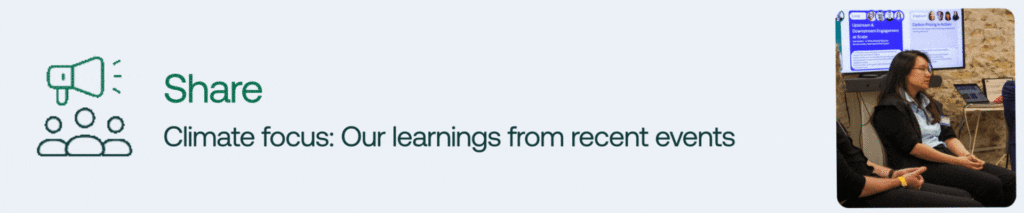
The most valuable conversations are happening among people willing to be honest about where they actually are. June confirmed that across two very different rooms on two different continents.
Anna A Ma, our Climate Director, hosted a panel at the Climate Choice Scope 3 Summit on moving beyond the perfect data trap, bringing together voices from Telefónica, the TfS Together for Sustainability initiative, and ClimateChoice. She also contributed to a second session on embedding carbon pricing into real procurement decisions.
A few themes that stayed with her:
The field is maturing, moving from frameworks to practice and from compliance to genuine business integration.
David Vázquez and Tim van Oijen were at the Pennsylvania Convention Center for CPHI Americas. David delivered a keynote on using Product Carbon Footprints to drive measurable business outcomes, and Nexio Projects joined a sustainability roundtable with senior pharma leaders.
The standout learning from the US: carbon data lands when it is tied directly to cost, supply risk, and customer expectations. That shift in framing made all the difference in the room.
Two cities, two audiences, one direction of travel. 🌍

14 July 2026, 3:00 PM CEST | 9:00 AM EDT | 6:00 AM PDT Supply chain emissions at scale: A real-world client story →
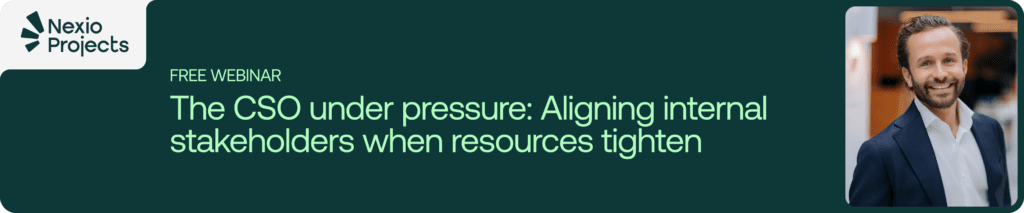
23 July 2026, 4:00 PM CEST | 10:00 AM EDT | 7:00 AM PDT The CSO under pressure: Aligning internal stakeholders when resources tighten →
Date TBD based on draft release The new ESRS: First look at the latest updates →
See the full webinars and events page for what is coming up.
Are you in need of support in any of these ESG topics? Nexio Projects experts are ready to talk. Book a discovery call now!


