

 2022 Update on The New CSRD
January 13, 2022


“Procurement is the lever where organisations have most of their supply chain impact, whether it’s from the environmental perspective, social labour and human rights, or even the ethical perspective”
Healthcare organisations cannot protect climate targets, business continuity or patient safety, through internal operations alone. A large share of the sector’s impact sits with suppliers, manufacturers, logistics providers, and other upstream partners.
Healthcare accounts for about 5% of global net emissions. Around 71% of its greenhouse gas emissions arise in the supply chain, while more than half of the sector’s climate footprint comes from energy use, primarily fossil fuel combustion.[1]
Procurement therefore becomes a strategic lever for connecting supplier decisions with environmental performance, human rights, resilience, and product quality.
Healthcare supply chains are complex, international, and dependent on continuous availability. Procurement teams must balance cost, quality, clinical performance, resilience, and sustainability. A sustainable procurement approach brings environmental, social, and ethical criteria into supplier selection, contracting, monitoring, and improvement.
The Sustainable Procurement Barometer identifies environmental and social sustainability as leading procurement priorities. [2] This is the foundation of supply chain sustainability in healthcare.
The environmental risks extend well beyond a healthcare facility’s buildings. They include energy use in manufacturing, emissions from logistics, water consumption, chemical pollution, waste generation, packaging, the carbon intensity of purchased goods and services, as well as physical climate risks such as heatwaves or floods, depending on geographical location.
Health Care Without Harm and Arup estimate that the healthcare supply chain produces most of the sector’s climate footprint. [1] Procurement teams therefore influence decarbonisation through product specifications, supplier requirements, contract terms, demand planning, and collaboration with manufacturers.
Environmental due diligence should begin with visibility. Teams need to understand which categories carry the greatest exposure, which suppliers are strategically important, and where reliable data exists. They can then set proportionate expectations for emissions management, resource efficiency, waste prevention, and environmental reporting.
Purchasing power can support market change. Aggregated demand, longer term relationships, and clear improvement expectations give suppliers more confidence to invest in cleaner production.
Healthcare products may be essential for patients while still carrying risks for workers and communities. These risks can include unsafe working conditions, forced labour, child labour, excessive working hours, restricted freedom of association, discrimination, and weak grievance mechanisms hat prevent employees from voicing their concerns.
Research on medical products in Norway found that 49.1% of products with a declared country of origin were mapped to countries assessed as high risk for labour rights abuses.[3] This does not prove an adverse impact. It does show why healthcare procurement needs supplier risk assessment, supplier engagement, escalation, and remediation. It also reinforces the role of human rights due diligence in responsible sourcing.
“The only way to achieve real impact is through collaboration with all of the stakeholders that you’re working with.”
ESG risk management becomes effective when broad commitments become defined processes for identifying risks, prioritising action, engaging suppliers, tracking performance, and communicating progress.
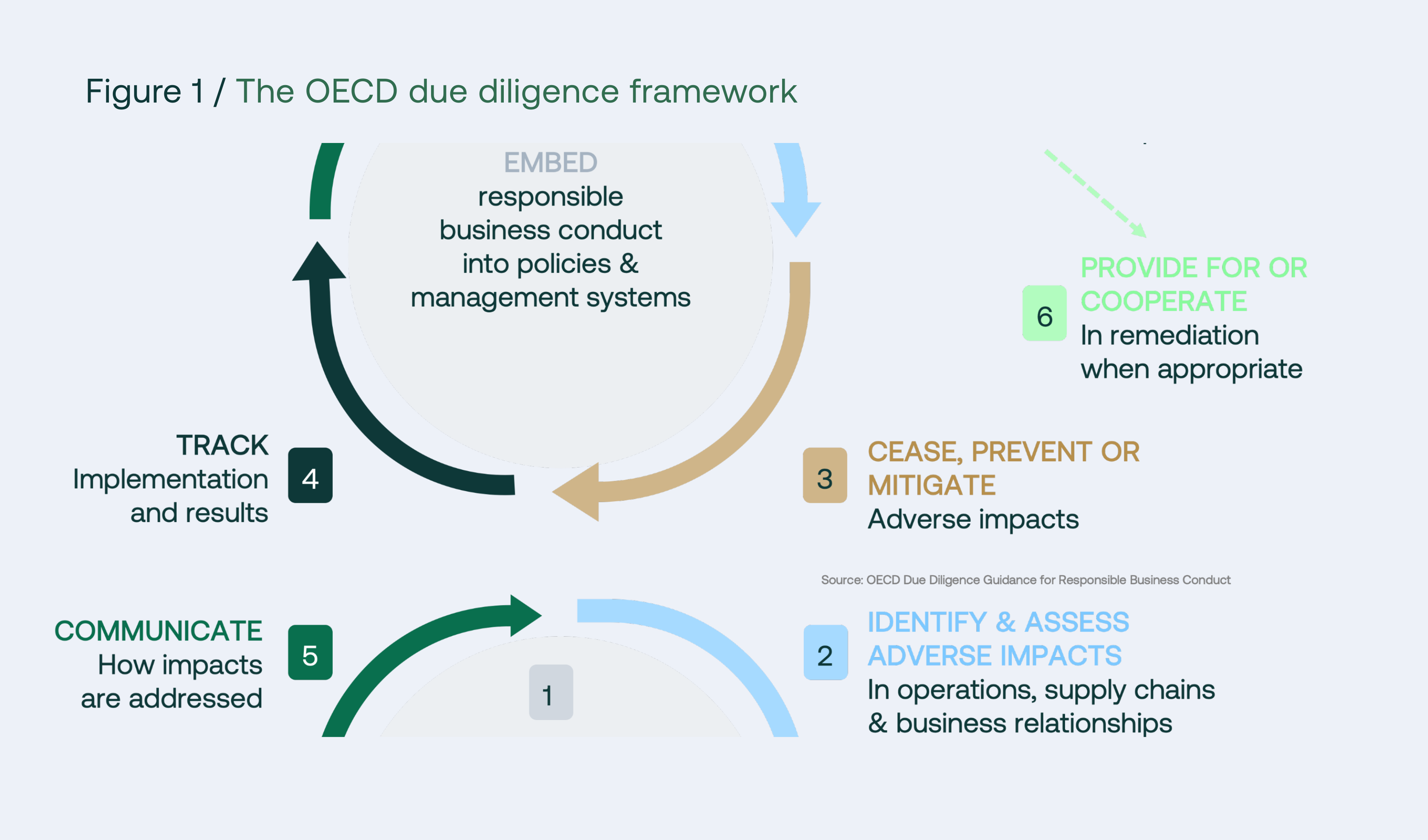
The OECD defines due diligence as a risk based process for identifying, preventing, mitigating, and accounting for how a company addresses actual and potential adverse impacts in its operations, supply chains, and business relationships.[4] The process is preventative, proportionate to risk, and connected to decision making.
This approach helps healthcare procurement apply scrutiny proportionately. A supplier declaration is only one input. Effective due diligence also requires action, monitoring, communication, and remediation where appropriate.
The relevant frameworks differ in legal design and scope. The CSRD is a reporting framework that requires in scope companies to disclose sustainability information, including how they manage material impacts and risks.[5]
The EU Corporate Sustainability Due Diligence Directive establishes a corporate due diligence duty for very large companies within its current scope. The European Commission states that the Directive covers adverse human rights and environmental impacts in companies’ own operations, subsidiaries, and chains of activities.
The framework has been amended by Directive (EU) 2025/794 and Directive (EU) 2026/470, so organisations should verify applicability against the current text and national implementation.[6]
Other legal drivers address specific risks or jurisdictions. The EU Forced Labour Regulation prohibits products made with forced labor from being placed on the Union market and applies from 14 December 2027.[7]
The US Uyghur Forced Labor Prevention Act creates a rebuttable presumption for certain goods linked to Xinjiang or entities on the UFLPA Entity List.[8]
France’s Duty of Vigilance law requires certain companies to establish and implement a vigilance plan covering serious risks to human rights, health and safety, and the environment.[9] Germany’s Supply Chain Due Diligence Act provides another national framework for corporate supply chain duties.[10]
These instruments do not create one universal procurement checklist. They do create a clear direction of travel: supplier due diligence, supply chain transparency, risk prioritisation, supplier engagement, evidence, and accountable governance.
The OECD Due Diligence Guidance for Responsible Business Conduct provides a practical framework for identifying, preventing, mitigating, and accounting for actual and potential adverse impacts across operations, supply chains, and business relationships.[4]
The framework presented here follows five connected steps:
Define responsibilities, decision rights, minimum supplier expectations, escalation routes, and links to enterprise risk management. Procurement, sustainability, legal, quality, compliance, and clinical stakeholders need a shared operating model.
Map the supply chain and prioritise risks based on product criticality, spend, sector, geography, manufacturing processes, supplier transparency, and potential harm. A critical supplier in a high risk category may require deeper assessment.
Use evidence based questionnaires, certifications, audits, grievance information, public records, and direct supplier engagement to understand risks. Where gaps arise, organisations can use corrective action plans, capability building, deadlines, contractual requirements, or commercial escalation.
Monitor supplier coverage, risk reduction, corrective action, emissions data, response rates, and unresolved issues. Setting targets and tracking KPIs helps organisations understand whether their actions are producing measurable progress.
Share relevant information with internal stakeholders and external audiences. Communication should explain the organisation’s approach, progress, remaining gaps, and how supplier relationships are being managed.
These steps form a continuous management cycle. Organisations should revisit them as supplier relationships, risks, regulations, and business priorities change.
According to Herman Grove, Senior Sustainability Consultant at Nexio Projects,
“For buying teams, this is a very easy way to understand how strong a company’s management system is off of a quick glance because they’ve completed this Ecovadis assessment.”
A mature system usually combines five components.
Collaboration is essential across all five components. Suppliers need clear expectations, reasonable requests, feedback, and support. Healthcare organisations also need to understand where their commercial practices may create pressure that undermines supplier improvement.
Once procurement teams have mapped supply chain risks and defined how they will prevent, mitigate, track, and communicate them, they need a practical way to assess supplier management systems and supporting evidence.
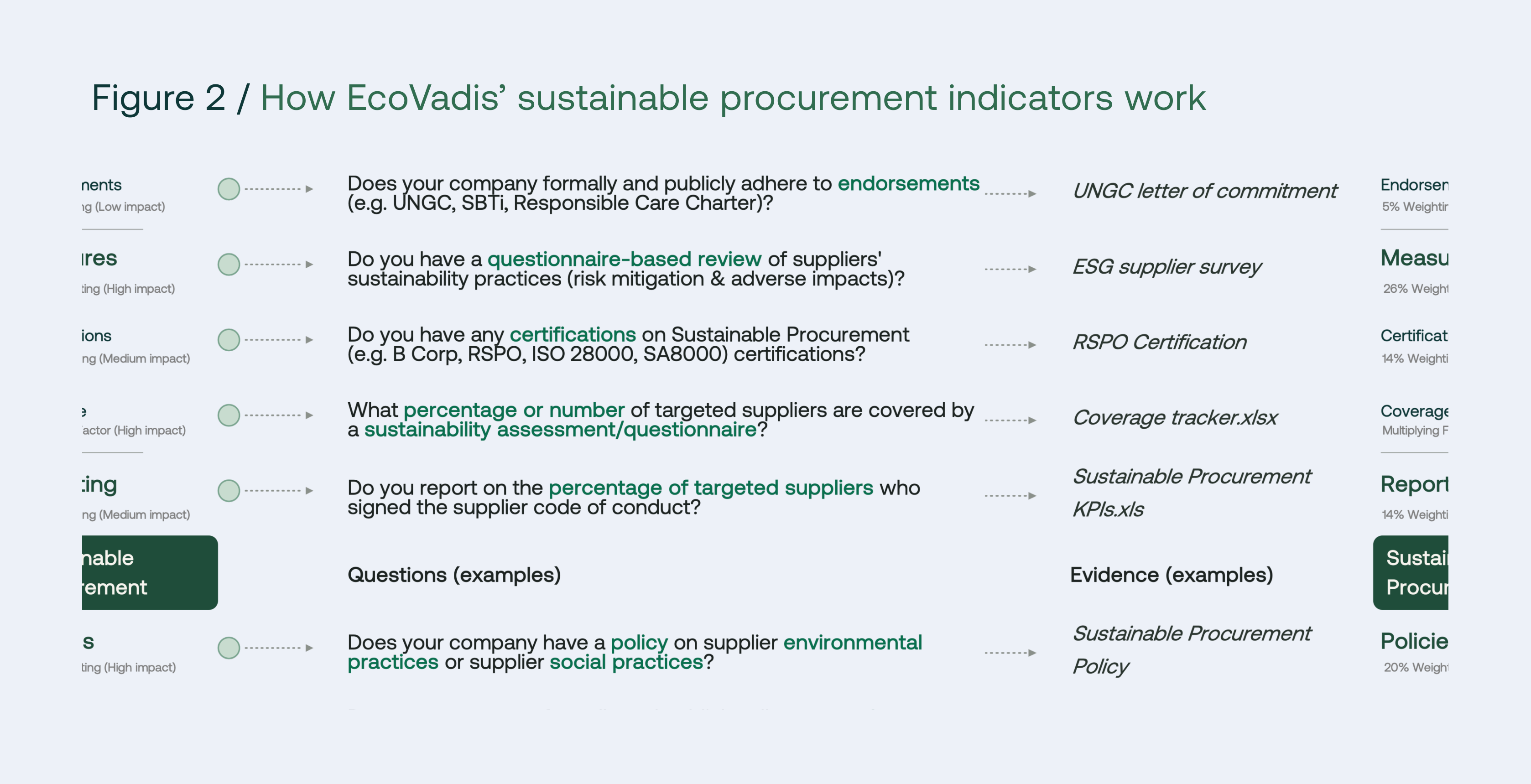
EcoVadis helps procurement teams structure this information across supplier policies, actions, certifications, coverage, and results. This gives organisations a clearer view of supplier maturity, helps identify due diligence gaps, and supports more focused supplier engagement and improvement.
EcoVadis assesses the quality of a company’s sustainability management system through Policies, Actions, and Results. Its methodology also considers management indicators such as endorsements, measures, certifications, deployment, reporting, and 360° Watch findings.[11]
This structure distinguishes stated intention, implemented process, and demonstrated outcomes. A code of conduct matters only when it is deployed, monitored, and supported by evidence.
Evidence quality matters. A score is stronger when policies are formalised, actions are implemented, coverage is clear, results are measured, and documents demonstrate that the system operates in practice.
For healthcare procurement teams, an assessment can structure supplier conversations, identify management gaps, and track improvement. Category specific due diligence remains necessary where healthcare risks require deeper investigation.
Sustainable procurement works when assessment leads to decisions. Teams should use findings to qualify suppliers, set improvement expectations, support corrective action, and inform sourcing choices. The value sits in the management cycle, not in the score alone.
Healthcare organisations can move from compliance to purpose when procurement becomes part of the sustainability journey. Strong programs connect the needs of business and the planet through clear expectations and constructive supplier relationships.
Nexio Projects helps organisations build practical procurement systems that connect ESG risk management, supplier engagement, and sustainability reporting. We support teams that want to move from compliance to positive impact while protecting the resilience and quality of essential healthcare supply chains.
As Herman Grove, Senior Sustainability Consultant at Nexio Projects, states:
“No progress can be accurately viewed unless you’re keeping KPIs, having targets set around them, and tracking how you’re doing against them or for your suppliers.”
We are an international sustainability consultancy dedicated to guiding organisations on their journey from compliance to positive impact. We provide expert support across sustainable procurement, supplier engagement, ESG risk management, and sustainability reporting.
Recognised as the best ESG consultancy in the Netherlands in 2025 by Consultancy NL and a Top Brand in sustainability by EUPD, we are here to help healthcare organisations turn supply chain due diligence into a system that improves decisions and supplier performance.
Contact Nexio Projects to assess your current sustainable procurement system and define the next practical steps for supplier risk, due diligence, and improvement.
[1] Health Care Without Harm and Arup. Health care’s climate footprint: How the health sector contributes to the global climate crisis and opportunities for action. September 2019. https://global.noharm.org/sites/default/files/documents-files/5961/HealthCaresClimateFootprint_092319.pdf. Accessed October 2026.
[2] EcoVadis and Accenture. Sustainable Procurement Barometer 2024: Transforming Procurement Into a Strategic Sustainability and Resilience Partner. February 2024. https://resources.ecovadis.com/whitepapers/sustainable-procurement-barometer-2024. Accessed October 2026.
[3] Alsup, M. et al. Country of Origin of Medical Products and Risk of Labour Rights Abuse. BMJ Open, 2024. https://pubmed.ncbi.nlm.nih.gov/38496098/. Accessed October 2026.
[4] OECD. OECD Due Diligence Guidance for Responsible Business Conduct. 2018. https://www.oecd.org/en/publications/oecd-due-diligence-guidance-for-responsible-business-conduct_15f5f4b3-en.html. Accessed October 2026.
[5] European Commission. Corporate sustainability reporting. Current page on the Corporate Sustainability Reporting Directive. https://finance.ec.europa.eu/financial-markets/company-reporting-and-auditing/company-reporting/corporate-sustainability-reporting_en. Accessed October 2026.
[6] European Commission. Corporate sustainability due diligence. Current page reflecting Directive (EU) 2024/1760 and amendments through Directive (EU) 2026/470. https://commission.europa.eu/topics/business-and-industry/company-law-and-corporate-governance/corporate-sustainability-due-diligence_en. Accessed October 2026.
[7] European Union. Regulation (EU) 2024/3015 on prohibiting products made with forced labour on the Union market. 27 November 2024. https://eur-lex.europa.eu/eli/reg/2024/3015/oj/eng. Accessed October 2026.
[8] U.S. Customs and Border Protection. Uyghur Forced Labor Prevention Act. Current guidance. https://www.cbp.gov/trade/forced-labor/UFLPA. Accessed October 2026.
[9] Légifrance. Loi n° 2017-399 du 27 mars 2017 relative au devoir de vigilance des sociétés mères et des entreprises donneuses d’ordre. 27 March 2017. https://www.legifrance.gouv.fr/jorf/id/JORFTEXT000034290626/. Accessed October 2026.
[10] Federal Ministry of Justice, Germany. Act on Corporate Due Diligence Obligations in Supply Chains. https://www.gesetze-im-internet.de/lksg/BJNR295910021.html. Accessed October 2026.
[11] EcoVadis. EcoVadis Ratings Scoring Principles: Framework for All Company Sizes and 360° Watch Findings. July 2026. https://resources.ecovadis.com/ecovadis-solution-materials/csr-rating-methodology-scoring-principles. Accessed October 2026.


