

 From DMA to datapoints: Revised ESRS implementation for CSRD
June 2, 2026


“The value of Scope 3 data lies in what it helps the business change, from supplier choices to product design and logistics.”
Scope 3 emissions cover indirect greenhouse gas emissions across an organisation’s upstream and downstream value chain. The GHG Protocol Scope 3 Standard divides these emissions into 15 categories, including purchased goods and services, capital goods, transportation, product use and end of life treatment. [2]
For procurement and supply chain teams, the difficulty of Scope 3 accounting is evident. Relevant information sits across purchasing systems, supplier records, logistics data, product specifications and sustainability questionnaires. The most important suppliers may also have limited capacity to calculate or share emissions data.
A strong Scope 3 emissions accounting programme should therefore produce more than a carbon figure. It should show where emissions sit, which suppliers matter most, what information is reliable enough for decisions and which actions can reduce emissions.
At Nexio Projects, we support organisations across Europe and international markets with expert led Scope 1, Scope 2 and Scope 3 inventories, supplier data improvement and decarbonisation roadmaps. Our climate team has supported more than 100 clients across more than 20 sectors, including manufacturing, logistics, shipping, professional services, and food and beverage. [1]
A supplier data collection exercise can seem disconnected from commercial priorities. Teams collect information that they are able to receive, then struggle to explain the implications of the result.
Scope 3 emissions accounting should start by defining the important questions the programme aims to answer. These may include:
The first stage is usually a screening assessment across relevant Scope 3 categories. Spend data can help identify potential hotspots quickly. Activity data, supplier specific information and product carbon footprint data can then improve the most material areas.
The purpose of the screening is prioritisation. It does not provide a final score on supplier performance but gives an indication where more work is needed.
Our article on how manufacturers can assess Scope 3 carbon footprints provides a useful category- based explanation for teams building this foundation. [4]
A practical programme should define success through operational measures. Examples include the percentage of priority suppliers providing usable data, the proportion of procurement spend covered, the number of suppliers with reduction plans and progress against category level targets.
These measures help procurement leaders explain the programme in commercial terms. They also give sustainability teams a stronger basis for improving the inventory each year.
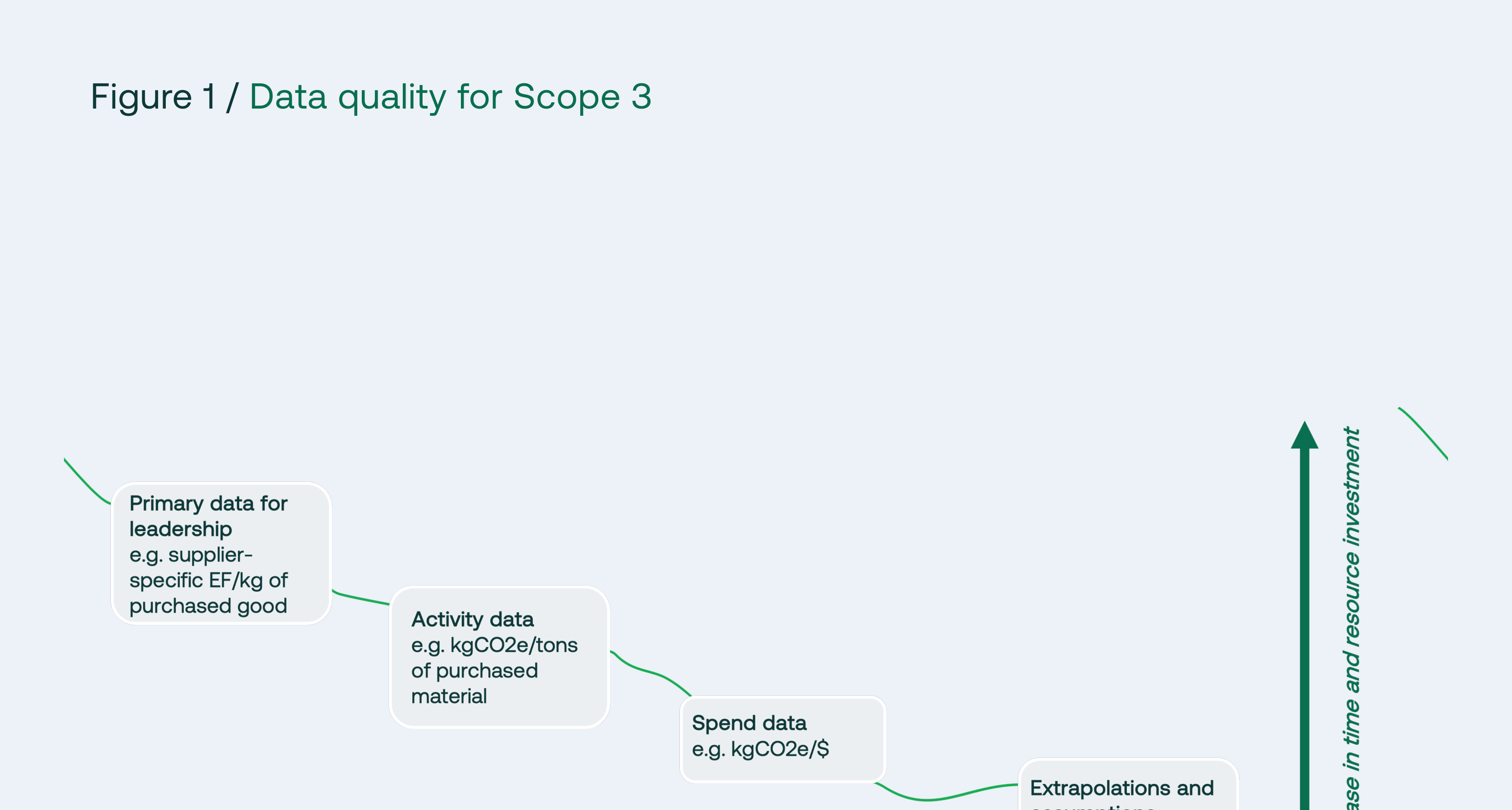
Data quality matters because it affects both the credibility of the inventory and the quality of the decisions that follow. The GHG Protocol recommends prioritising data collection for activities with significant emissions, strong reduction opportunities or high relevance to business goals. [2]
This guidance supports a staged data collection pathway.
Start with purchasing spend, supplier lists, product categories, logistics records and existing environmental information. Use this stage to identify likely hotspots and missing information.
Spend based estimates are often useful for an initial screening exercise. They can reveal where the organisation’s exposure may sit across categories and supplier groups.
For material categories, collect information such as mass, units purchased, distance transported, fuel consumed, energy used or waste treated. Activity data can provide a more specific view of the emissions associated with the organisation’s purchases.
This stage often requires coordination between procurement, finance, operations and suppliers. Data requests should specify units, reporting periods, organisational boundaries, product-specific emission factors where available, and supporting evidence.
Supplier specific data can provide greater detail for priority goods and services. It may include product carbon footprints, facility emissions, energy use, production volumes and reduction initiatives.
However, supplier data should be assessed rather than accepted automatically. A supplier may report a figure without explaining its boundary, allocation method, emission factors or level of assurance.
Our article on primary data and supply chain transparency explores why reliable supplier information improves the quality of product and corporate carbon assessments. [3]
A data quality review should record the source, age, geographic relevance, completeness and methodology of each data point. This creates an improvement plan for the next reporting cycle.
“A credible Scope 3 baseline does not require perfect data on day one. It requires a transparent method for improving the data that matters most.”
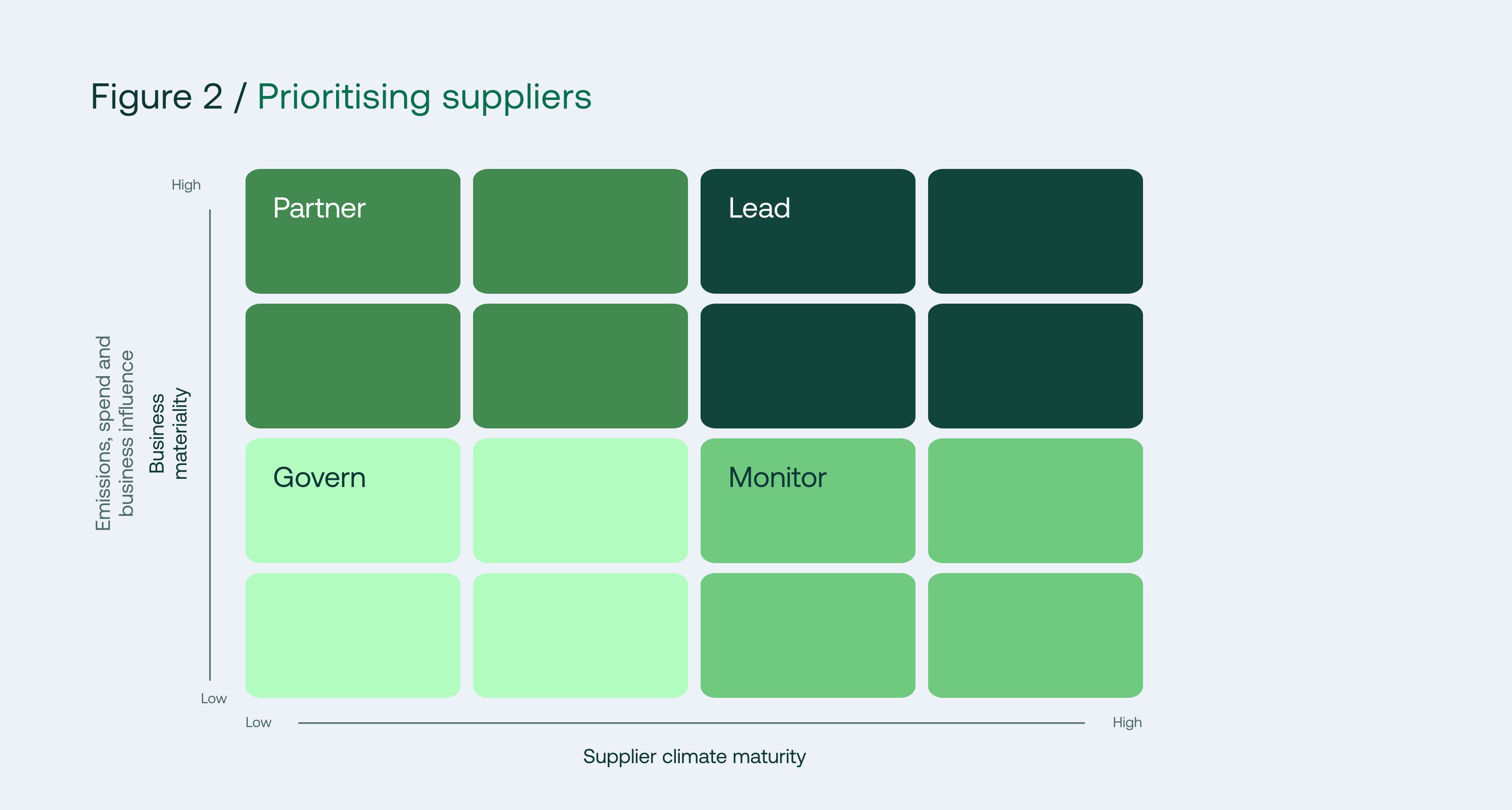
A common weakness in supplier programmes is treating every supplier in the same way. This creates unnecessary work for procurement teams and leads to time spent on non-strategic suppliers, while giving strategic suppliers too little attention.
Supplier prioritisation should combine four dimensions:
A high emissions supplier with strong business influence may require a joint reduction plan. A high emissions supplier with limited maturity may need training and structured support. A low emissions supplier may only need a baseline request and periodic monitoring.
This approach creates differentiated engagement pathways:
Work directly with the supplier on data quality, target setting, product changes and joint reduction projects.
Share methods, milestones and data expectations. Agree how both organisations will improve performance.
Request baseline information and maintain a light touch review process.
Include minimum expectations in sourcing, contracts, supplier reviews and renewal decisions.
The SBTi identifies supplier engagement targets as one method for addressing Scope 3 emissions. Where Scope 3 emissions represent more than 40% of combined Scope 1, Scope 2 and Scope 3 emissions, SBTi requires Scope 3 targets that collectively cover at least 67% of total Scope 3 emissions. [5]
A prioritised portfolio also creates a better experience for suppliers. The most important suppliers receive relevant requests, realistic timelines and support linked to their operating context.
A reduction roadmap should connect each material emissions source with a specific intervention. It should also show who owns the action and how progress will be measured.
Potential levers include:
The right lever depends on the emissions source and the organisation’s influence. A supplier engagement programme cannot substitute for product design changes. Procurement criteria cannot solve every logistics constraint. A roadmap should therefore bring procurement, R&Dng, operations, logistics, finance and commercial teams into the same implementation process.
The roadmap should contain five elements:
State the emissions source, calculation method, data quality and materiality.
Describe the operational change required from the organisation, the supplier or both parties.
Assign responsibility to a function and an accountable individual.
Separate immediate actions from medium -term projects and longer-term structural changes.
Track emissions, activity data, supplier participation, target coverage or financial performance.
For example, a roadmap for purchased goods may begin with supplier segmentation. It can then move to product level data collection, material substitution trials, supplier energy projects and revised sourcing criteria.
The Scope 3 starter kit provides further guidance on supplier engagement, data collection and procurement decisions. [9]
Circularity can also support reduction planning. Our article on using circular economy principles for practical Scope 3 reduction examines opportunities across materials, product design and end of life. [8]
A Scope 3 roadmap will not deliver reductions if it remains only within the sustainability team. Procurement provides the operating system for supplier expectations, commercial influence and performance reviews.
Implementation should connect the roadmap with existing processes:
The latest Nexio Projects article on structured supplier engagement programmes explains why segmentation, capacity building and continuous supplier management matter for Scope 3 progress. [7]
The engagement strategy and its progress should be reviewed at least annually. The review should compare emissions results with activity levels, supplier participation, data quality and business changes. This helps distinguish genuine reductions from changes caused by production volume, acquisitions, divestments or calculation methods.
Scope 3 emissions accounting creates value when it connects supplier information with decisions the organisation can influence. The work should begin with a focused screening exercise, improve data where it matters and prioritise suppliers according to emissions and business relevance.
The final output should be a managed programme. It needs defined actions, accountable owners, realistic timelines and measures that procurement and sustainability teams can review together.
This is how organisations move from compliance to positive impact. They build a sustainability journey that connects the needs of business and the planet through better data, stronger supplier relationships and practical decarbonisation.
“The goal is not a perfect supplier database. It is a management system that turns emissions insight into better sourcing decisions.”
We are an international sustainability consultancy dedicated to guiding organisations on their journey from compliance to positive impact. We provide expert support across GHG inventories, supplier engagement, climate strategy and practical reduction roadmaps.
Recognised in Verdantix’s Buyer’s Guide for Boutique ESG and Sustainability Strategy Services and named the Best ESG consultancy in the Netherlands in 2025 by Consultancy NL, we are here to connect supplier data with decisions that reduce emissions and strengthen supply chain resilience.
Book a discovery call to discuss your Scope 3 data gaps, supplier priorities and reduction roadmap.
[1] Nexio Projects. Corporate GHG Inventory. Accessed September 2026.
[2] Greenhouse Gas Protocol. Corporate Value Chain, Scope 3, Accounting and Reporting Standard. Electronic version of the 2011 standard. Accessed September 2026.
[3] Nexio Projects. Carbon footprints decoded: A collaborative approach to climate action. Accessed September 2026.
[4] Nexio Projects. Mastering Scope 3: Manufacturers’ guide to assessing carbon footprints. Accessed September 2026.
[5] Science Based Targets initiative. Standards and guidance. Accessed September 2026.
[6] Science Based Targets initiative. New Supplier Engagement Guidance: Unlocking the Power of Supply Chains for Decarbonization. Accessed September 2026.
[7] Nexio Projects. 9x more likely to hit your Scope 3 targets: The supplier engagement advantage. Accessed September 2026.
[8] Nexio Projects. Bridging the gap: Practical implementation of Scope 3 and circular economy. Accessed September 2026.
[9] Nexio Projects. The Scope 3 starter kit: A simplified guide for success. Accessed September 2026.


