

 Supply chain emissions: The hidden impact of your carbon footprint
August 19, 2025


The question of whether science-based targets deliver business value is no longer a matter of opinion. In early 2026, the Science Based Targets initiative (SBTi) published a comprehensive impact report. It draws on a survey of 171 companies and a literature review of 22 academic studies and quantifies the competitive returns from validated target setting across five dimensions: strategy, reputation, finance, supply chain, and climate performance.
The findings are unambiguous. Nine in ten companies with validated science-based targets report a positive overall impact on their organisations. For the executives still treating target-setting as a future agenda item, the more relevant question is what is being foregone in the meantime.
This article draws on the SBTi’s findings and Nexio Projects’ client experience to set out what the data shows, and what it means for organisations yet to commit.
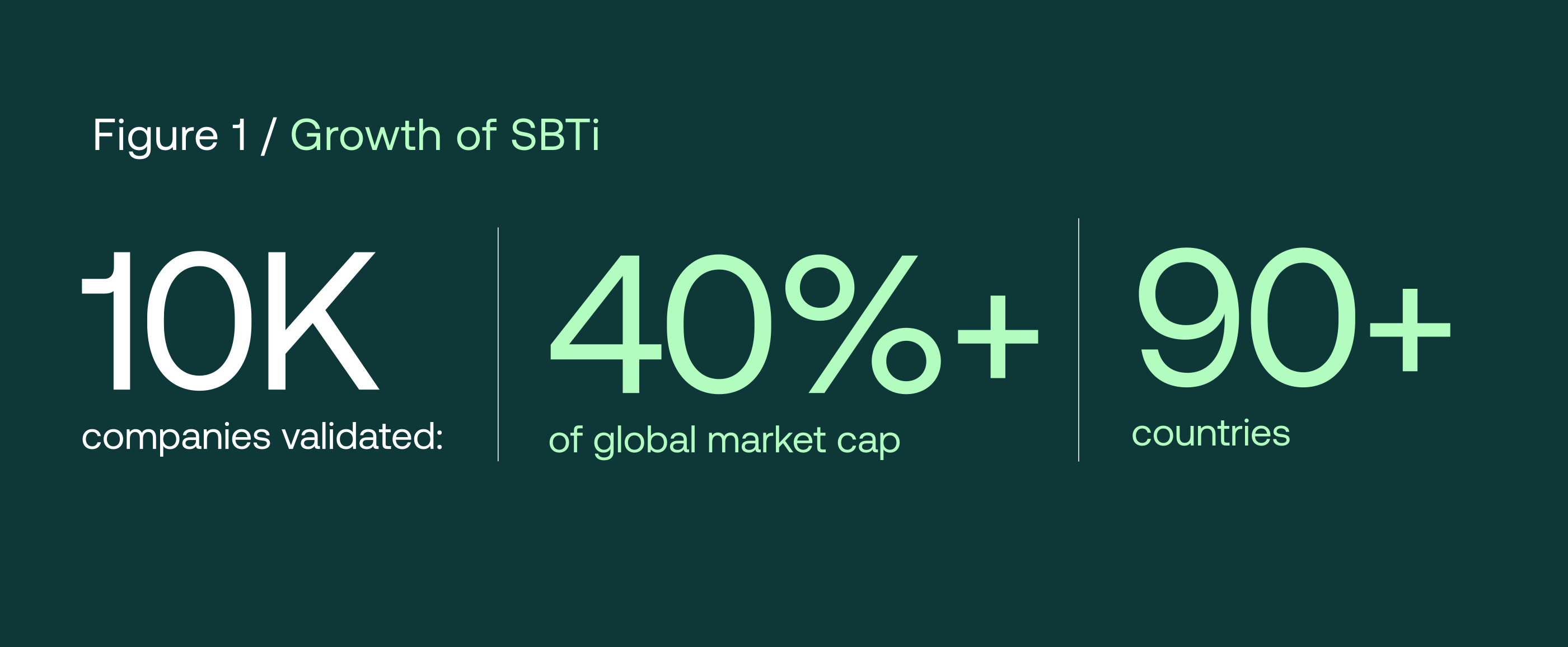
In January 2026, the SBTi announced that 10,000 companies had achieved validated science-based targets. Those companies now represent more than 40% of global market capitalisation and span over 90 countries.
That milestone matters beyond its symbolism. When a critical mass of peers, competitors, customers, and suppliers operate to a validated climate standard, the commercial and relational pressure on those outside it increases. The question for any executive benchmarking their organisation against sector peers is no longer whether SBTi adoption is mainstream, it clearly is, but whether the organisation can afford to remain outside that group.
The SBTi Impact Report 2025 measured business impact across five dimensions. The results are consistent and decisive across all five.
Eighty per cent of surveyed companies said science-based targets improved their strategic cohesion and long-term vision. Seventy-one per cent reported improved resilience against future regulatory changes.
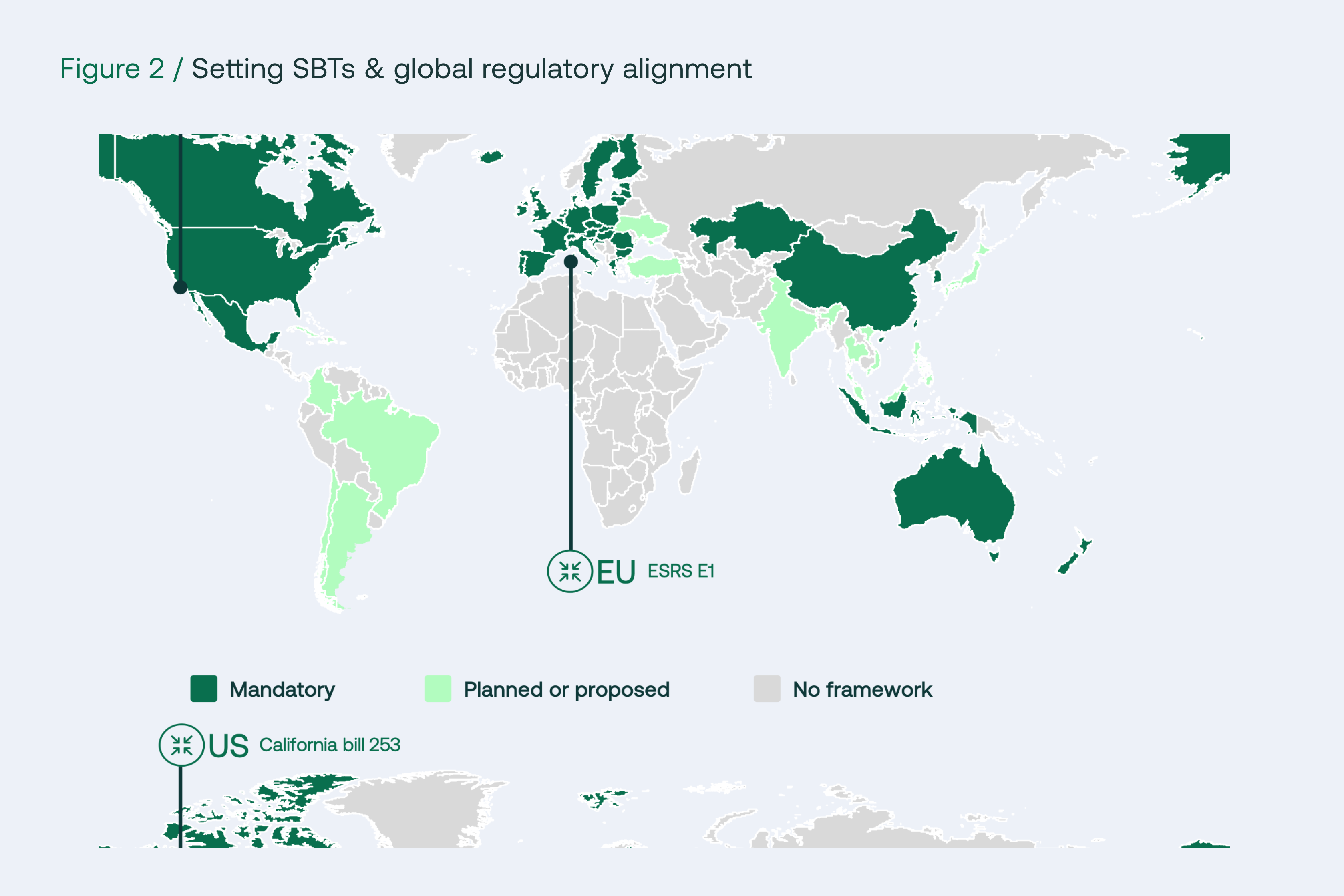
That regulatory resilience dimension is directly relevant to the 2026 regulatory landscape. The CSRD requires companies to disclose climate targets and explain their alignment with the Paris Agreement. ESRS E1, which governs climate-related disclosures, expects companies to demonstrate that their targets are science-aligned. An SBTi-validated target satisfies this requirement with external credibility. Companies that have already set validated targets are operationally ahead of those scrambling to retrofit a climate target into an ESRS E1 disclosure for the first time.
Seventy-four per cent of companies said science-based targets helped them align with supply chain and customer requirements.
The logic is direct. When a company has a validated SBTi target, the decarbonisation expectation cascades. Supplier engagement becomes structured rather than ad hoc, and the company moves from being a passive recipient of customer ESG queries to being an active anchor in its value chain’s net-zero transition.
For any company whose enterprise customers are beginning to request data from suppliers to include in their Scope 3 inventories, conduct procurement ESG assessments, or require climate commitments as a condition of contract, this dimension has an immediate commercial translation.
Almost all surveyed companies (95%) reported a positive reputational impact from target setting. Three in four reported improved credibility within their sector and the broader business ecosystem.
These are not soft metrics. Investor perception directly affects cost of capital. Sector credibility affects commercial relationships, partnership opportunities, and talent attraction. A validated SBTi target provides independent evidence of climate ambition, something that a self-declared net-zero commitment, however detailed, cannot replicate.
Sixty-seven per cent of surveyed companies also reported a positive impact on consumer perception and brand trust. For B2B companies whose customers face their own CSRD or procurement sustainability obligations, this may translate directly into contract renewals and meeting supplier qualification criteria.
“A validated SBTi target is increasingly a financing variable. Better loan terms from European banks, reduced stock price volatility, and stronger investor confidence are outcomes that belong on a CFO’s agenda, alongside IRR and cost of capital.”
This is the dimension that warrants the most attention from finance leadership.
Seventy-six per cent of companies with validated targets reported a positive impact on investor confidence. That finding alone is significant. The financial impact extends further: analysis cited in the report from the European Central Bank shows that European banks are offering better loan terms to companies with validated climate targets.
Companies without validated targets are, in some instances, accessing more expensive debt compared to organisations that have set science-based targets. For organisations with significant financing needs or refinancing events on the horizon, this differential is material.
Academic research cited in the report also shows reduced stock price volatility among companies with validated targets, a finding consistent with the view that investors price climate-related risk more favourably where it is actively managed and externally validated.
Ninety per cent of surveyed companies said target-setting had positively impacted their climate ambition. Eighty-six per cent reported a positive impact on their pace of decarbonisation.
Multiple academic studies confirm this in aggregate: companies with validated targets reduce absolute and intensity emissions faster than those without. The effect is strongest when validated targets are paired with externally assured emissions data.
The financial implication of that faster pace is also quantified. Research referenced in the SBTi report finds that companies initially invest 60–64% more on climate initiatives annually in the short term, but that this generates estimated annual savings of 17–19% in CO2 emissions and 22–33% in costs over time.
The SBTi’s Corporate Net-Zero Standard version 1.3 was updated in September 2025. A draft version 2.0, released for second public consultation in November 2025, proposes tightening requirements for Scope 3 emissions, introducing enhanced validation and reporting, and providing more actionable guidance for companies in emerging economies.
Companies that commit now are working with a clear, current standard. Those that delay face the prospect of committing under a more demanding version 2.0, and risk falling further behind peers who have had validated targets in place for two or three years by the time they begin.
The SBTi also introduced expanded public target status categories in December 2025. The categories “active,” “updated,” “expired,” and “archived”, were made straightforward for investors, customers, and partners to identify which companies are delivering on climate commitments and which are not.
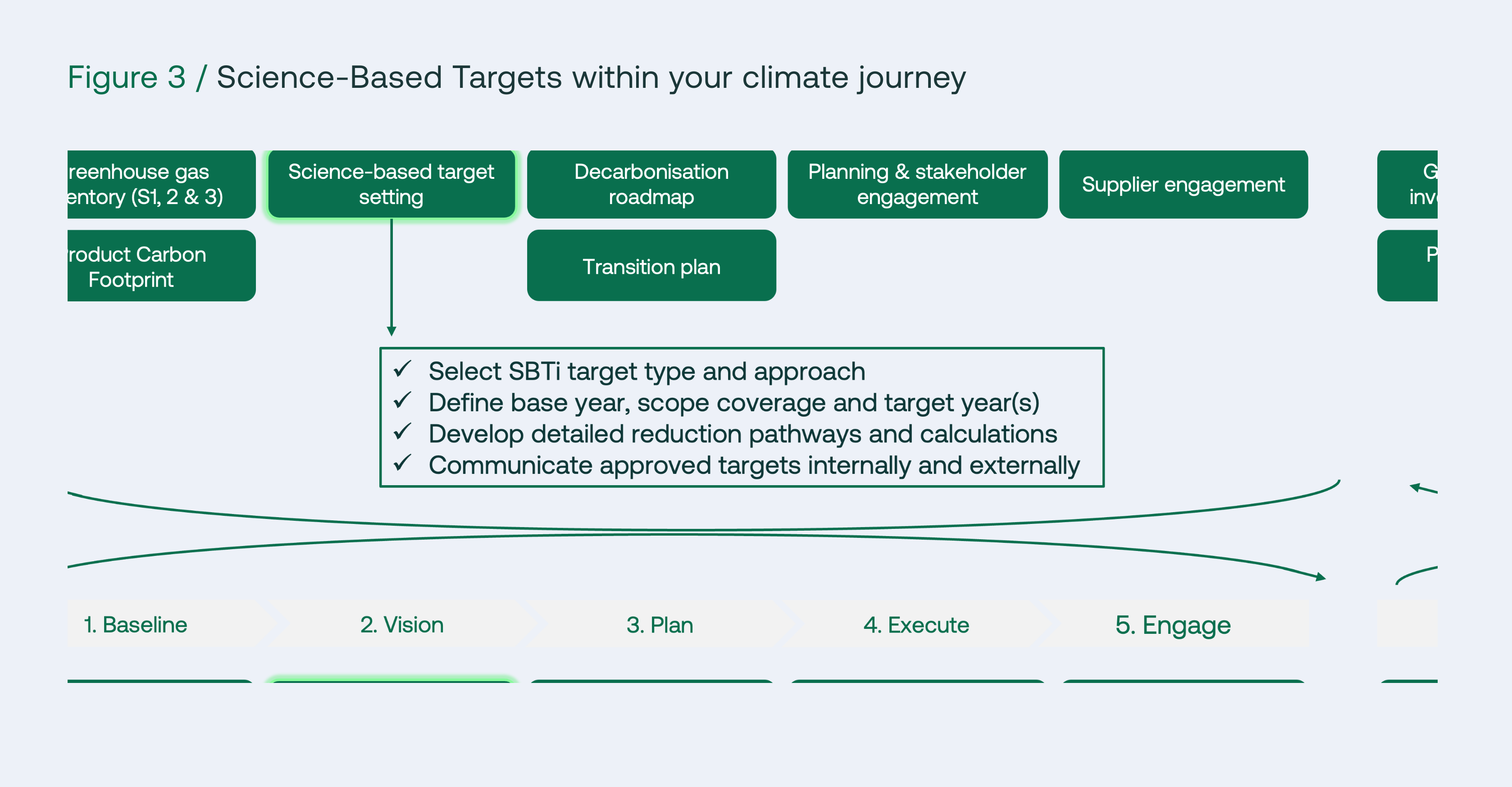
The Nexio Projects team works with companies at every stage of the SBTi journey, from initial carbon footprint measurement through to target setting, validation, and the decarbonisation roadmap that follows. Nexio Projects also supports organisations to obtain a clear understanding of the competitive returns they will most likely obtain if they set science-based targets.
Download our SBTi factsheet that explores the full journey.

The pattern the Impact Report describes is consistent with what the team observes. The companies that move from compliance-driven reporting to a validated science-based target consistently find that the target becomes a strategic organising principle, clarifying capital allocation, supplier engagement priorities, internal accountability, and investor communications simultaneously.
The carbon footprint is where this journey begins. Without a credible Scope 1, 2, and 3 baseline, there is no foundation for a science-based target. For companies earlier in this process, establishing that foundation is the immediate priority.
Sustainability ambition and business performance are not in tension. The SBTi Impact Report 2025 provides the clearest evidence yet that validated climate targets deliver measurable returns across every dimension a board meeting covers: strategy, supply chain, reputation, financing, and operational efficiency.
At Nexio Projects, connecting the needs of business and the planet is not a tagline. It is the practical logic behind every science-based target engagement. The data now confirms what that work produces.
“Ten thousand validated targets represent a competitive standard, not an aspiration. The companies still treating SBTi as a future agenda item are benchmarked against peers who have had validated targets, structured Scope 3 programmes, and measurable financing advantages for two or three years already.”
Nexio Projects helps organisations combine rigour with pragmatic delivery. We’re ecognised as a Top Consulting Firm by Consultancy.nl and a top boutique ESG and sustainability strategy consultancy by Verdantix. Our climate experts will support you at every stage of decarbonisation.
Ready to establish your carbon footprint baseline and set a science-based target? Contact the Nexio Projects team to start the conversation.
Sign up to our newsletter to get SBTi updates, decarbonisation best practices and more.
(1) SBTi. (2025). The Impact of Setting Science-Based Targets on Businesses. Science Based Targets initiative. Available at: https://sciencebasedtargets.org/the-impact-of-setting-science-based-targets-on-businesses (Accessed: March 2026).
(2) SBTi. (2026, January 22). “SBTi celebrates 10,000 company validations.” Science Based Targets initiative. Available at: https://sciencebasedtargets.org/news/sbti-celebrates-10000-company-validations (Accessed: March 2026).
(3) SBTi. (2025, September). Corporate Net-Zero Standard, Version 1.3. Science Based Targets initiative. Available at: https://sciencebasedtargets.org/resources/files/Net-Zero-Standard.pdf (Accessed: March 2026).
(4) ESG Today. (2026, January). “SBTi Passes 10,000 Companies with Validated Science-Based Climate Targets.” Available at: https://www.esgtoday.com/sbti-passes-10000-companies-with-validated-science-based-climate-targets/ (Accessed: March 2026).
(5) Nexio Projects. (2025). “Driving decarbonisation: Setting science-based targets to cut your GHG emissions.” Available at: https://nexioprojects.com/driving-decarbonisation-setting-science-based-targets/ (Accessed: March 2026). (URL to be confirmed with Marketing Team.)
(6) Nexio Projects. (2025). “Proposed changes in SBTi Net-Zero Standard version 2.0.” Available at: https://nexioprojects.com (URL to be confirmed with Marketing Team.)
(7) Nexio Projects. (2025). “Why get support with your corporate carbon footprint?” Available at: https://nexioprojects.com/why-get-support-with-your-corporate-footprint/ (Accessed: March 2026).
(8) Nexio Projects. (2026). SBTi: The Path to Decarbonisation [factsheet]. Available at: https://nexioprojects.sharepoint.com/sites/MarketingTeam/Shared%20Documents/12%20Dapper%20Collaboration/2026/Video%20ads/SBTi/SBTi%20The%20path%20to%20decarbonisation.pdf (Accessed: March 2026).


