From ESG to ROI: Applying the 4Cs to unlock business value
From compliance challenges to purpose-led performance with ESG’s business value
Marc Roodhuyzen de Vries
Co-CEO & Managing Partner
10 min read
“Sustainability stops being a cost centre the moment you treat ESG as a strategic lens for decisions, not a reporting exercise.”
Navigating the ESG compliance jungle
From CSRD, ESRS and EU Taxonomy to ISSB, GRI, TCFD, CDP, EcoVadis and B Corp, the ESG landscape has become a dense forest of regulations, standards and frameworks. Many organisations now find themselves spending more time decoding acronyms than focusing on their sustainability performance. At the same time, regulators are tightening disclosure rules, investors are demanding better data, and customers expect credible proof of impact. The question for most leadership teams is no longer “Should we do something on ESG?” but “Where do we start, and how do we avoid getting lost in the compliance jungle?”.
How can you assess ESG maturity?
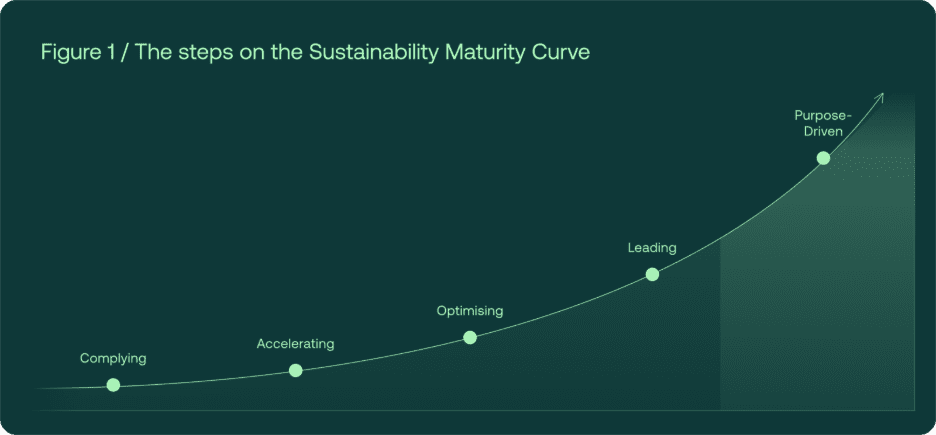
To move towards real impact, it helps to understand your organisation’s ESG capabilities and maturity. As Nexio Projects, we operationalise this phenomenon by placing organisations on a sustainability maturity curve, based on certain criteria such as their management systems, long-term goals and internal capacity.
The five stages of ESG maturity
Complying (Stage 1) Organisations take a largely reactive approach, focused on meeting minimum legal requirements and responding to incoming questionnaires from customers, investors or banks.
Accelerating (Stage 2) Companies start to build a more complete picture of their impacts, articulate the business case for sustainability, and move beyond ad‑hoc initiatives.
Optimising (Stage 3) A robust ESG management system is in place, material topics are defined, and efforts are coordinated centrally to improve performance across key impact areas.
Leading (Stage 4) Sustainability is embedded across the value chain, including suppliers and partners, with a clear link to innovation, risk management and competitive advantage.
Purpose-driven (Stage 5) People and planet sit alongside profit as core business drivers, with ESG fully integrated into strategy, governance, operations and culture.
Where you are on this curve determines which actions create the most value today and which frameworks or disclosures are truly strategic rather than just “nice to have”.
Why positioning and tailoring matter
Trying to jump from “Complying” straight to “Purpose‑driven” often leads to over‑promising, under‑delivering and confusion across stakeholders. Instead, organisations need tailored roadmaps that reflect their sector, footprint, stakeholder expectations, and internal capabilities.
The goal is not to adopt every framework, but to:
Start with what is mandatory in your jurisdictions
Select complementary frameworks that match your main stakeholders (for example, GRI for multi‑stakeholder transparency, ISSB for capital markets).
Build an implementation plan that turns reporting requirements into operational improvements and clear business value.
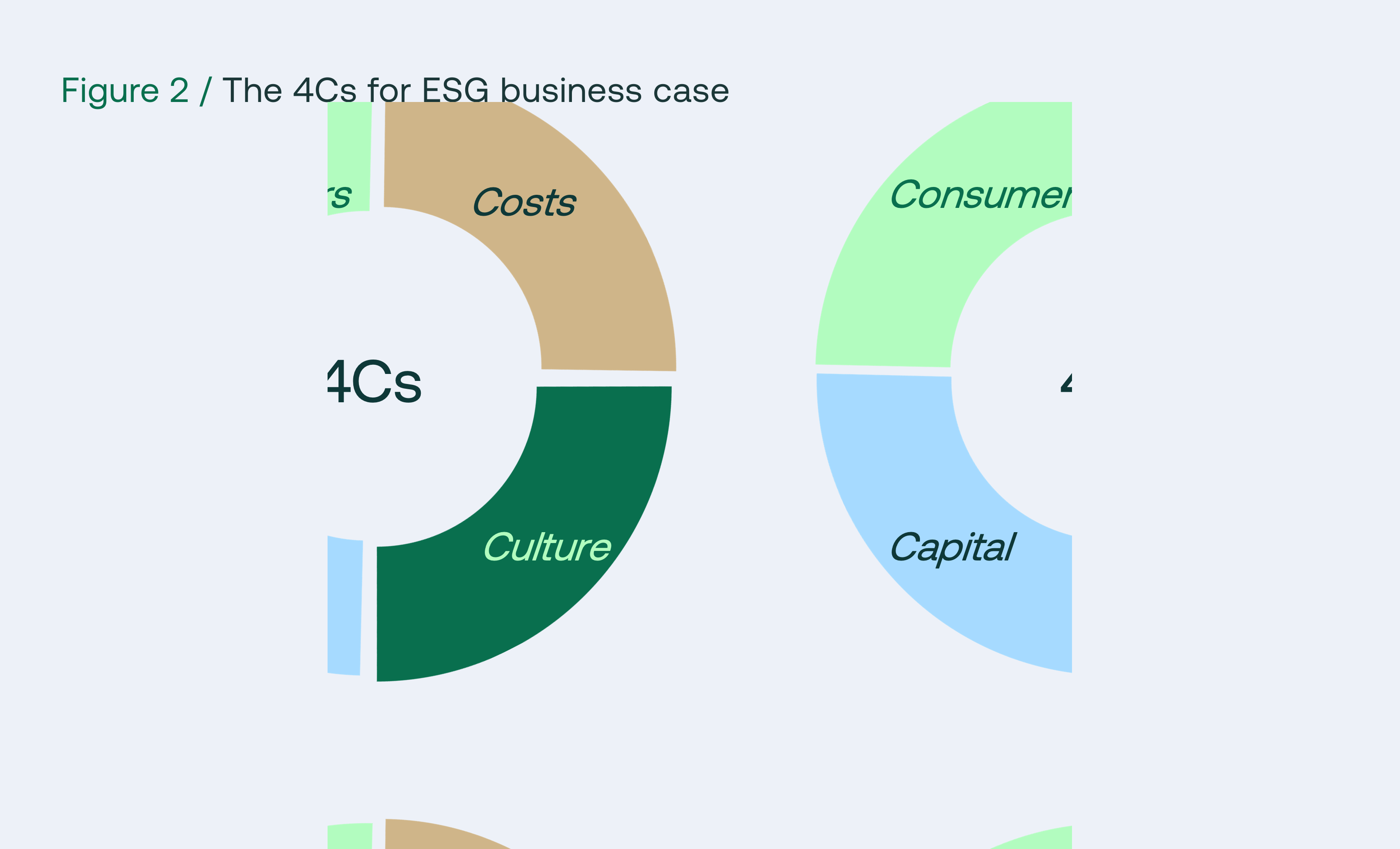
In order to build the right strategy, you first need to help key stakeholders such as leadership teams, employees, customers and suppliers understand the concrete value ESG brings to your business. A practical way to do this is to view that value through the lens of the 4 Cs: Costs, Capital, Consumers and Culture.
Why ESG? The business case in 4 Cs
Sustainability is no longer a side project; it is a strategic imperative that shapes resilience, profitability and long‑term growth. The benefits of embedding ESG in your strategy can be broken down into four core value drivers: Costs, Capital, Consumers and Culture.
1. Costs: Efficiency, resilience and risk reduction
Sustainability initiatives often translate directly into lower operating costs. By reducing energy consumption, cutting waste and optimising logistics, companies can unlock cost savings of up to around 9% (1).
Organisations focusing on energy efficiency, waste reduction and improved logistics report tangible reductions in operating expenses.
Companies that shifted to renewable energy before the recent gas price spikes avoided major cost increases and volatility.
Because up to 70% of a typical company’s sustainability footprint is embedded in its supply chain, smarter procurement and supplier engagement can reduce both emissions and costs (2).
In other words, ESG is a lever for leaner operations, better resource use and more resilient supply chains, especially in energy‑intensive or globalised sectors.
2. Capital: Access, pricing and value creation
Investors, banks and lenders are increasingly examining ESG performance as a leading indicator of risk, resilience and future‑fit strategy. Strong ESG performance can improve access to capital and lower the cost of financing.
Companies with strong ESG performance can achieve a reduction in cost of debt, and sustainability‑linked loans often price several basis points below traditional loans.
Investors report higher revenue growth and value uplift in portfolios where sustainability‑linked value creation is actively managed.
Sustainable procurement leaders say their programmes help them mitigate supply chain and regulatory risk, which directly influences how investors perceive long‑term value.
In short, capital markets are rewarding credible ESG strategies with better financing conditions and higher valuations.
3. Consumers: Trust, loyalty and growth
Today’s consumers are more informed, values‑driven and sceptical of greenwashing than ever. Sustainability is increasingly shaping purchasing decisions across B2C and B2B markets.
Around 80% of consumers say they are willing to pay more for sustainably sourced goods (3).
Many accept paying nearly 10% more for environmentally friendly products when they trust the claims (3).
Between 80–89% of people globally want governments and businesses to do more to tackle climate change, driving expectations for action, transparency and accountability (4).
Companies that can credibly demonstrate better environmental and social performance often enjoy higher margins and stronger brand loyalty, especially when ethical and labour practices are embedded in their supply chains.
4. Culture: talent, engagement and innovation
ESG is also a powerful driver of internal culture, impacting how organisations attract, engage and retain talent. This is particularly true for younger generations who expect employers to align with their values.
Companies with strong ESG strategies report up to 25% lower turnover among millennial employees (5).
Firms with high ESG scores see higher employee productivity, with some studies indicating a productivity uplift of around 13% (6).
A strong sustainability culture helps organisations foster innovation, cross‑functional collaboration and a shared sense of purpose that goes beyond quarterly results.
Turning the 4 Cs into strategy: Key steps and common pitfalls
Realising the full business value of ESG requires structured, sequenced implementation. Acting out of order—such as jumping straight into carbon calculations without data foundations—can waste time, create unreliable results and erode trust.
The core steps of a successful ESG journey
Assess Establish where your company stands today by mapping existing initiatives, policies and performance across operations and suppliers. Tools such as EcoVadis assessments, gap analyses or maturity scans can give you a structured baseline.
Plan Build a tailored sustainability roadmap that aligns with your business strategy. Define priority topics, targets and actions using frameworks like PATM (Policies, Actions, Targets, Metrics) to keep your plans concrete and measurable.
Implement Embed ESG into processes, governance and operations rather than treating it as a separate workstream. This includes integrating sustainability into procurement, product development, finance and HR.
Collect data Put in place robust systems to track emissions, energy use, waste, water, health and safety and supply chain performance. Reliable data is the backbone of credible reporting and informed decision‑making.
Report and communicate Once the foundations are in place, communicate progress through reports aligned with relevant standards such as GRI, CSRD or TCFD. Be transparent about both achievements and gaps to build trust with stakeholders.
Which pitfalls should you avoid?
Calculating detailed carbon footprints before establishing data governance and quality controls, leading to inconsistent or misleading numbers.
Treating ESG as a communications exercise rather than an operational and strategic transformation, which increases greenwashing risk.
Over‑committing to too many frameworks and ratings without sufficient internal capacity, causing fatigue and fragmented efforts.
Neglecting culture, ownership and internal capability building, which makes it hard to sustain progress over time.
Focusing on the right actions at the right time helps you unlock the 4 Cs in a way that matches your maturity level and sector realities.
You cannot do this alone: Build your ESG ecosystem
No organisation can navigate the ESG compliance jungle and unlock the full 4 Cs of value entirely on its own. You will need an ecosystem of partners—from technology providers and data platforms to ratings agencies, auditors and specialist sustainability consultancies—to move from intention to execution.
This ecosystem approach allows you to combine internal ownership with external expertise so that your teams stay focused on strategic decisions while partners support you with frameworks, methodologies and implementation capacity. Over time, that mix of internal and external capabilities becomes a key differentiator, helping you move along the maturity curve faster and with more confidence.
Nexio Projects: Your full‑service sustainability partner
Nexio Projects is a full‑service sustainability consultancy, helping organisations break down complex ESG challenges and turn ambitious climate and sustainability goals into practical action. Recognised by Verdantix as one of the top boutique ESG and sustainability strategy consultancies globally, we support clients from early‑stage compliance through to purpose‑driven transformation.
With 400+ clients across 1,000+ projects in more than 20 countries and over 25 sectors, our team brings deep experience in industries such as shipping and logistics, manufacturing, chemicals and consumer goods. We combine strategic advice with hands‑on implementation, from materiality and roadmap design to decarbonisation, supply chain engagement and reporting.
We are a certified B Corp, a global EcoVadis strategic partner, and work with an in‑house team of certified B Leaders to support organisations on ratings, certifications and sustainable procurement. Our expertise spans key regulations and frameworks, including CSRD, ESRS, EU Taxonomy, GRI, ISSB‑aligned standards, CDP and more, ensuring that your ESG strategy is both compliant and value‑creating.
If you are ready to cut through the ESG jungle, unlock the 4 Cs and move up the maturity curve, Nexio Projects can act as your sustainability partner. We help you build the ecosystem, capabilities and culture needed to turn ESG into enduring business value.
Contact us know if you seek support with your ESG business case.


 How to recertify for B Corp: Deadlines, pathways and what’s next