ESG business case: Why sustainability drives profit, resilience, and growth
August 18, 2025


The escalating demands of ESG regulations and stakeholder expectations collide with a fundamental challenge. Estimated CSRD implementation costs can hit millions of euros in the long-term (1), while 57 percent of CEOs cite unclear ROI as the top barrier to sustainability progress (2). Yet studies show strong ESG performers enjoy valuation uplifts of 6-7 percent, cheaper financing and operational efficiencies that directly boost the bottom line (3).
The gap is clear – the cost of ESG is highly visible, but benefits remain hidden from boardrooms. Framing ESG as compliance misses its competitive advantage: using sustainability KPIs to drive revenue, deliver operational savings, and build resilience. This article draws the high-level points and quick wins from our webinar where we built that detailed business case. Derived from the webinar conducted by Sustainability Director Jatin Budhraja and CEO Marc Roodhuyzen de Vries, here are our learnings on concrete ways ESG can contribute to your business.
Interested to see more? Watch the full session!
Too many companies see ESG as a box-ticking exercise: minimum disclosures and regulatory avoidance. That might satisfy short-term needs, but it ignores how ESG can create leadership in your sector, through tangible gains like cost reduction, risk mitigation and market access.
Competitors who treat ESG as strategy, tying it to pricing premium(s), investor appeal and operational edge, will pull ahead. The shift from compliance to purpose means proving ESG is a core driver of performance, not an add-on. This draws questions such as where, how and when to draw this value. This brings out our three-step framework, that can be tailored for organisations based on scope, needs and unique positioning.
Read more about how ESG drives profit and value, in the article by our CFO.
Begin with a blank canvas: List ESG initiatives relevant to your context, then map their dual impact on stakeholders (people and planet) and financial levers.
Financial levers would typically comprise of the folloiwng three categories:
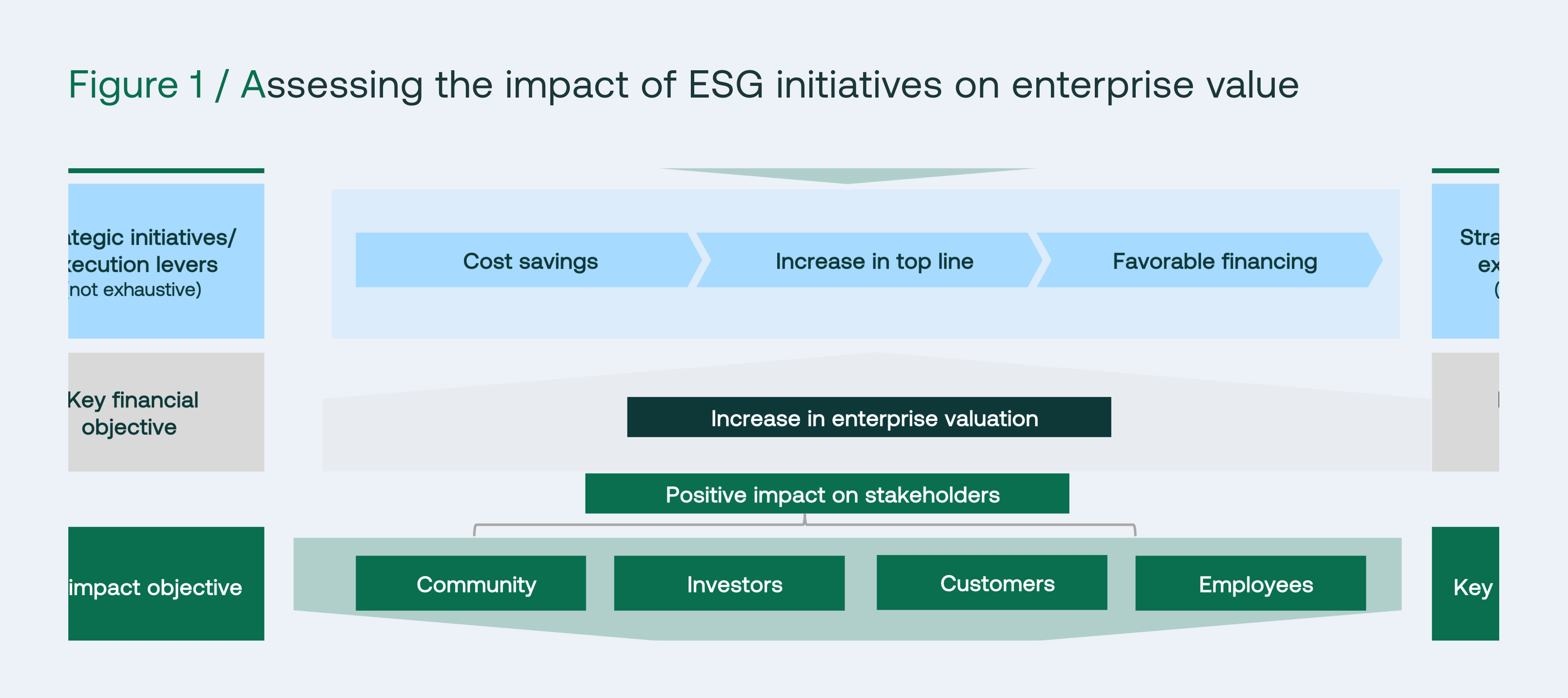
Move from stories to numbers: quantify how each initiative affects revenue, margins, cash flows and valuation. The slides outline metrics for key projects like EcoVadis, climate risk assessment and circularity, drawing from real cases.
For instance:
Roll these into EBIT(DA) uplift and discount rate effects to show enterprise value impact.
Not every project fits every timeline. Build a strategic canvas plotting initiatives by financial gains and impact, then layer on drivers:
Examples like MACC analysis for decarbonisation or ICP strategy for capex decisions get sequenced based on payback and scale. This creates your sustainability strategy roadmap – practical, sequenced and defensible.
Consider a mid-sized European manufacturer: implementing circularity, logistics optimisation and EcoVadis-linked financing generated multi-year EBIT(DA) uplift and a modest WACC shift. Circularity cut input and waste costs; optimisation reduced transport emissions and spend; the rating enabled cheaper debt.
The net effect? A meaningful enterprise value increase over two years, driven by conservative assumptions. This shows how interconnected initiatives amplify impact, turning ESG into a valuation lever. Watch the webinar for the full calculations.
MACC analysis ranks decarbonisation options by cost per tonne abated, helping prioritise quick wins and scale up. Negative-cost levers (e.g., energy efficiency) deliver savings immediately; higher-cost ones (e.g., fuel switching) are sequenced later.
It integrates into your decarbonisation strategy, showing how to hit targets cost-effectively while delivering OPEX savings.
ICP assigns a shadow carbon cost to decisions, making low-carbon options automatically attractive. “Charge” travel or capex budgets, then recycle into offsets or green projects.
This embeds climate risk assessment insights into finance, avoiding shocks from rising carbon taxes or ETS prices. Leading firms use ICP to drive efficiency and hedge long-term exposure.
Read more about MACC analysis and ICP under our decarbonisation solutions.
ESG drives top line when tied to customer demand and market rules. Examples include tenders requiring EcoVadis scores or marketplaces favouring rated suppliers. Sustainable products support premia and retention. Track sustainability KPIs like sales growth from ESG-linked lines or win rates in rating-gated bids.
Avoided losses are half the ESG business case: penalties, stranded assets, supply disruptions. Proactive climate risk assessment and circularity reduce vulnerability, protecting cash flows and valuation. This is where ESG planning becomes insurance against volatility.
Many run ESG projects but fail to quantify financial value. MACC analysis, ICP strategy and detailed financial modelling are often postponed, leaving ESG as “nice to have.” Treat them as core to the business case for leadership in sustainability.
High-level ESG business case and canvas: a few months. Projects like EcoVadis or basic climate risk: similar timeframes. Full MACC or ICP: longer, but start small. Pragmatic scope yields credible results fast.
Double-digit score gains per year are realistic with commitment. Percentile-based scoring means continuous improvement is needed to hold medals as peers advance. Embed EcoVadis in wider ESG planning.
Market maturity raises the bar; standing still means falling behind. Continuous sustainability KPIs improvement is essential. Relative performance drives ratings.
At Nexio Projects, we focus on helping organisations move from ad hoc sustainability actions to a structured ESG business case that connects impact, savings and growth. That includes both the high-level framework and the targeted services that really change the numbers in your models.
We can support you with:
The aim is to build an integrated narrative and strategy that make ESG a core part of strategy and valuation, not a side project.
If you’re seeking support in building or revising your ESG business case or any other solutions that will help build that, book a complimentary session so we can explore your specific context and needs.
Subscribe to our monthly newsletter and stay up to date on ESG business case examples, sustainability strategy roadmaps and more.