Building a climate-resilient ESG strategy for 2025
March 31, 2025


Welcome back to ‘Sustainability in motion’. In this edition, we cover:

Nexio Projects is working closely with EcoVadis through the Responsible Health Initiative (RHI), a sector-wide effort to strengthen sustainability and human-rights practices across global healthcare supply chains.
As part of this collaboration, we support the industry’s transition by delivering practical, hands-on training to suppliers across leading pharmaceutical value chains—helping them build the knowledge and capabilities needed to meet rising expectations and drive meaningful progress.
EcoVadis’ sector initiatives bring companies within the same industry together to tackle shared sustainability and human rights challenges. By using harmonised standards and shared assessment tools, members can evaluate suppliers more efficiently and access pooled performance data that would be difficult to obtain individually.
These initiatives strengthen supplier engagement by standardising expectations and providing suppliers with clear, consistent requirements across multiple customers. Suppliers benefit from unified scorecards, sector benchmarks, and no-cost capacity-building support, including training sessions, improvement tools, and guidance on topics like decarbonisation, human rights due diligence, and transparent reporting.
Participating companies can collectively monitor supplier performance, identify risks, and track progress on issues such as labour conditions, emissions, and ethical practices. For example, the Responsible Health Initiative (RHI) supports a wide net of suppliers, enabling shared learning and measurable improvements across healthcare supply chains.
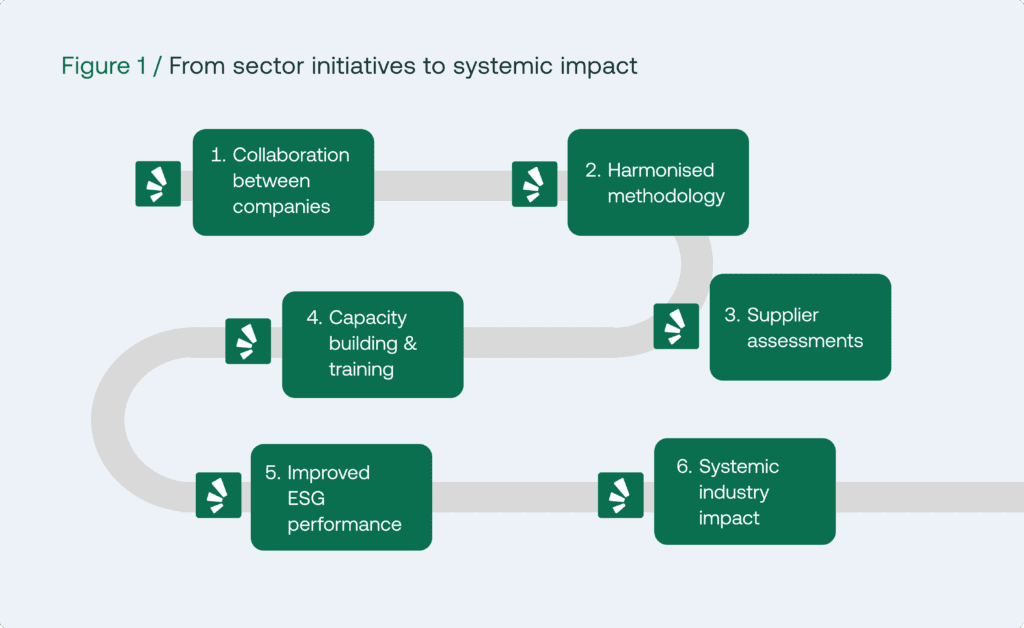
Through sector initiatives, suppliers are not only assessed but actively supported in strengthening their systems, improving data quality, and understanding expectations tied to global standards. This creates stronger, more resilient supply chains capable of meeting evolving regulatory and industry requirements.
Nexio Projects supports supplier engagement on two primary pillars:
Learn more: Supplier engagement support

Decarbonising value chains requires understanding emissions at the product level and embedding circular design. Product Carbon Footprints (PCFs), circular economy strategies, and manufacturing insights together provide practical pathways to reduce Scope 3 emissions, strengthen supplier engagement, and future-proof products.
Here are some tips to start:
PCFs quantify greenhouse gas emissions across a product’s entire lifecycle, from raw materials to end-of-life, using Life Cycle Assessment (LCA) standards. They reveal carbon hotspots, help prioritise decarbonisation actions, and guide circular product design by showing where materials and energy can be used more efficiently.
By combining structured PCF data with supplier collaboration, organisations can build transparent, resilient supply chains and communicate credible product-level climate performance.
Learn more: PCF explained: your roadmap for decarbonising products
Scope 3 emissions—indirect emissions across suppliers, product use, and end-of-life—often represent 70–95% of a company’s footprint. Circular economy strategies offer practical ways to tackle these emissions:
Circularity not only cuts emissions but also delivers economic and social co-benefits, such as lower raw material costs and stronger customer loyalty.
Explore more: Circular approaches from our on-demand session
Manufacturers’ Scope 3 emissions are on average 26× higher than direct emissions, largely from suppliers and raw material extraction. Key trends include:
Combining PCFs with circular strategies allows manufacturers to pinpoint interventions, reduce emissions effectively, and strengthen supply chain resilience.
Read more: ESG leadership for manufacturers: key trends and best practices

Our team connected with Master’s students, running a hands-on case study on guiding a company’s sustainability journey. Students presented creative solutions, sparking lively discussions, and there was strong feedback on the diversity and collaboration within our team.

Our team joined events in New York and San Francisco. Key takeaways: ESG continues to shape business strategy, value goes beyond numbers, supply chain insights are key, and companies are moving from compliance to purpose-driven action.

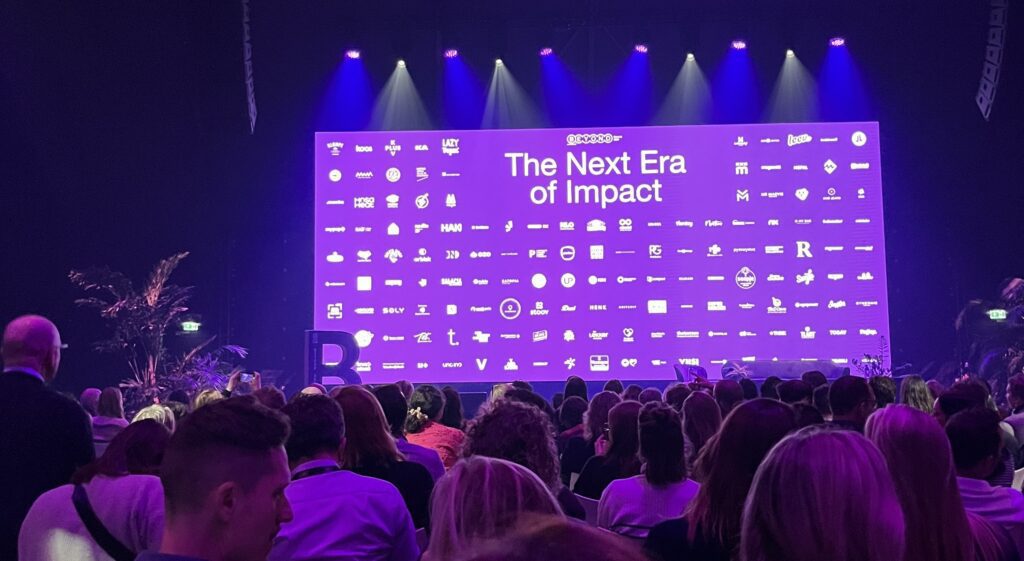
Our team joined Dutch B Corps to explore “Is this the next era of impact?” Discussions focused on radical change, youth-led action, repair over replace, and collaboration. We remain committed as a B Corp and B Way Partner and will continue to work towards meaningful impact.

The world of ESG and sustainability reporting is evolving fast, with regulations shaping how companies measure, disclose, and act on climate and social risks. This month brought notable developments on both sides of the Atlantic that could influence reporting timelines, compliance obligations, and strategic planning.
The U.S. Ninth Circuit Court of Appeals has temporarily paused enforcement of California’s SB 261, which requires companies with more than $500M in revenue to disclose climate-related financial risks. The January 1, 2026 deadline is on hold while the case is reviewed, with full briefing and arguments expected in early 2026.
Implications
The Omnibus package passed in a watered-down version, following coalition negotiations. Key changes include:
Final negotiations with the Council and Commission will determine the package’s ultimate form.
Takeaway
Despite deregulation, companies should maintain sustainability ambition. Integrating reporting and decarbonisation strategically continues to build credibility, stakeholder trust, and long-term competitiveness.
Our experts recently explained the implications and practical next steps. Watch the session here.

If you want to check out the rest of our webinars, check our webinars and events page.
If any of these topics are relevant for your organisation and you’d like to explore next steps, get in touch and our team can help you move from insight to action.