ESG teams’ practical guide to working with consultants
November 17, 2025


Welcome back to ‘Sustainability in motion’. In this edition, we cover:

You’re in the right place.
Product Carbon Footprints are a core metric for Scope 3 decarbonisation. But if you’ve ever tried to roll PCF collection out across a supply chain, you’ll know it can get… character-building. Our team tackled the most common “practical reality” questions in a #PCF clinic at last month’s Scope 3 Peer Group event.
Here are 3 key questions:
Focus on material comparability for your use case, not perfect uniformity. Start with the decision you want to make, then standardise what matters most.
Prioritise. Supplier-specific data is worth it for high-impact, high-stakes areas, but good secondary data can beat poor supplier figures. Method quality matters more than the source label.
Use what you already have, build capability internally, and make supplier engagement value-led, not admin-led. The biggest barrier is often cultural, not technical.
When collecting PCFs at scale, perfect accuracy isn’t always the goal. The real value comes from strategic prioritisation on the materials and processes that matter most.
This is just the tip of the iceberg. Looking for more? Download our PCF factsheet.
Read the full piece: Product Carbon Footprints: Navigating practical questions
Since 2024, EcoVadis has used a percentile-based medal system, benchmarking based on peer performance. As more organisations join the EcoVadis journey, it’s evident that maintaining the same medal now requires improvement.
To increase your medal, you need to show substantial, year-on-year progress.

So, what should you do differently this year to keep up?
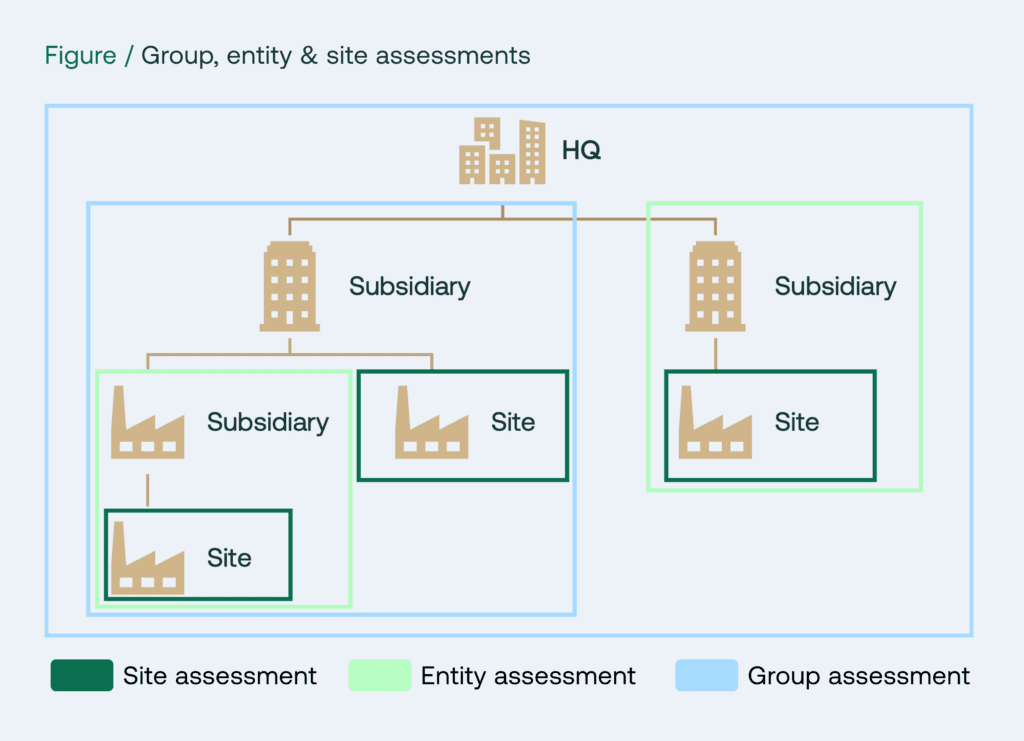
1) Scope clarity is non-negotiable: A common (and costly) issue is scoping misalignment. If your evidence does not match the scope EcoVadis is assessing (group, entity, or site), it can be rejected and drag down your score.
2) Reporting requirements have tightened: To score well, reporting increasingly needs to be public, show multi-year KPIs, and align with recognised frameworks. Internal spreadsheets still help, but they do not unlock top reporting scores on their own.
3) Audits can be a credible alternative to certifications, if done right: Third-party audits can score in place of certifications under certain conditions. But if the audit report includes non-conformities, it can backfire. Use audits strategically and carefully.
1) Materiality customisation continues for some environmental topics: Some sectors can deactivate certain environmental topics if they can justify non-materiality with a robust materiality assessment. If EcoVadis sees contradictions in external sources or evidence, topics may be reactivated.
2) 360 Watch severity is being refined: EcoVadis is adjusting how it assesses the severity of findings, including an added lens on stakeholder consensus. This increases the value of proactive monitoring and clear scope ownership.
3) VSME is now formally recognised: EFRAG’s VSME is recognised as a reporting framework, with scoring depending on the level of adoption. This creates a more structured entry point for organisations outside CSRD scope.
EcoVadis performance is now less about repeating last year’s submission, and more about showing year-on-year maturity: tight scope, stronger reporting, and evidence that stands up to scrutiny.
Our experts have prepared a guide that dives into EcoVadis basics, as well as each of the points above. Download and start your 2026 submission right!


Next week is looking busy (in a good way). If you’ll be at any of these events, come say hello.
London, 2–4 March 2026
Our team will be there next week, joining conversations on practical solutions at the intersection of climate action, strategy, finance, and supply chains.
They bring experience from supporting organisations across a wide range of decarbonisation projects, from getting emissions data in shape to turning net zero plans into practical roadmaps, and they’re looking forward to exchanging real-world lessons with peers.
If you’re attending, feel free to message us or connect with the team.
Paris, 2–3 March 2026
Our team will be on site throughout the event.
What to expect from us this year:
Come by our booth and let’s connect.
Leiden, Van Steenis Building, 5 March 2026
We’ll also be joining the Leiden University Governance of Sustainability Career event. The event will host around 120 students, as well as alumni. We’ll be at our booth at the job fair and will join the networking drinks afterwards.
We’re looking forward to meeting students at our booth and exploring possibilities together.
Three cities, three very different audiences, one theme: turning sustainability work into measurable impact. If you’ll be at any of these events, come find us.

More regulators are aligning with IFRS S1 + IFRS S2, pushing ESG reporting towards investor-grade disclosures that are comparable and decision-useful.
The conversation is no longer “which framework wins”, but how ISSB-aligned reporting can work alongside #GRI and #ESRS without doubling effort. The practical implication: design your reporting architecture once, then map it across standards.
The UAE Climate Law is translating Net Zero ambition into clearer expectations around emissions measurement, reporting, and reduction planning, with phased implementation. It is also raising the bar for what “good” looks like across the region.
Approaches differ by country, but the direction is consistent. Reporting requirements are expanding, often starting with listed or high-impact sectors, then broadening over time.

This is no longer just about publishing a report. It is about building a repeatable reporting engine: clear governance, reliable data flows, and an audit-ready trail that can keep up as expectations tighten.
See how we help with different reporting scenarios: CSRD & reporting support


If you want to check out the rest of our webinars, see our webinars and events page.
If any of these topics are on your radar and you’d like hands-on support, reach out to our team and we’ll point you to the right experts.