Driving decarbonisation: Setting Science-Based Targets to cut your GHG emissions
August 12, 2025


Many procurement and sustainability leaders reach the same turning point. The business has decided to use EcoVadis as its primary tool for assessing supplier sustainability performance. A timeline has been agreed. Internal communication has gone out. And then reality arrives: hundreds or thousands of suppliers, wide variation in sustainability maturity, limited resources on both sides, and a deadline that is not moving.
A supplier engagement programme is not a request. It is a system. Done well, it creates genuine transparency, drives measurable improvement, and feeds the supply chain and Scope 3 data that regulators and stakeholders are increasingly demanding. Done poorly, it generates friction, low completion rates, and data that does not hold up under scrutiny.
This article sets out how to design and run an EcoVadis supplier engagement programme that delivers, from the first segmentation exercise to the point where results inform procurement decisions, climate targets, and compliance disclosures.
Most programmes that underperform do so for the same reasons. Suppliers receive an invitation without context. Score thresholds are set without reference to where suppliers actually stand. Capacity building is absent. And the internal team lacks the bandwidth to follow up consistently.
The numbers reflect this gap clearly. While 71% of organisations view supply chain sustainability as critical to meeting their own sustainability goals [1], only 26% of buyers cover more than half their addressable spend with third-party ESG ratings [1]. The distance between ambition and execution is large. It is not primarily a technology problem. It is a programme design problem.
The good news is that the gap is closeable. Procurement or sustainability teams seeing the best results are those who treat supplier engagement as an ongoing operating model, not a one-off campaign.
The starting point for any well-designed programme is segmentation. Not all suppliers carry the same risk, and not all can be managed with the same approach.
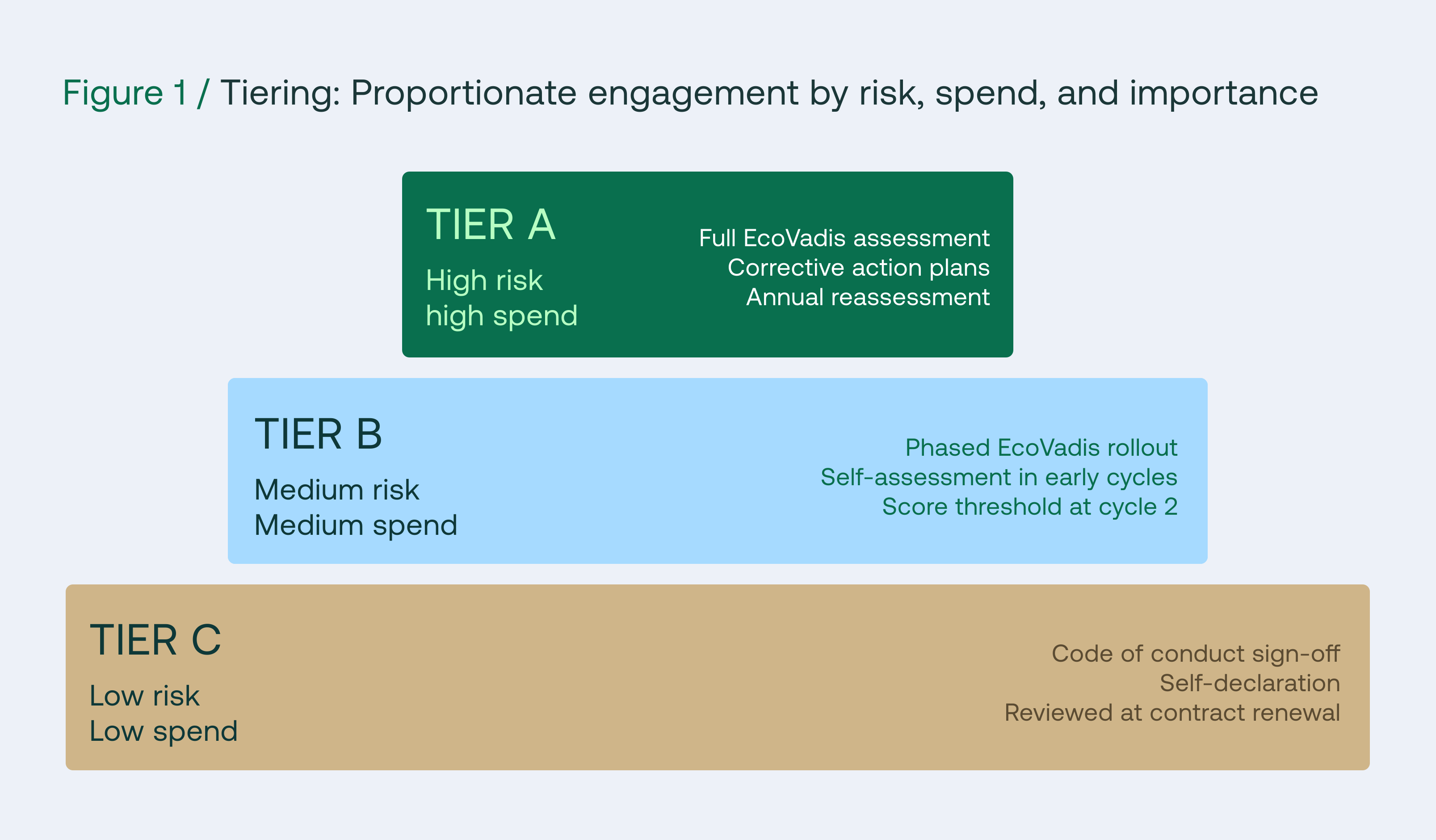
Segment your supplier base across at least three dimensions: sustainability risk (based on industry, geography, and activity), spend, and strategic importance. The intersection of high spend and high sustainability risk defines your priority population, the suppliers who should be assessed first and engaged most intensively.
For lower-risk, lower-spend suppliers, a lighter approach is appropriate: a phased timeline, a self-assessment questionnaire, or a “complete and share” requirement before score thresholds are introduced in later cycles.
This matters for compliance reasons too. The EU Corporate Sustainability Due Diligence Directive (CSDDD) requires companies to exercise proportionate due diligence across their value chains. Under the Omnibus simplification package, the transposition deadline has been extended to 26 July 2028 as currently proposed, with phased application expected from 2029 [2]. Segmentation is not just good practice. It is the programme architecture that regulators suggest to see documented
Once the supplier base is segmented, the programme needs clear requirements. This means answering three questions before any invitation goes out:
Score thresholds need to be grounded in baseline reality. Requiring all suppliers to achieve EcoVadis Gold in year one, without knowing where they start, sets the programme up to fail. A more effective model sets a minimum requirement for cycle one, typically completing the assessment and sharing the scorecard, and then introduces score thresholds in subsequent cycles as suppliers develop their sustainability management systems.
Contractual integration strengthens the signal. Including EcoVadis requirements in supplier contracts, onboarding criteria, and RFP scoring sends a clear message that this is a business requirement, not a voluntary initiative. Companies including DHL, Merck, and Brenntag have already embedded EcoVadis into their compliance frameworks in this way [3].
The first supplier communication sets the tone for the entire programme. Suppliers who receive an EcoVadis invitation without prior context, and without understanding why they are being asked or what the consequences are, are less likely to complete the assessment and more likely to treat it as an administrative burden.
A well-structured launch communication covers: the reason for the request, the timeline and any score requirements, what support is available, and the commercial implications. Where programmes include a dedicated supplier briefing or training session before activation, completion rates and evidence quality are consistently higher.
The 2024 EcoVadis Sustainable Procurement Barometer found that 67% of leading buyers require suppliers to participate in sustainability databases and ratings [4]. A further 53% provide ESG training and e-learning to support them [4]. That correlation is not coincidental. The supplier engagement seeing the best results are the ones who build capability alongside the requirement.
As the Nexio Projects article on supply chain transparency highlights, the EcoVadis assessment creates a platform for starting meaningful conversations with suppliers, but only if the groundwork has been laid first [7].
“Capacity building is the investment that separates a supplier engagement programme from a compliance exercise. Suppliers who receive the right training and documentation support achieve better scores, produce stronger evidence, and sustain those improvements across subsequent cycles.”
The most common reason supplier engagement programmes plateau is that the requirement exceeds the capability of the supplier base. Suppliers want to comply. They do not always know how.
Capacity building takes different forms depending on supplier segment:
Collective action makes this more efficient. Sector-wide initiatives, of the kind increasingly operating through the EcoVadis ecosystem, allow multiple buyers to align requirements and pool training delivery, reducing the burden on suppliers who receive requests from many customers simultaneously [5]. This is one of the clearest themes to emerge from EcoVadis Sustain 2026: organisations making the fastest progress are building shared systems that suppliers can work with, not fragmented processes that suppliers have to fight through [8].
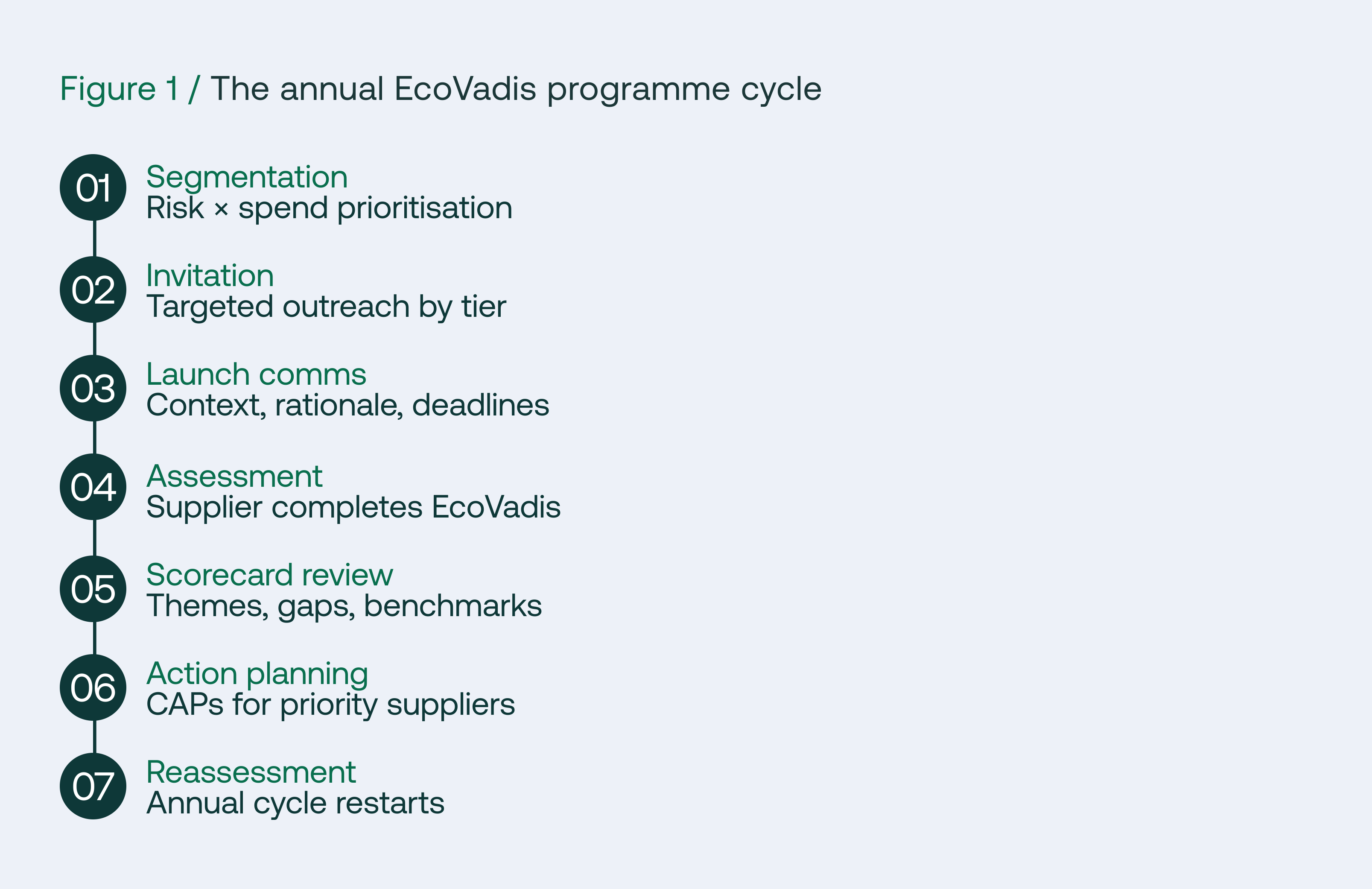
Collecting EcoVadis scores is not an outcome in itself. The value comes from what the data enables: supplier risk assessment, improvement tracking, and procurement decisions grounded in performance evidence rather than assumptions.
Build a regular review cadence into the programme governance. Track completion rates by supplier segment, review score distributions across the four EcoVadis themes (Environment, Labour and Human Rights, Ethics, and Sustainable Procurement), and flag suppliers where performance has declined or where a corrective action plan is needed. EcoVadis provides live monitoring within its platform that surfaces alerts on significant ESG incidents for rated suppliers, giving procurement teams a continuous view of risk rather than a point-in-time snapshot.
Critically, programme results should feed upward: informing preferred supplier designations, contract renewals, pricing discussions, and the supply chain data needed for CSRD reporting and science-based targets. Over 80% of companies improved their EcoVadis score following a reassessment [6], but only when the supplier engagement programme gives them feedback, support, and a clear reason to act.
A well-run EcoVadis supplier engagement programme is not simply a procurement tool. It is a live data source that feeds some of the most demanding reporting obligations companies face today.
For companies in scope under the CSRD, ESRS E1 and S2 require supply chain climate data and due diligence evidence respectively. EcoVadis scorecards and evidence packages are directly relevant to both. For organisations working towards science-based targets, supplier engagement is one of the primary mechanisms for reducing Scope 3 Category 1 emissions from purchased goods and services. And for those preparing for CSDDD application, a documented, evidence-based engagement programme with proportionate due diligence by tier is precisely what the Directive expects.
The link between a well-run buying programme and these external requirements is not administrative. It is strategic. As Nexio Projects’ guide on supply chain emissions sets out, addressing Scope 3 effectively requires procurement teams and sustainability teams to work from the same data. EcoVadis is one of the most effective bridges between the two [9].
For buyers also navigating EcoVadis IQ Plus and enhanced due diligence requirements across their supplier base, the foundations described here are equally relevant. The segmentation logic, communication approach, and monitoring cadence apply across the full suite [10].
Launching an EcoVadis programme is a commitment, not a campaign. The organisations that see lasting results treat supplier engagement as an ongoing operating model, with governance, structured communication, real support for suppliers, and data that drives decisions.
The journey from a list of invited suppliers to a genuinely transparent and improving supply chain takes time. With the right architecture in place, it is entirely achievable.
“A supplier engagement programme is at its most valuable when the data it generates travels into preferred supplier designations, contract renewals, CSRD disclosures, and science-based target calculations. That is the architecture that justifies the investment and drives the supply chain performance it was designed to create.”
Nexio Projects is an international sustainability consultancy dedicated to guiding organisations on their journey from compliance to positive impact. We’re the number 1 consultancy with number of EcoVadis projects delivered, and an accredited strategic consulting partner. Ultimately, our experts help our clients achieve their sustainability goals with a pragmatic, step-by-step approach to supplier programmes, ratings support and beyond.
Recognised as a top European sustainability consultancy by Consultancy EU and as a Top Brand in sustainability by EUPD, we are here to help you design a supplier engagement programme that delivers real outcomes, not just reported ones.
Ready to build an EcoVadis programme that works? Contact the Nexio Projects team to discuss your supplier base and where to start. And to go deeper on tackling Scope 3 through your supply chain, download the guide.
[1] EcoVadis. Sustainable Procurement Barometer 2024. Based on a survey of 592 purchasing organisations and 1,087 suppliers from 65 countries. https://ecovadis.com/resources/ Accessed May 2026. (Note: a 2025 edition may now be available. Verify before publication.)
[2] European Council. Corporate Sustainability Due Diligence Directive (CSDDD): Omnibus simplification package. Provisional political agreement reached April 2026. Transposition extended to 26 July 2028; phased application expected from 2029, as currently proposed. https://www.consilium.europa.eu/en/press/press-releases/ Accessed May 2026.
[3] EcoVadis. Supply chain sustainability regulations: How DHL Group, Brenntag, and Merck comply with confidence. https://resources.ecovadis.com/buyers/supply-chain-sustainability-regulations-how-dhl-group-brenntag-and-merck-comply-with-confidence Accessed May 2026.
[4] EcoVadis / Nexio Projects internal data. 2025 Sustainable Procurement: EcoVadis Requirements. Slide 9. SharePoint: Operations Team. Based on EcoVadis Sustainable Procurement Barometer data.
[5] EcoVadis. Sector initiatives and collective action programmes. https://ecovadis.com/solutions/ Accessed May 2026.
[6] EcoVadis. EcoVadis Ratings. https://ecovadis.com/solutions/ratings/ Accessed May 2026.
[7] Nexio Projects. Improve supply chain transparency with EcoVadis. https://nexioprojects.com/improve-supply-chain-transparency-with-ecovadis/ Accessed May 2026.
[8] Nexio Projects. EcoVadis Sustain highlights: Building resilient supply chains. https://nexioprojects.com/ecovadis-sustain-highlights-building-resilient-supply-chains/ Accessed May 2026.
[9] Nexio Projects. Supply chain emissions: Unlocking supplier engagement for net zero. https://nexioprojects.com/knowledge-centre/supply-chain-emissions-unlocking-supplier-engagement-for-net-zero/ Accessed May 2026.
[10] Nexio Projects. Strong supplier due diligence with EcoVadis IQ Plus and beyond. https://nexioprojects.com/strong-supplier-due-diligence-with-ecovadis-iq-plus-and-beyond/ Accessed May 2026.