

 The business guide to nature-based vs. engineered solutions
October 2, 2023


AI has found a natural home in sustainability work. It drafts materiality templates, generates ESG gap analyses, maps reporting frameworks, and calculates emissions inventories. For sustainability managers working under resource pressure, often with EcoVadis, reporting, and strategy all on one desk, these tools offer genuine efficiency [1].
The risk is not in using them. It is in mistaking efficiency for strategy.
A sustainability programme is not a series of documents. It is a process of decisions, relationships, and change, most of which play out between people, not between a user and an algorithm. Across the sustainability journey, from deciding what matters to making it last, there are five moments where human expertise is not a preference. It is a requirement. This article maps each of them.
Every sustainability programme starts with a question that sounds straightforward: what matters most to your organisation? The answer, in practice, is one of the most consequential strategic decisions a leadership team will make.
AI tools can produce a materiality matrix quickly. They draw on sector benchmarks, GRI topics, peer disclosures, and regulatory requirements to generate a plausible-looking list of material issues. The output satisfies the format. What it does not do is reflect your specific organisation.
Materiality is not a benchmark exercise. It is a judgement about where your business has the greatest impact on the world and where the world has the greatest impact on your business. That judgement depends on genuine dialogue with your stakeholders: customers, employees, suppliers, investors, communities. It depends on a real understanding of your operations, your sector exposure, and the strategic choices your leadership is actually prepared to make.
A materiality determination built on AI-generated templates, without substantive stakeholder engagement and expert facilitation, produces a document. Not a direction. The difference matters, because everything that follows: your targets, your disclosures, your investment priorities, will be built on it.
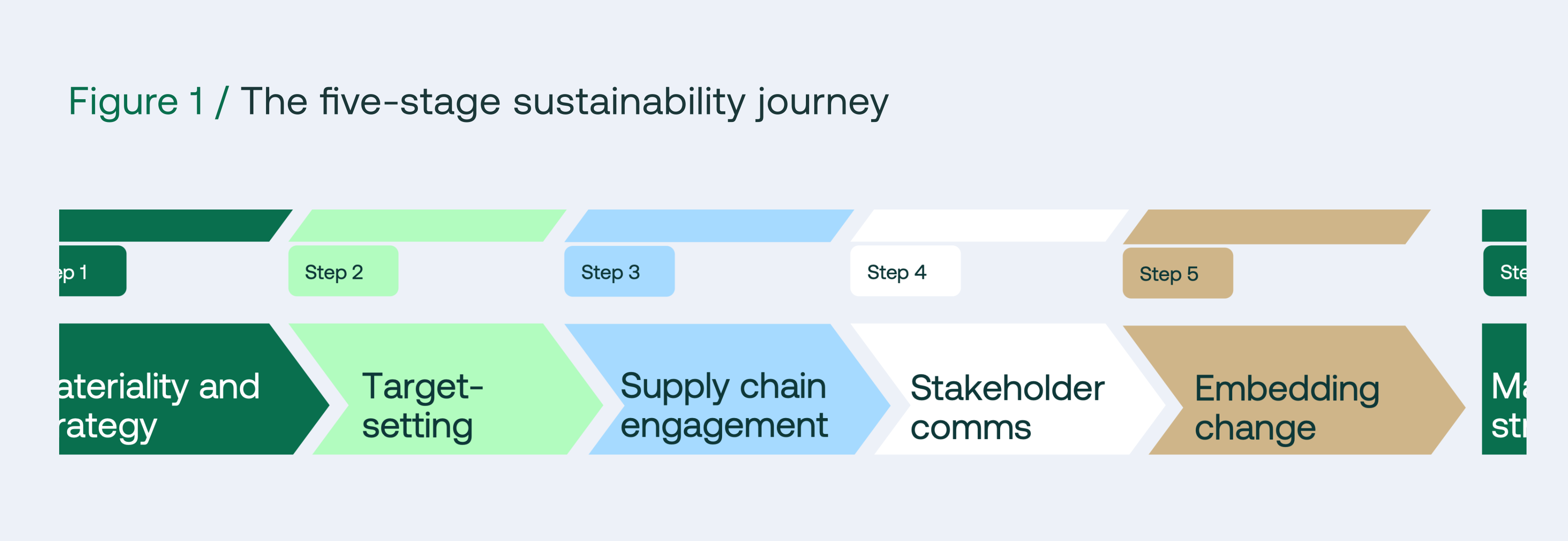
Once an organisation has defined what matters, it faces a more demanding question: what, specifically, will you commit to changing?
Setting science-based targets requires selecting the appropriate pathway for your sector, building a credible baseline from your current emissions profile, and navigating the SBTi validation process, which involves detailed scrutiny of methodology, scope, and timeline [3]. AI tools can help structure the calculations. They cannot substitute for expertise in which pathway is appropriate for your sector, what validation reviewers typically challenge, and how to design targets that are both ambitious and operationally achievable.
The same applies to EcoVadis score improvement. The methodology is precise, sector-weighted, and updated regularly [4]. AI tools can generate lists of potential improvement actions. What matters to a sustainability manager measured on her score is not a list. It is knowing which actions will move her specific score, given her company’s sector, current documentation, and the precise gaps her last assessment revealed. That knowledge comes from deep familiarity with the methodology, not from a prompt.
The organisations that set targets they can defend, and then meet, are the ones that built those targets with expert input at the outset. Generic targets, generated from templates, tend to fail at the point of validation, or worse, at the point of progress review.
For most organisations, the majority of their environmental and social impact sits outside their direct operations. Supply chain sustainability has become a defining challenge and, for an increasing number of companies, a commercial requirement [4].
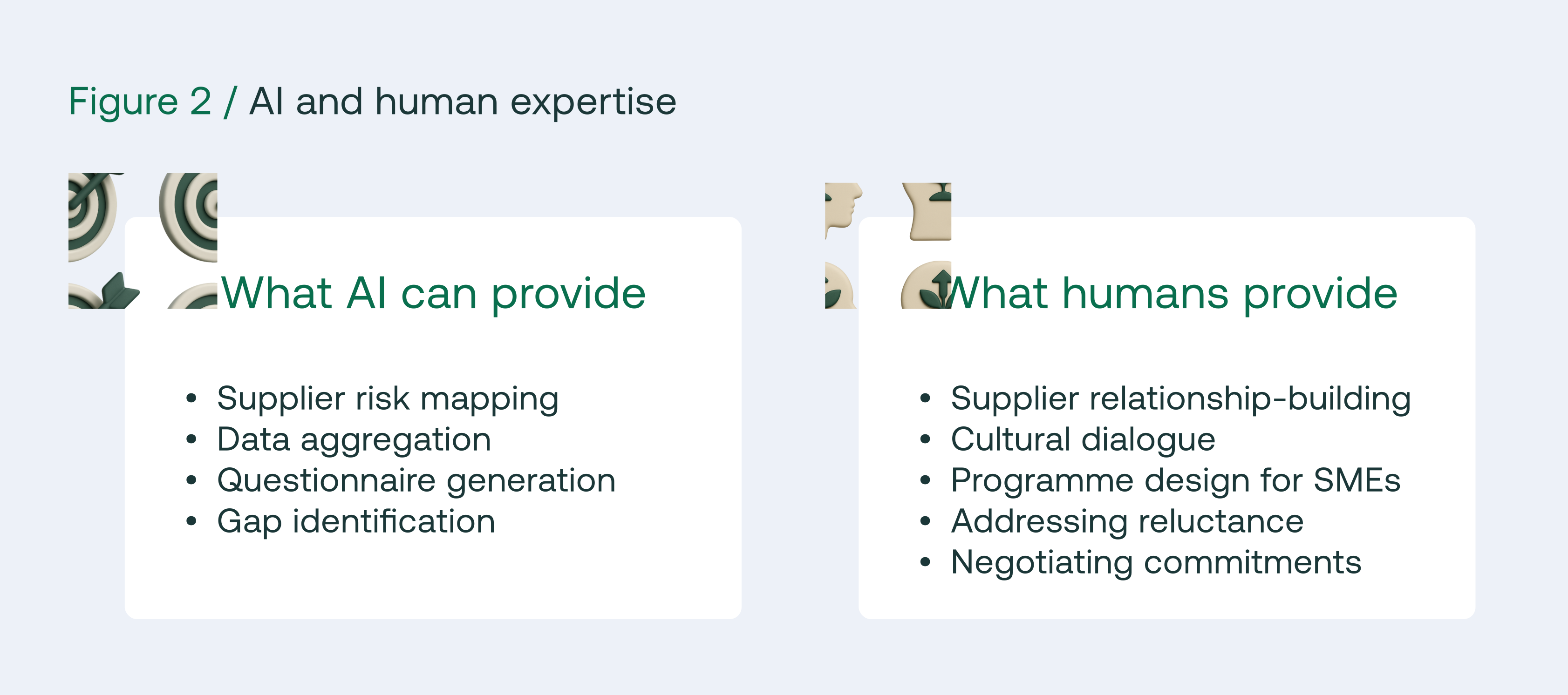
AI can help map supplier risk profiles, aggregate ESG data across a supplier base, and generate assessment questionnaires. What it cannot do is have the conversation.
Supply chain sustainability requires convincing suppliers, often smaller companies with limited resources and limited understanding of why this is being asked of them, to invest in changes they would not otherwise make. It requires building relationships, addressing reluctance, understanding the constraints specific suppliers face, and designing an engagement programme that is realistic for companies at different stages of their sustainability journey. It requires cultural awareness, commercial sensitivity, and genuine dialogue.
These are human competencies. They are also the ones that determine whether a supply chain programme generates measurable improvement in supplier performance or generates a folder of unanswered questionnaires.
Sustainability communications are not just about reporting. They are about credibility, and credibility is earned in conversations, not documents.
Your CFO needs to understand why a sustainability investment is justified. Your board needs to see ESG as a strategic asset, not a compliance burden. Your investors need to believe your claims are substantiated. Your customers need to trust you are genuine. Each of these audiences requires a different approach, a different register, and a different kind of human presence.
AI can draft sustainability reports, investor narratives, and board presentations. It cannot read the room in a board meeting. It cannot navigate the political dynamics of getting sustainability onto the capital allocation agenda. It cannot know which question your investor is really asking when they push back on your net zero timeline. It cannot sense when a conversation is shifting and adapt in real time.
Communicating sustainability credibly is part strategy, part judgement, and part relationship. The documents are the output. The conversations that make those documents land are not something any tool prepares for you.
This is the moment most sustainability programmes underestimate. It is also the one where AI has the least to offer.
Sustainability only delivers lasting value when it is embedded in how an organisation makes decisions, not treated as a parallel workstream managed by one person or one team. That requires changing behaviours, shifting incentives, building understanding across functions that have competing priorities, and sustaining momentum when leadership attention moves elsewhere.
The change management frameworks that have shaped organisational transformation for decades with examples like:
These converge on the same insight: sustainable change requires visible leadership commitment, a genuine internal coalition, two-way communication, and consistent personal engagement with the sources of resistance [5]. None of this can be automated.
AI cannot run a workshop that shifts how a procurement team thinks about supplier selection. It cannot address the middle manager who sees sustainability as a distraction from their primary targets. It cannot hold an organisation’s commitment to its sustainability programme when a difficult quarter arrives and priorities are being re-ordered.
Making sustainability stick is a leadership, culture, and change management challenge. It is, at its core, a human one.
Nexio Projects is an international sustainability consulting and project management firm, guiding organisations from compliance to positive impact. Recognised as a Smart Innovator in Consulting Services for CSRD and ESG Regulation Readiness by Verdantix and among the top European sustainability consultancies by Consultancy EU, we are here to walk the sustainability journey with you.
Wherever you are on your sustainability journey, whether it’s building your strategy, setting your targets, or trying to make it permanent, our sustainability and climate experts can help you navigate the moments that require human expertise most. Book a free discovery call and we will identify where you are, where you need to go, and what support will make the difference.
[1] PwC. Global Sustainability Reporting Survey 2025. https://www.pwc.com/gx/en/issues/esg/global-sustainability-reporting-survey.html. Accessed April 2026.
[2] Wavestone. CSR Barometer 2025: ESG Data & AI. https://www.wavestone.com/en/insight/csr-barometer-2025-esg-data-ai/. Published October 2025. Accessed April 2026.
[3] Science Based Targets initiative. Standards and Guidance. https://sciencebasedtargets.org/standards-and-guidance. Accessed April 2026.
[4] EcoVadis. EcoVadis by the Numbers. https://ecovadis.com/. Accessed April 2026.
[5] Ksapa. “Human-Led AI for ESG: Strategy Before Technology.” https://ksapa.org/human-led-ai-for-esg-strategy-before-technology/. Accessed April 2026. (Note: references Kotter’s 8-step model, Prosci ADKAR, and Doppelt’s Wheel of Change as foundational change management frameworks. Original works date from 1995–2006 — verify most recent editions before publication.)


