 Ultimate guide for business: How to contribute to the Paris Agreement
November 8, 2022


Across the world, countries are adopting net zero pledges and translating them into national climate plans under the Paris Agreement. In parallel, more than ten thousand companies have committed to setting targets through the Science Based Targets initiative to show that their climate ambition is grounded in science rather than marketing.
This wave of commitments has a very practical consequence: organisations now need reliable, auditable information about their emissions. Carbon accounting is no longer a nice‑to‑have report; it is the backbone of credible carbon management and the starting point for any serious decarbonisation roadmap.
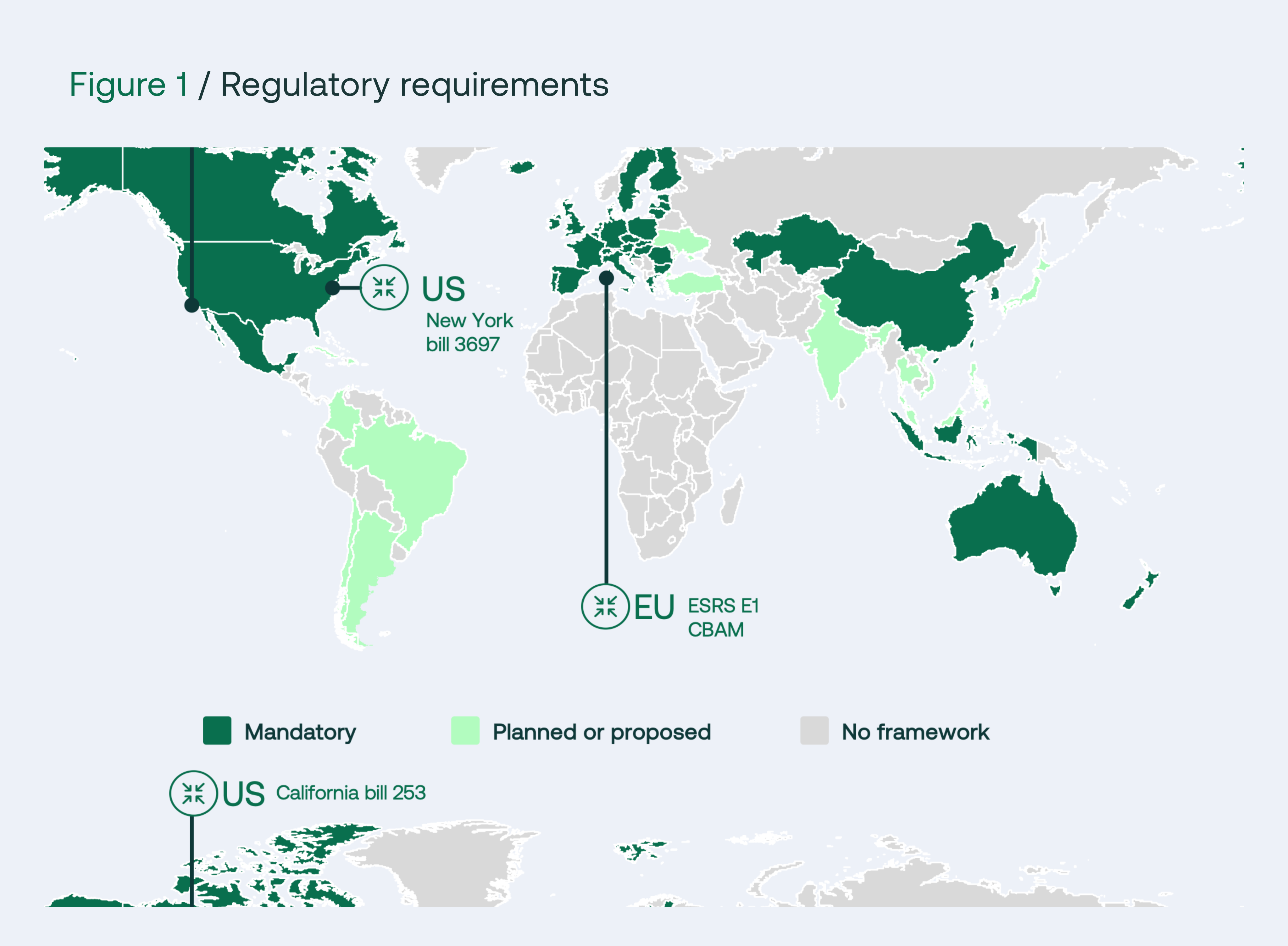
Several major regulatory regimes already require greenhouse gas disclosures, with more on the way. These include:
When a carbon footprint assessment follows a recognised standard, a single dataset can support many of these obligations and reduce duplication of effort.
Part 1 of this series explored how carbon accounting measures, analyses and reports emissions across Scopes 1, 2 and 3. That work provides the baseline: a clear, structured view of where emissions come from and how big they are.
Without that baseline, it is impossible to evaluate trade‑offs, design credible reduction pathways or track the impact of projects over time. With it, carbon management becomes a strategic discipline rather than a periodic reporting exercise.
Science based targets turn a static inventory into a forward‑looking commitment. In essence, they define how quickly and how far an organisation needs to reduce emissions to align with a 1.5°C or well‑below‑2°C trajectory.
A 1.5°C trajectory is the most ambitious climate goal. It aims to limit warming to 1.5°C above pre-industrial levels. This requires rapid emissions cuts in the next decade, with a focus on reducing both direct and indirect emissions. Companies must move quickly towards net-zero and rely less on carbon offsets. Achieving this target shows climate leadership and meets the highest expectations from regulators and investors.
A well-below-2°C trajectory still aligns with the Paris Agreement but is less strict. It allows for slower emissions reductions and more reliance on carbon offsets. Companies can transition at a steadier pace, making this option more accessible for those in the early stages of decarbonisation. While still ambitious, it offers more flexibility and focuses on long-term sustainability with a moderate pace of change.
To be eligible for validation by the Science Based Targets initiative, a company’s inventory must follow the Greenhouse Gas Protocol and apply consistent, transparent methods. This ensures that reductions claimed against those targets are comparable across sectors and regions, and that progress towards net zero can be tracked over time.
Once the decision is taken to strengthen carbon management, the immediate challenge is data. Organisations first need to understand who holds which information and in what format. Typical sources include:
The goal at this stage is not perfection, but coverage. Mapping what exists, where the gaps are and how data flows inside the organisation gives a realistic starting point for a carbon footprint assessment.
Not all data is created equal. Primary data comes directly from meters, invoices or suppliers and tends to be closest to reality. Examples include:
Secondary data involves estimates and assumptions, such as industry averages or extrapolating from incomplete records. While secondary data is less precise, it is often essential when primary information is not yet accessible, particularly in complex supply chains. A pragmatic approach is to use secondary data as a bridge while building relationships that will eventually unlock better information.
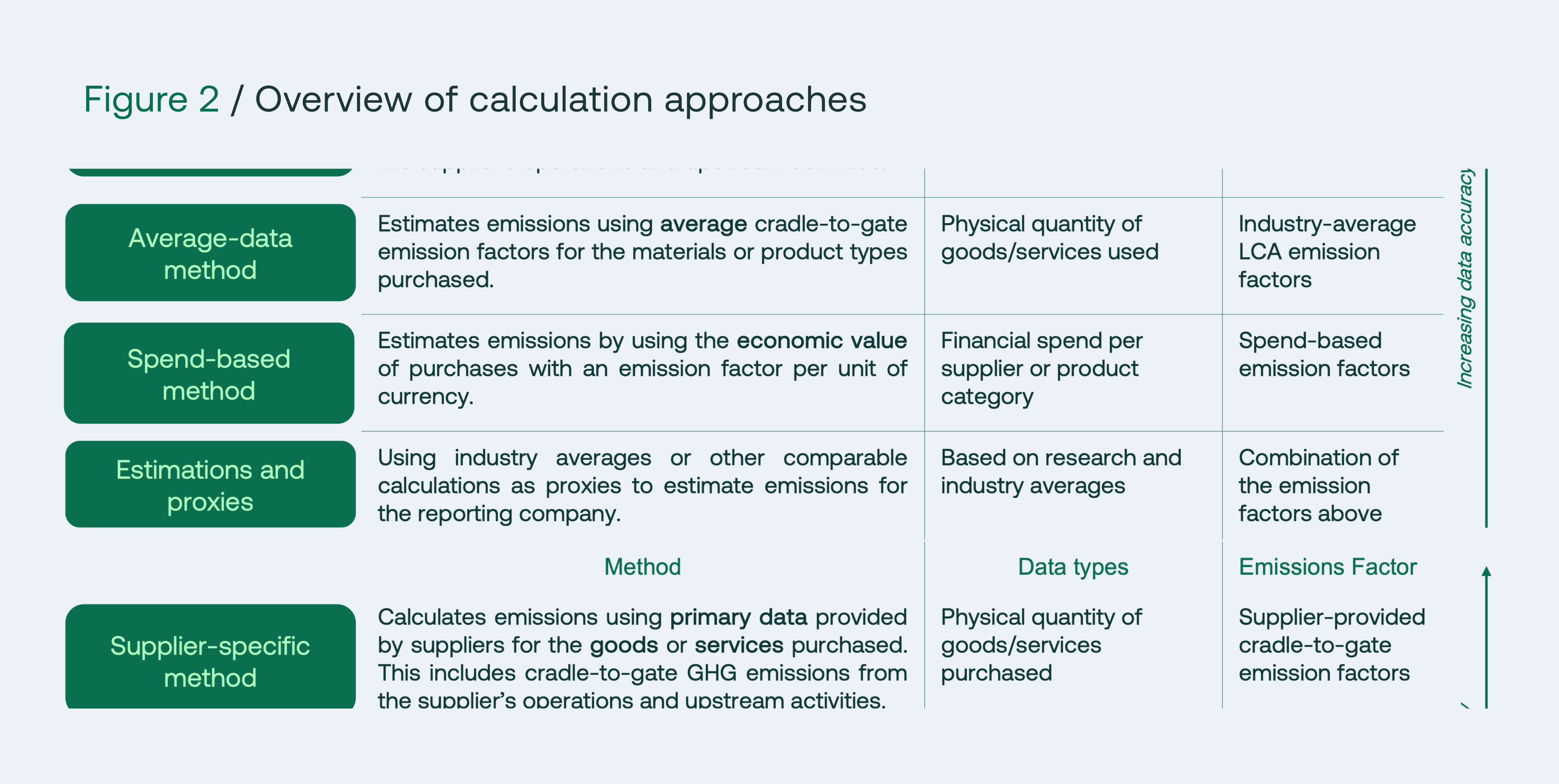
Once activity or spend data is in place, organisations must decide how to turn it into emissions. There are three main approaches, each with its own balance of effort and accuracy.
In practice, most companies use a mix of these methods across different categories. The important thing is to document choices clearly so that future updates and comparisons remain meaningful.
Emission factors link real‑world activities to estimated greenhouse gas output. They express emissions per unit of something measurable, for example per kWh of electricity, per tonne‑kilometre of freight or per euro spent.
Good practice is to:
With the right factors in place, calculation becomes straightforward: multiply activity data by the relevant factor and convert the result into CO2e to create a consistent view across different gases.
Several recurring issues can undermine an otherwise solid carbon footprint assessment:
Recognising these pitfalls early makes it easier to design simple checks and controls into the carbon accounting process.
No organisation will have perfect data in its first year. A realistic plan focuses on improvement over time, for example by:
This gradual strengthening of the dataset supports more confident carbon management decisions year after year.
Once the main emissions sources are quantified, the organisation can see where it has the greatest leverage. Hotspot analysis typically reveals a small number of categories or suppliers that drive most of the footprint.
These insights are vital when designing science based targets. They help define which scopes and categories to prioritise, what level of reduction is realistic in the short and long term, and where collaboration with partners will be essential. With this information, a company can submit targets to the Science Based Targets initiative that reflect both scientific pathways and operational reality.
Download our factsheet to get more insights specific to science-based target setting.

Targets only drive change if they influence day‑to‑day decisions. That means weaving them into:
When these elements line up, science‑based targets become a compass for the wider organisation rather than a standalone sustainability project. Over time, this alignment supports a credible trajectory towards net zero, guided by clear carbon accounting and robust governance.
Each annual cycle of carbon footprint assessment provides new information about progress, obstacles and emerging opportunities. This feedback can be used to refine calculation methods, improve data quality and update carbon management initiatives.
In this way, the combination of high‑quality data, thoughtful methodologies and science‑based targets creates a self‑reinforcing loop: better insight leads to better decisions, which in turn lead to deeper emissions reductions and more resilient business models.
Decarbonisation is a long‑term journey, but the first step can be taken today. Nexio Projects helps organisations move confidently from basic compliance to a clear, purpose‑driven sustainability strategy, combining integrated ESG advisory with deep expertise in climate and emissions reduction.
Our specialists design and implement science based targets, build practical decarbonisation roadmaps and set up data management systems that fit your organisation’s reality rather than forcing a one‑size‑fits‑all approach. With a track record of delivering SBTi‑aligned targets and robust carbon strategies across sectors, the team is ready to translate your ambition into concrete plans and measurable outcomes.
Ready to get started? Contact us for a free consultation to explore where you are today and what your next steps could be.
Want to stay in the loop? Sign up to our newsletter for insights, case studies and updates on the latest sustainability and climate developments.