 CSRD in motion: Unlocking the Omnibus Directive
November 24, 2025

The 2026 UN Global Compact (UNGC) Communication on Progress (CoP) submission period opened on 1 April 2026 and closes on 31 July 2026. [1] For all business participants including companies that have signed the UNGC CEO commitment letter, that deadline is now active.
The CoP is not optional. It is the main accountability mechanism of the UNGC, and failure to submit carries consequences that show up publicly on your participant profile. But beyond the compliance obligation, the questionnaire has evolved meaningfully over the past two years. The 2026 version is more aligned with global reporting frameworks, more focused on actionable data, and better positioned as a practical tool for continuous improvement.
In March 2026, Nexio Projects hosted a webinar with Monica Pascual, Senior Participant Engagement Manager at UN Global Compact Netherlands, to walk through those changes. This article captures what every UNGC participant needs to know before the July deadline.
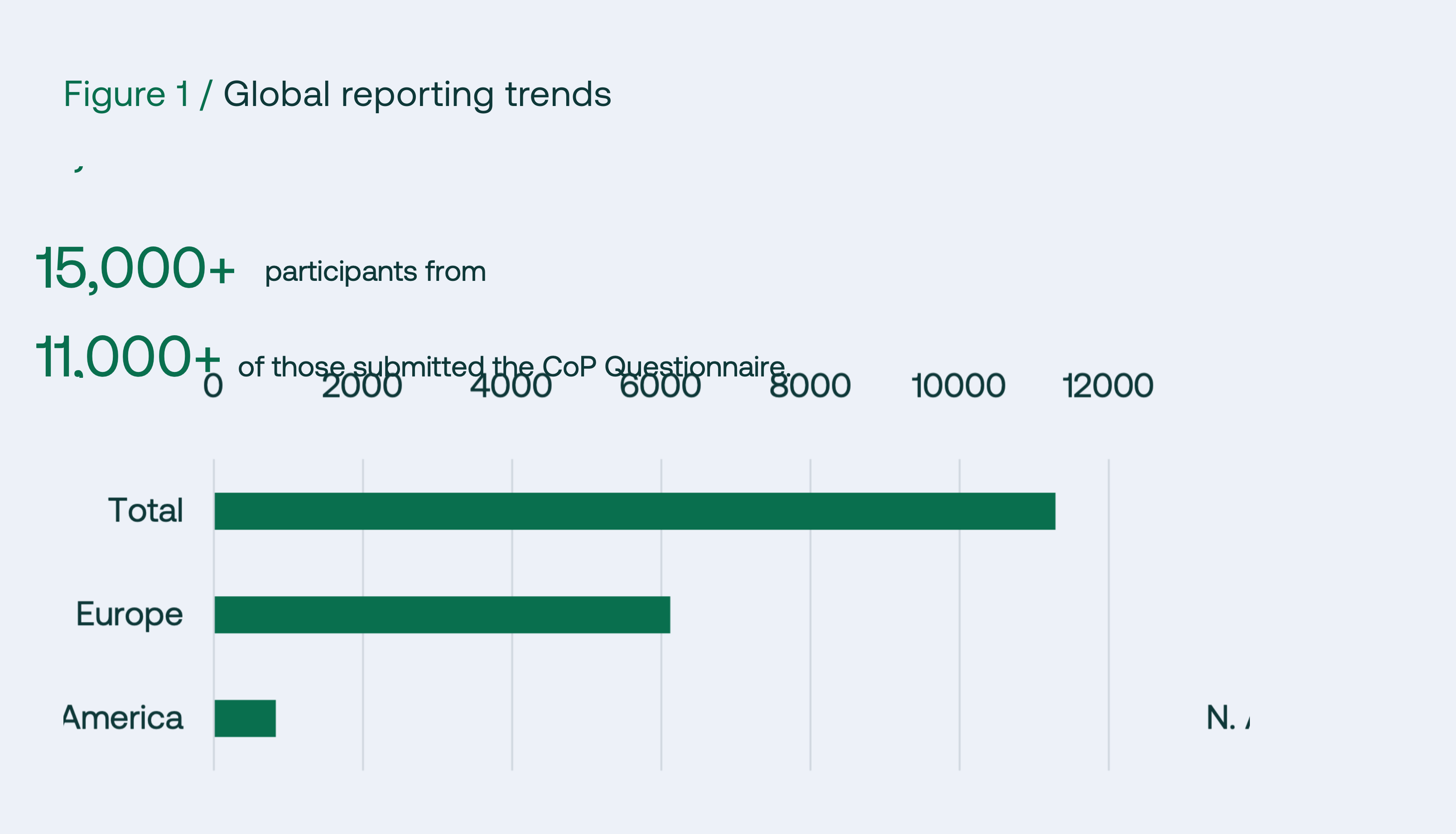
The UNGC is the world’s largest voluntary corporate sustainability initiative, with over 20,000 companies across 150+ countries participating. [1] Every business participant is required to submit an annual CoP covering the Ten Principles across four areas: human rights, labour, environment, and anti-corruption.
There is a choice in how to submit, either upload a sustainability report, or complete the digital questionnaire. The data tells a clear story. In 2025, 70.1% of participants completed the questionnaire rather than submitting a report alone. [2] The reason is straightforward: report-only submission provides no access to the CoP data visualisation tools. Only companies that complete the questionnaire can benchmark their performance against global peers by sector, region, and company size — and track year-over-year progress on key metrics.
For Sustainability Managers who need to demonstrate progress to leadership, to customers, and to procurement counterparts, those benchmarking capabilities are not a nice-to-have. They are one of the clearest, free, and structured ways to understand how your corporate sustainability reporting compares globally.
The 2025 data reinforces why this matters. 77% of UNGC participants report that their board or highest governing body supervises ESG reporting. 80% say their leadership regularly reviews sustainability-related business model risks. [2] But gaps remain significant. Only 35–40% of companies extend sustainability commitments beyond their own operations to suppliers and value chains. 85% still have no oceans-related policy. 58% have no biodiversity-related policies. [2] The CoP makes these gaps visible and provides the starting point for closing them.
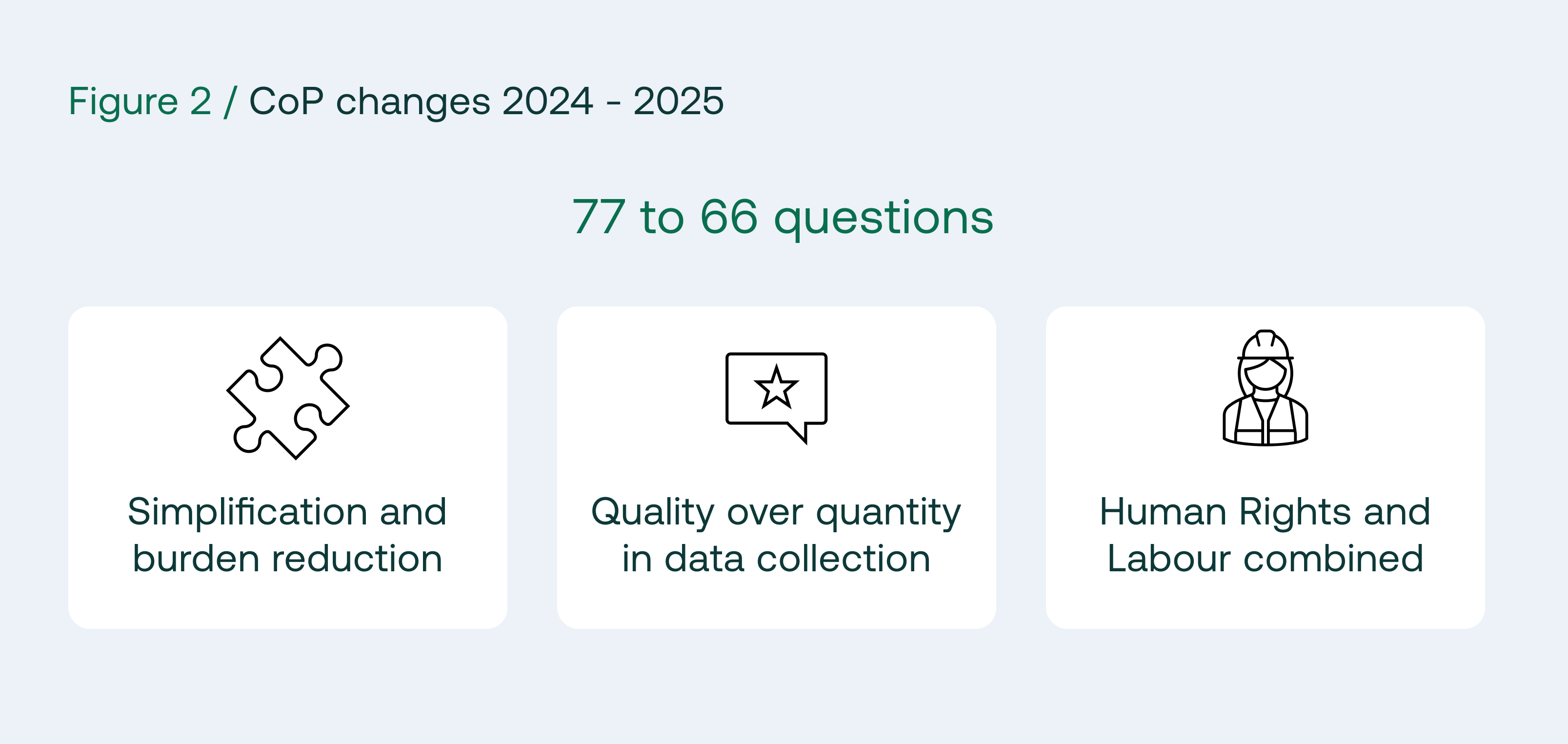
The most significant structural change to the CoP happened between the 2024 and 2025 cycles, when the questionnaire was reduced from 77 to 66 questions. [3] This was not a simplification for its own sake. It was the result of a deliberate review of data quality and usability.
Three changes drove the revision:
The outcome is a questionnaire that is shorter, sharper, and more focused on what companies can actually do with the results.
The changes from 2025 to 2026 are more targeted than the previous year’s overhaul. Three areas stand out. [3]
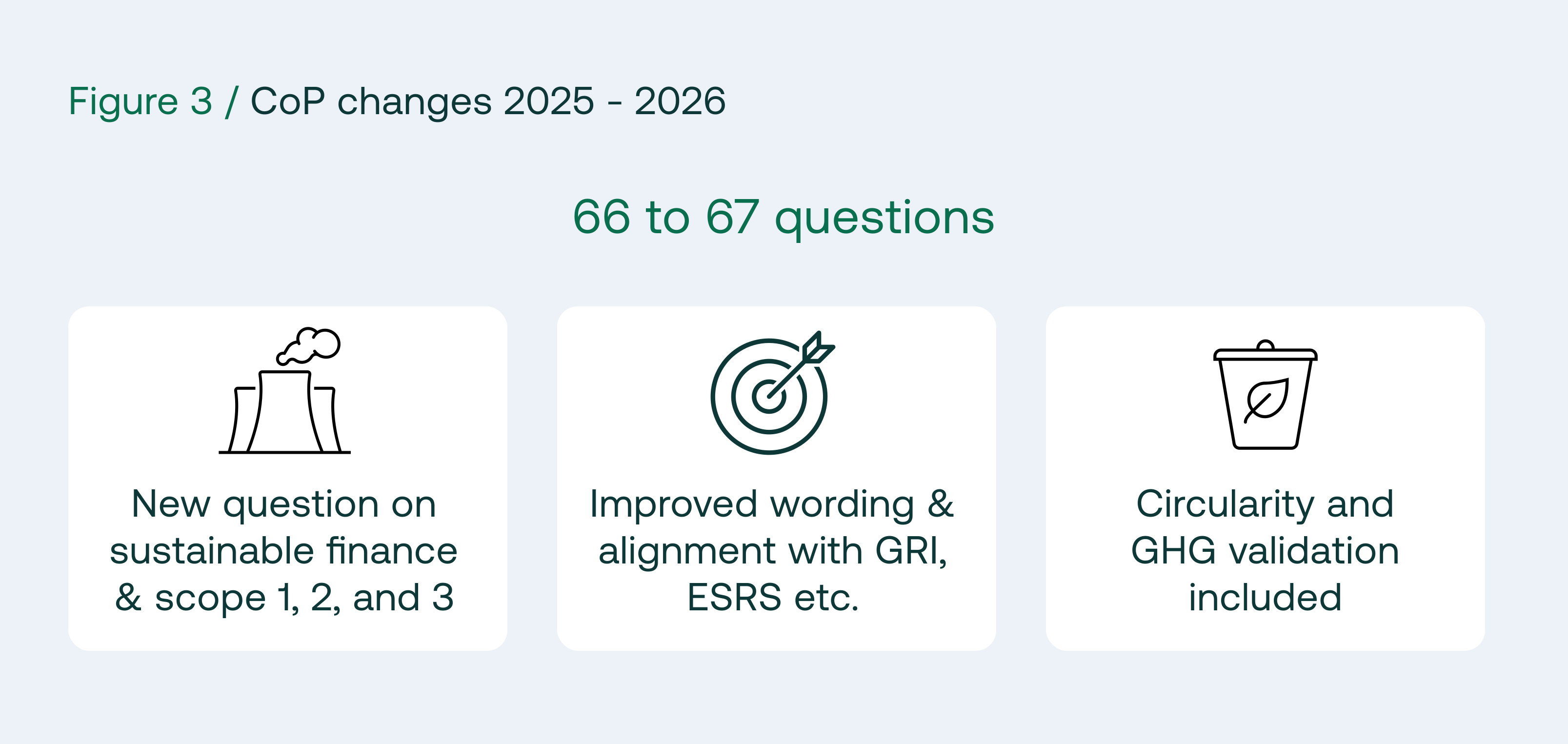
These changes sit within a broader context. The 2025 reporting year saw significant shifts in global corporate sustainability reporting. The EU Omnibus narrowed the scope of mandatory CSRD reporting, and the UNGC has deliberately limited its own simplifications, positioning the CoP as a more robust voluntary tool and as a preparatory framework for companies that may face mandatory reporting in the future. [3] Meanwhile, 30 jurisdictions representing approximately 60% of global GDP are taking steps to implement IFRS Sustainability Standards, and GRI has released updated standards including GRI 102 on Climate Change. [3] The 2026 CoP questionnaire has been revised to remain compatible with all of these developments.
One of the most practical themes from the webinar was efficiency. Companies that already report through EcoVadis, or that are preparing for CSRD, have a significant head start on the CoP.
The CoP questionnaire covers the same core terrain as EcoVadis’ four themes: environment, labour and human rights, ethics, and sustainable procurement. Mapping existing EcoVadis evidence to CoP questions reduces preparation time substantially and avoids collecting the same information twice. For many mid-market companies, that efficiency is what makes the CoP deliverable within the existing reporting cycle.
Download our Ecovadis guide for 2026 insights:
The same logic applies to GRI reporting. The CoP questionnaire was designed with interoperability in mind, and companies that already report using GRI Standards will find many questions familiar in structure and intent. The difference is that the CoP produces structured, comparable data that sits in a global database, enabling benchmarking that narrative GRI reports cannot provide on their own.
For companies now subject to CSRD, the CoP can function as a preparatory layer. Completing the questionnaire builds the governance structures, data collection habits, and board-level accountability that ESRS reporting demands at greater depth. Companies on the journey from compliance to positive impact are not starting over each time a new framework arrives. They are building a connected system. The CoP fits into that system.
The timeline is clear, and the consequences for missing it are public. [1] Companies that fail to submit any CoP element by 31 July 2026 are marked as ‘Non-Communicating’ on their UNGC participant profile, visible to anyone who searches for your company on the UNGC website. Access to UNGC network resources is suspended.
Companies that remain non-communicating beyond 31 December 2026 are delisted on 1 January 2027. The name of every delisted company is publicly disclosed on the UNGC website. Rejoining requires a CEO-signed letter of recommitment and an advance submission of the CoP questionnaire.
For companies that have built their UNGC participation into their sustainability narrative, customer communications, or investor disclosures, delisting is a reputational issue.
The SDGs are in many ways a translation of the Ten Principles. The UNGC actively promotes alignment between the two through its Forward Faster campaign, which identifies five priority areas where companies need to advance if the world is to reach Agenda 2030.
In practice, completing the CoP does not grant automatic rights to use SDG logos. That permission sits with a separate UN department and requires a standalone request. The UNGC participant logo, available to active members, also comes with specific restrictions on how it may appear in reports and external communications. Both should be reviewed before any logo is used in public-facing materials.
The practical approach is to treat the two as a connected system. Mapping your CoP disclosures to relevant SDG targets at the outset reduces duplication and strengthens the story you communicate externally.
Yes, and this is one of the most underused efficiency opportunities in sustainability reporting. The CoP questions and the EcoVadis assessment themes cover the same core ground: environment, labour and human rights, ethics, and sustainable procurement. Evidence already gathered for an EcoVadis cycle maps directly onto CoP questionnaire responses in most sections. Companies managing both within the same reporting cycle should not be collecting the same information twice.
No. The UNGC is designed to meet companies wherever they are on their sustainability journey. Membership requires a CEO commitment to work toward the Ten Principles and to report on progress annually. Several UNGC network events are open to non-participants, providing a low-barrier way to understand the initiative before committing. The CoP questionnaire itself can also serve as a useful starting diagnostic, surfacing where policies, systems, and data still need to be built.
The submission period runs until 31 July 2026. Companies that approach it well, gathering evidence systematically, mapping data owners across the business, and reviewing the 2026 guidebook [4] will find the questionnaire manageable within a structured process.
The practical steps are clear. Confirm CEO continued support and sign the digital statement. Review the 2026 questionnaire and use the CoP guidebook to understand the rationale behind each question. Map data owners across governance, HR/labour, environment, and anti-corruption. Submit through the CoP digital platform, then use the data visualisation tools after submission to compare performance against peers and identify where to focus next.
Companies that have not submitted in recent cycles, or that are considering UNGC membership for the first time, can reach out to the UNGC Netherlands network directly. The CoP is not a certification and offers no external logo. What it offers is structured, comparable visibility into where your sustainability management stands. That visibility is the foundation for meaningful improvement.
Sustainability is a journey. The CoP is one of the most accessible and well-structured tools available to mark where you are on it, and to demonstrate that commitment externally. The 2026 window is open. The deadline is 31 July.
The 2026 CoP window is now open. If your company needs support preparing your submission, or wants to understand how the CoP fits into your broader reporting commitments, contact the Nexio Projects team to book a consultation.
Subscribe to our newsletter for more updates on the CoP, Ecovadis, reporting frameworks and beyond.
[1] UN Global Compact. Communication on Progress (CoP). https://unglobalcompact.org/participation/report/cop. Accessed April 2026.
[2] UN Global Compact. 2024 CoP Insights Report. https://unglobalcompact.org/library/6292. Accessed April 2026.
[3] Romina Coral Andrade and Monica Pascual. From insight to impact: Changes to the CoP questionnaire. Nexio Projects / UN Global Compact Netherlands webinar slides. March 2026.
[4] UN Global Compact. 2026 Communication on Progress Questionnaire Guidebook. https://unglobalcompact.org/library/6341. Accessed April 2026.
[5] UN Global Compact. 2026 Communication on Progress Policy. https://unglobalcompact.org/library/6305. Accessed April 2026.