 Climate risk is financial risk: The business imperative for resilience
December 24, 2025


The UK Sustainability Reporting Standards were published on 25 February 2026 by the Department for Business and Trade (UK Government, 2026). Something to monitor. Voluntary or not, they set a clear baseline for where UK reporting is heading, raising expectations for sustainability directors and CFOs to act now. It is only matter of time, the UK is building a mandatory sustainability disclosure regime.
The Financial Conduct Authority published consultation paper CP26/5 on 30 January 2026, specifically on mandatory application for listed companies, with the consultation closing 20 March 2026 and a Policy Statement expected Autumn 2026 (FCA, 2026). A wider consultation on embedding UK SRS into the Companies Act framework for private companies is expected before the end of 2026. The direction is set.
The organisations that will manage this most effectively are the ones that understand their scope exposure now, not the ones scrambling to respond once mandatory deadlines are confirmed.
For UK-listed companies, the regulatory pathway is the clearest. FCA CP26/5 proposes mandatory UK SRS disclosure requirements for companies listed on UK regulated markets. The consultation closed 20 March 2026. A Policy Statement is expected Autumn 2026 and mandatory application would start on 1 January 2027. (FCA, 2026).
Per the consultation paper, the UK SRS seeks to first apply the new reporting rules to listed companies already subject to TCFD disclosures. As these companies presumably already have the processes and data collection systems in place, and considering the official disbanding of TCFD, this seems a natural first step towards ensuring up-to-date sustainability and climate disclosures.
UK SRS 1 covers general sustainability-related risks and opportunities across governance, strategy, risk management, and metrics. UK SRS 2 covers climate-related disclosures, following the structure of IFRS S1 and S2. For companies that have already built TCFD-aligned disclosures, UK SRS 2 is not a reinvention, it is a structured upgrade (Taylor Wessing, 2026). The governance documentation, data infrastructure, and assurance readiness required to make that upgrade defensible takes time to build.
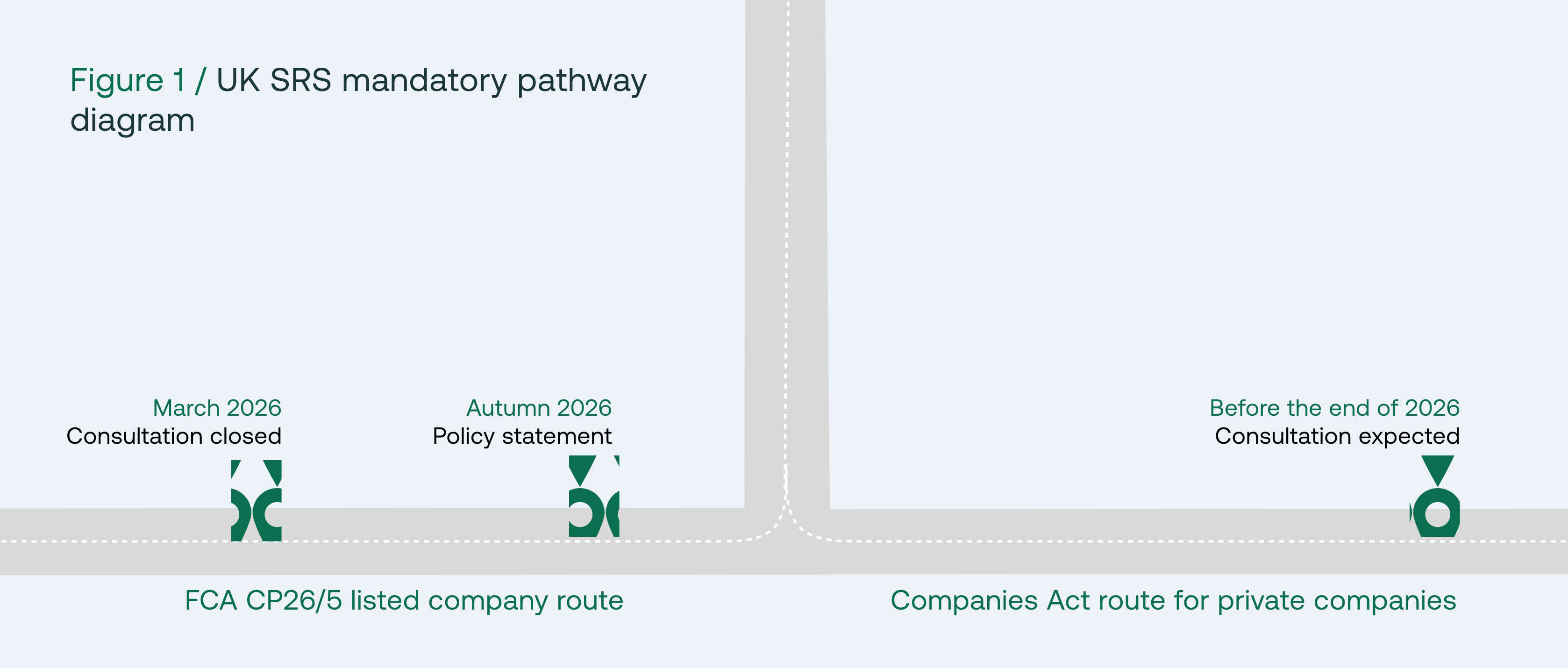
For private companies, the mandatory timeline is less defined. Changes to the Companies Act required to embed UK SRS into the UK corporate reporting framework for non-listed entities are the subject of consultation expected later in 2026. No mandatory date for private companies has been confirmed.
This does not mean private companies are outside the frame. Several forces are already creating de facto reporting expectations regardless of regulatory status.
For private equity-backed companies, the materiality of UK SRS is not primarily regulatory, it is commercial and reputational.
PE firms operating under their own ESG commitments, including UNPRI signatories and firms with sustainability principles embedded in their fund mandates are already requesting ISSB-aligned disclosures from portfolio companies. ESG roadmaps included in post-acquisition 100-day plans increasingly reference UK SRS as the expected reporting framework for UK assets (ICAEW, 2026). For an overview of the sustainability reporting frameworks most relevant to PE-backed businesses, read our guide.
For sustainability directors at PE-backed companies, the triggering event is not a government mandate. It is the next LP report, the next board review, or the next add-on acquisition. Understanding UK SRS scope now means having a credible answer when it is asked.
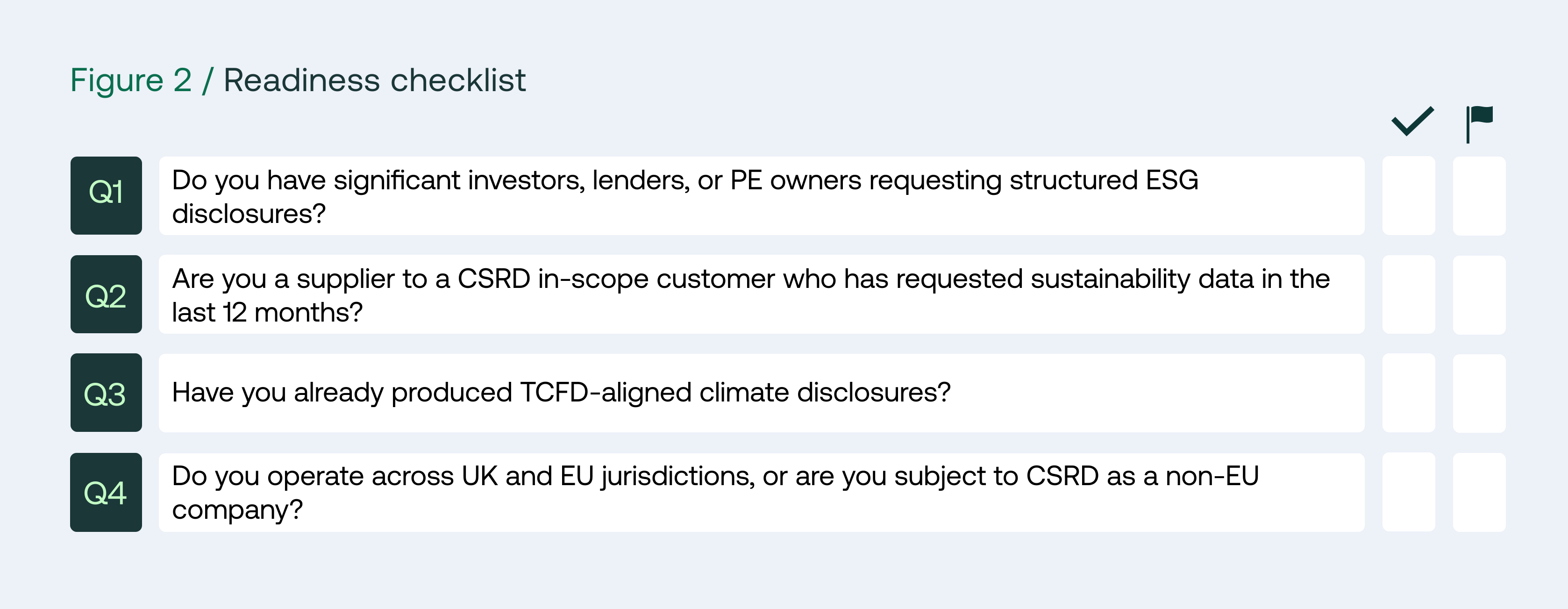
Scope is not purely a function of listing status. It is a function of multiple intersecting factors. Four questions indicate whether your organisation needs to act now or has time to plan carefully.
The UK Sustainability Reporting Standards are not a future regulatory event. They are a live framework, published on 25 February 2026, with a mandatory pathway advancing through the FCA for listed companies and a wider consultation expected before the end of 2026 for private companies. For some organisations, the mandatory deadline is the primary driver. For many others, investor requirements, customer demands, and PE expectations will arrive first.
The right question is not whether UK SRS will apply to your organisation. The right question is which trigger will reach you first, and whether you are ready when it does.
Nexio Projects specialises in scoping exactly this. From compliance to positive impact, starting with clarity on where you stand.
You should not need to wait for a mandatory deadline to know whether UK SRS is relevant to your organisation. The triggers that matter: investor requirements, PE mandates, customer disclosure requests, the FCA Policy Statement, are all moving on their own timelines.
Nexio Projects helps sustainability directors and CFOs understand their UK SRS exposure clearly and build a credible plan before urgency sets in. If you want to know where you stand, let us work through it together.
FCA (2026) Consultation Paper CP26/5: Aligning Listed Issuers’ Sustainability Disclosures with UK SRS. London: Financial Conduct Authority. Available at: https://www.fca.org.uk/publications/consultation-papers/cp26-5-sustainability-disclosures (Accessed: March 2026).
ICAEW (2026) Government Publishes UK Sustainability Reporting Standards. London: Institute of Chartered Accountants in England and Wales. Available at: https://www.icaew.com/insights/viewpoints-on-the-news/2026/feb-2026/government-publishes-uk-sustainability-reporting-standards (Accessed: March 2026).
IFRS Foundation (2023a) IFRS S1 General Requirements for Disclosure of Sustainability-related Financial Information. London: IFRS Foundation. Available at: https://www.ifrs.org/issued-standards/ifrs-sustainability-disclosure-standards/ (Accessed: March 2026).
IFRS Foundation (2023b) IFRS S2 Climate-related Disclosures. London: IFRS Foundation. Available at: https://www.ifrs.org/issued-standards/ifrs-sustainability-disclosure-standards/ (Accessed: March 2026).
IFRS Foundation and EFRAG (2024) Interoperability Guidance between ESRS and IFRS Sustainability Disclosure Standards. London/Brussels: IFRS Foundation and EFRAG. Available at: https://www.ifrs.org/news-and-events/news/2024/05/ifrs-foundation-and-efrag-publish-interoperability-guidance/ (Accessed: March 2026).
Taylor Wessing (2026) UK Sustainability Reporting Standards: What You Need to Know. London: Taylor Wessing. Available at: https://www.taylorwessing.com/en/insights-and-events/insights/2026/03/uk-sustainability-reporting-standards-what-you-need-to-know (Accessed: March 2026).
UK Government (2026) UK Sustainability Reporting Standards: UK SRS S1 and UK SRS S2. London: Department for Business and Trade. Available at: https://www.gov.uk/government/publications/uk-sustainability-reporting-standards-uk-srs-s1-and-uk-srs-s2 (Accessed: March 2026).