 Stakeholder mapping for effective decarbonisation
August 20, 2025


“The clock is ticking. And SBTi wants to make sure that you actually have a plan to reach your targets.”
Corporate climate commitments have moved well beyond voluntary ambition. Disclosure mandates in the EU and North America now make science-based target setting part of the compliance agenda, not just the sustainability one. At the same time, the SBTi is preparing the most significant revision to its Corporate Net-Zero Standard since the framework launched.
For companies navigating CSRD post-Omnibus, California’s SB 253, or growing investor scrutiny, the question is no longer whether to set science-based targets. It is whether to do so before the framework changes and without the common pitfalls that slow implementation down.
This article draws directly on Nexio Projects’ March 2026 webinar, SBTs in Practice: The Road to Net Zero and Compliance, presented by David Vázquez, Principal Climate Consultant, and Dora Cristian, Principal Sustainability Consultant and on over 75 client SBTi journeys across 25 sectors and 20 countries.
The SBTi now counts over 10,000 companies with validated targets, a milestone reached in January 2026. Approximately 13,000 when commitments are included, representing more than 40% of global market capitalisation across 86 territories and 52 sectors [1].
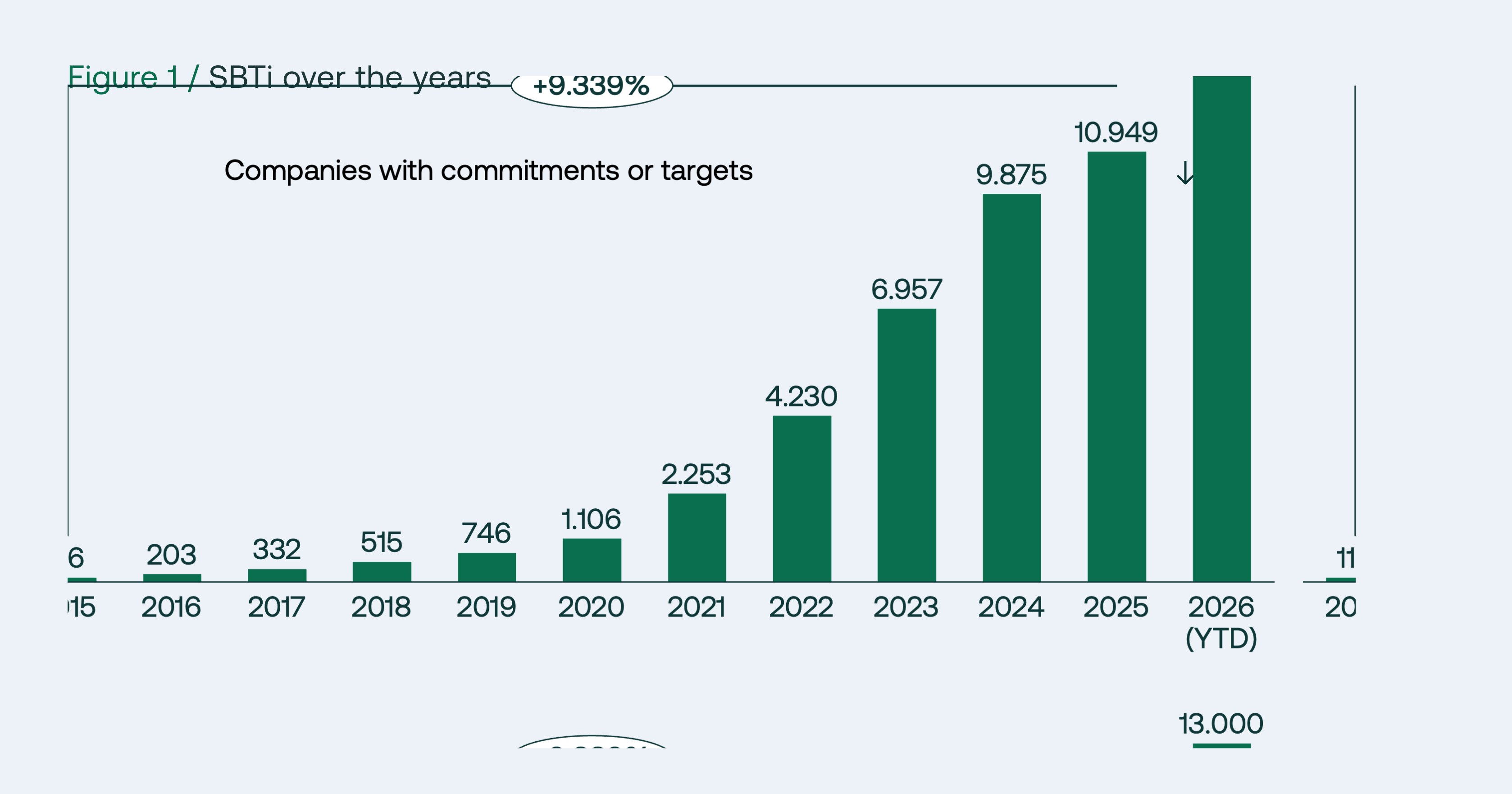
That figure reflects a structural shift. SBTi-aligned targets are no longer the preserve of large, sustainability-mature multinationals. They are required by enterprise customers whose own validated commitments include supplier engagement targets. They are expected by investors assessing climate transition risk. And they are directly connected to the regulatory frameworks companies must now report against.
As David Vázquez stated during the webinar: “The good thing about following SBTi is that it helps you build the essential foundations to meet many requirements mandated by these regulations.”
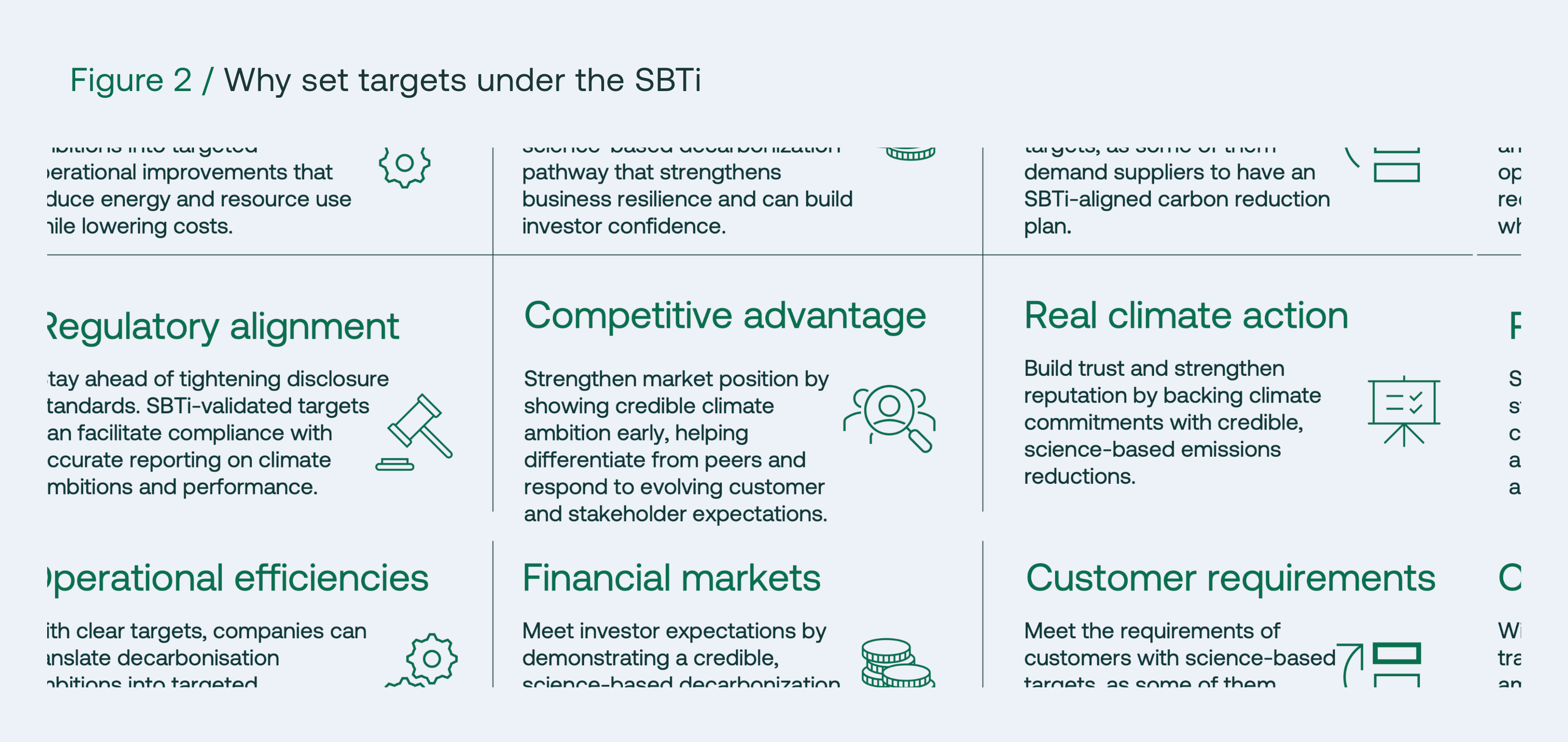
The business case extends beyond compliance: Clear measures implemented to meet targets drive operational efficiency, strengthen investor confidence, and create the governance structure needed to make a credible transition plan defensible at audit.
Download our factsheet for foundations on SBTi and best practices!

For companies subject to CSRD, the link between validated science-based targets and ESRS E1 reporting is direct and practical.
Under the post-Omnibus scope, applicable to EU companies with more than 1,000 employees and over €450 million in turnover, the disclosure requirements under ESRS E1 most likely to remain include: targets related to climate change mitigation and adaptation (E1-6), energy consumption and mix (E1-7), gross Scope 1, 2 and 3 emissions (E1-8), transition plans (E1-1), and removal actions (E1-9) [5][6].
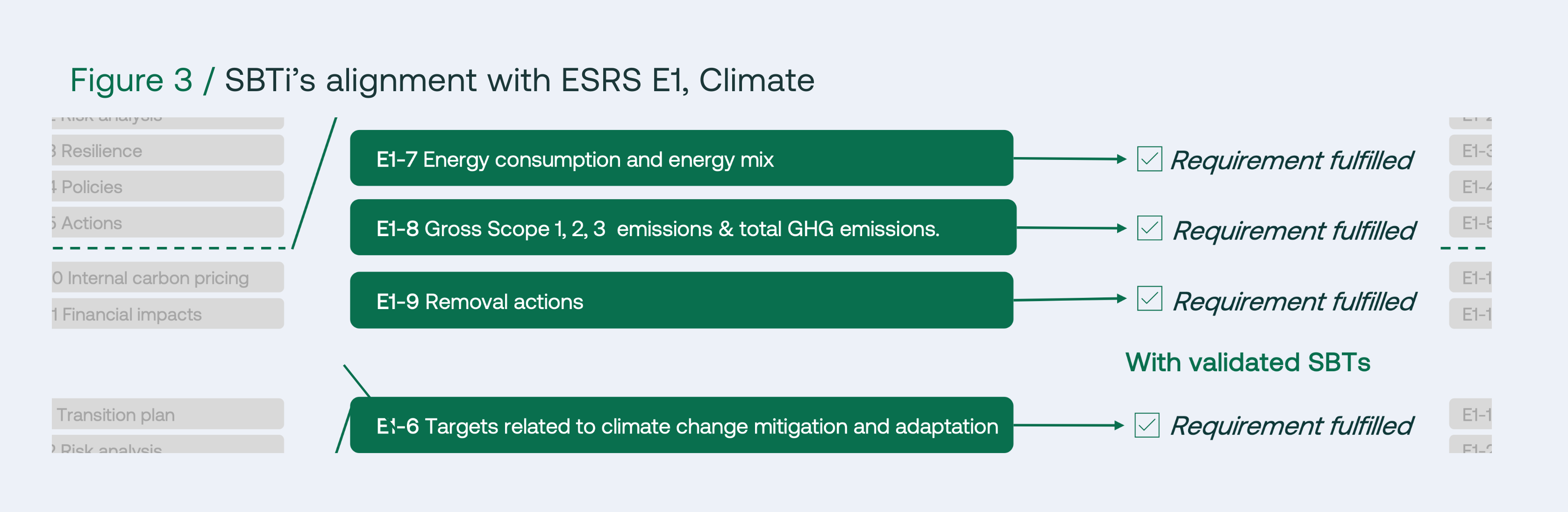
A validated SBTi submission, built on a robust GHG inventory, practically fulfils the majority of these ESRS E1 requirements — including the audit-ready emissions baseline, target methodology, and documentation trail needed for limited assurance.
Dora Cristian was precise on what ESRS actually demands: “ESRS does not prescribe behaviour. They mostly say that if you choose to set climate change mitigation and adaptation targets, they need to be science-based , in line with the Paris Agreement. This is where SBTi provides that nice framework.”
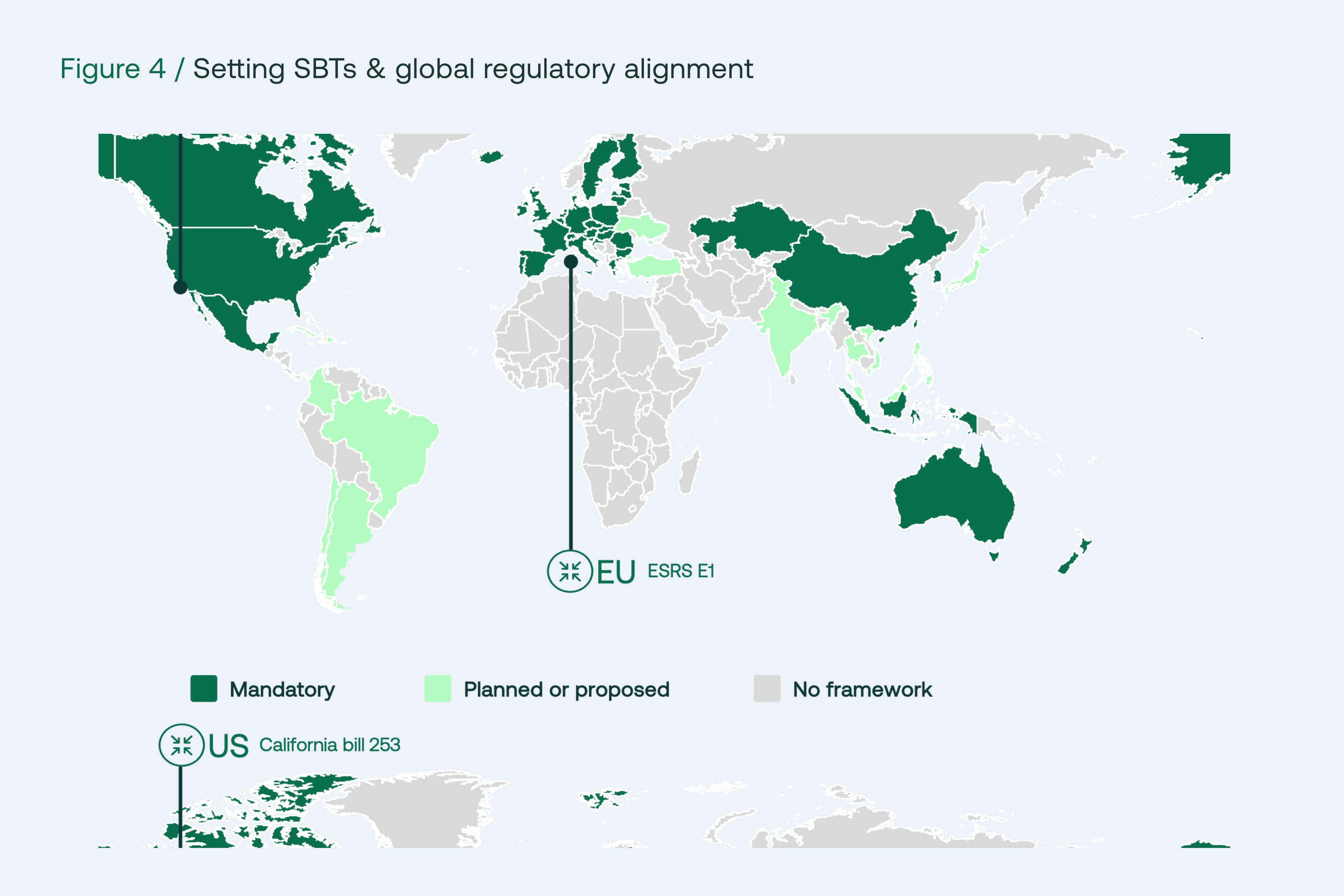
For companies doing business in California, the California Air Resources Board (CARB) approved its implementing regulation under SB 253 on 26 February 2026 [7]. Initial Scope 1 and 2 reporting, covering 2025 data, is required by 10 August 2026, with Scope 3 requirements following from 2027 [8]. The law applies to US entities with annual revenue above $1 billion. Separate limited assurance for Scopes 1 and 2 is required, but an SBTi-validated inventory is inherently audit-friendly, with traceable calculations aligned to ISAE 3000 or AA1000 standards.
Looking further ahead, mandatory climate disclosure frameworks are expanding globally. The IFRS Sustainability Disclosure Standards (ISSB) and the emerging UK Sustainability Reporting Standards (UK SRS) both require companies to disclose any climate targets they hold. As Dora Cristian noted in the webinar: “The IFRS S2 and UK SRS also say that if the company has a target, they need to disclose it and there is more of a tendency to regulate these things.”
Disclaimer: ESRS standards referenced above are based on the EFRAG amended exposure draft (July 2025) and revised draft (November 2025) and remain subject to finalisation [5][6].
The SBTi is developing Version 2 of its Corporate Net-Zero Standard. Following two rounds of public consultation, the second of which closed on 12 December 2025, the standard is expected to be published in 2026, following formal review and approval by the SBTi Technical Council and Board of Trustees [2].
The most significant proposed changes in the second consultation draft include:
On transition: companies can continue setting targets under the current Corporate Net-Zero Standard (V1.3) and Near-Term Criteria (V5.3) until 31 December 2027. From 1 January 2028, all new submissions will be required to use Version 2 [3]. Existing validated near-term targets remain valid until the end of their target timeframe.
That transition window is not an invitation to delay. Setting targets under V1.3 now builds the inventory quality, internal processes, and supplier engagement foundations that Version 2 will require — and avoids a last-minute rush as the 2027 deadline approaches.
Note: All references to the Corporate Net-Zero Standard V2 are based on the second public consultation draft (November 2025). The standard has not yet been published [2].
For most companies, value chain emissions represent the majority of their total footprint. Where Scope 3 accounts for more than 40% of total GHG emissions, a Scope 3 near-term target is required under current SBTi criteria [4]. For numerous sectors it is mandatory to set targets according to Sectoral Decarbonisation Approaches (SDAs).
Three target types are accepted for near-term commitments:
One point frequently missed: intensity and engagement targets are accepted only for near-term commitments. For net-zero, only an absolute contraction target qualifies [3]. Companies that structure only intensity or engagement targets today will need to revisit their approach for the long-term submission.
The most common reason companies delay starting the Scope 3 process is incomplete data. The GHG Protocol allows for extrapolations and estimations where primary supplier data is unavailable [4]. As David Vázquez explained during the webinar: “It doesn’t require you to have perfect data. If your data is complete, even with estimations and extrapolations, I would still encourage you to set a target.”
Starting with available data and improving iteratively, guided by documented assumptions, is both accepted methodology and the most effective way to build internal commitment and supplier engagement momentum.
Nexio Projects has more than 75 client organisations that have started their SBTi journey. From initial GHG inventory to validated target submission, across more than 20 countries and 25 sectors, we help you set credible targets, as part of your wider decarbonisation strategy.
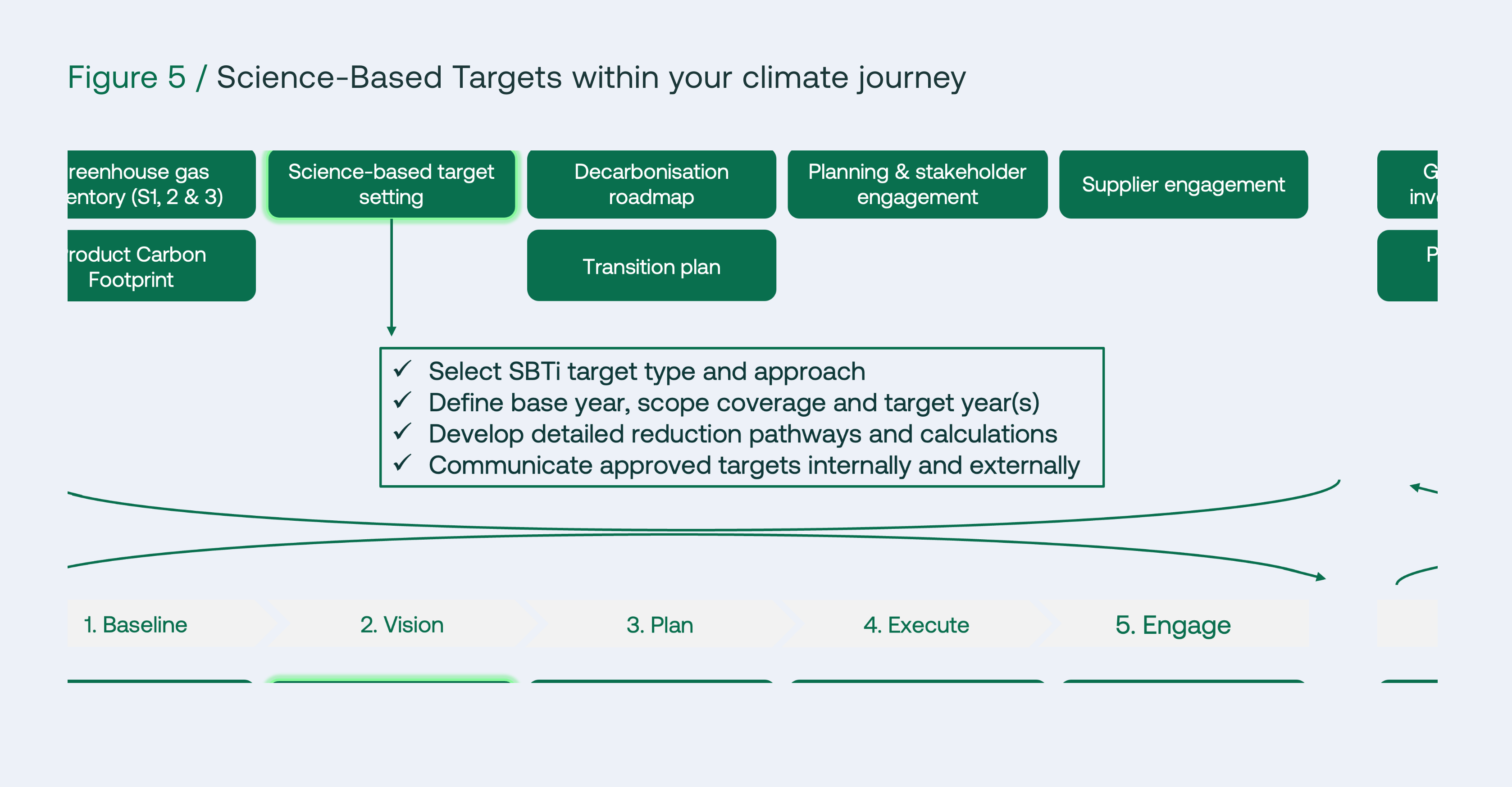
Rigorous methodological preparation before submission is the single highest-value action. SBTi’s validation process specifically identifies inconsistencies in emissions calculations, the less clean the submission, the longer and more disruptive the review. Scenario modelling before selecting a target type prevents targets being validated and then quietly missed.
Supplier engagement matters even when a formal supplier engagement target has not been selected. Companies with established supplier data programmes are better placed for Scope 3 reduction and better positioned for the more demanding requirements expected under Version 2.
On rebaselining: Where data quality improvements or corporate actions, acquisitions, divestments, structural reorganisations materially alter the baseline, SBTi requires notification and may require resubmission [3]. Methodological improvements that do not materially shift the baseline do not trigger this requirement. It is a manageable process once understood, but one that regularly surprises teams encountering it for the first time.
Science-based targets are now embedded in the compliance and disclosure landscape, not as a separate initiative, but as the methodology underpinning credible climate reporting under CSRD, SB 253, and frameworks expanding globally. The SBTi’s own standard is evolving in response: Version 2 will require published transition plans and introduce a cyclical validation system that makes target-setting a continuous discipline rather than a one-time event.
The companies best positioned are those that have treated SBTi not as a badge, but as a planning framework, building inventory quality, engaging their supply chains early, and connecting their validated targets to reporting, investor communications, and operational decisions. That is the road from compliance to positive impact.
Download our expert guide to learn more about measuring and reducing scope 3 emissions.

Ready to set or validate your science-based targets ahead of Corporate Net-Zero Standard V2?
Book a free consultation with Nexio Projects’ climate team. We will assess your current GHG inventory, identify the right target type for your business, and guide your submission to validated status.
Sign up to our newsletter and learn more about climate trends, strategic best practices and regulatory news.
[1] Science Based Targets initiative (SBTi), “Corporate climate action momentum builds as SBTi reaches 10,000 companies with validated targets”, 22 January 2026. https://sciencebasedtargets.org/news/sbti-celebrates-10000-company-validations
[2] Science Based Targets initiative (SBTi), “Developing the Corporate Net-Zero Standard Version 2 — Second Public Consultation Draft”, November 2025. https://sciencebasedtargets.org/developing-the-net-zero-standard
[3] Science Based Targets initiative (SBTi), Corporate Net-Zero Standard V1.3 and Near-Term Criteria V5.3, September 2025. https://sciencebasedtargets.org/net-zero
[4] Science Based Targets initiative (SBTi), Corporate Near-Term Criteria V5.1, April 2023. https://files.sciencebasedtargets.org/production/files/SBTi-criteria-v5.1.pdf
[5] EFRAG, Draft ESRS E1 — Climate Change, revised draft, November 2025. https://www.efrag.org/sites/default/files/media/document/2025-12/November_2025_ESRS_E1.pdf
[6] EFRAG, Amended ESRS Exposure Draft, July 2025. https://www.efrag.org/en/draft-simplified-esrs
[7] California Air Resources Board (CARB), “CARB approves climate transparency regulation for entities doing business in California”, February 2026. https://ww2.arb.ca.gov/news/carb-approves-climate-transparency-regulation-entities-doing-business-california
[8] PwC, “California climate reporting — SB 253 and SB 261 explained”, updated March 2026. https://www.pwc.com/us/en/ghosts/california-climate-reporting-sb-253-and-sb-261-explained.html