 Ultimate guide for business: How to contribute to the Paris Agreement
November 8, 2022


The pharmaceutical sector operates under intensifying ESG scrutiny. Regulatory frameworks like CSRD and CSDDD, alongside stakeholder expectations, compel action on human rights and decarbonisation. These interconnected priorities shape the industry’s sustainability trajectory across complex global value chains.
Pharma sits at the heart of healthcare, contributing 5% of global GHG emissions, with nearly half the industry committed to achieving net zero emissions by 2050 (1). These organisations navigate intricate supply chains spanning raw material extraction, manufacturing, and global distribution, leading to high carbon emissions and creating both significant ESG risks and transformation opportunities.
With Pharma’s importance established, it’s important to mention that no matter the sector, 70% of an organisation’s sustainability footprint resides within its supply chains (2) that span raw material extraction, manufacturing, and global distribution. This is where the greatest transformation opportunities lie.
A recent study reveals 81% of buying organisations across sectors prioritise labour & human rights alongside supplier workforce practices, while 68% of global pharma companies now mandate annual human rights due diligence from Tier-1 suppliers (3).
CSRD, CSDDD, modern slavery legislation, and CBAM create mounting pressure, transforming ESG from discretionary reporting to operational necessity across pharma’s complex global networks. Consequently, the themes below stand out as priority sustainability areas for pharmaceutical companies to focus in 2026 and beyond.
Pharma’s global reach amplifies labour & human rights risks across complex supply chains. Reputational damage from violations can be devastating, while consumers increasingly favour ethically produced medicines, most willing to pay premiums (4). The ILO estimates workplace accidents cost 4% of global GDP annually (5), making robust human rights management a clear financial imperative.
The sector faces persistent challenges:
Scope 3 emissions dominate pharmaceutical carbon footprints, concentrating in purchased goods, product use, and upstream transportation. Thousands of companies now work towards science-based decarbonisation targets for verified reductions.
Most visible emissions represent only a fraction of true impact; supply chain emissions form the bulk of organisational footprints in the pharmaceutical sector. Carbon footprint measurements can shed light on emissions lying in the value chain and thereby unlock cost reductions, regulatory readiness, and stakeholder trust. A strategic decarbonisation strategy positions companies ahead of inevitable compliance demands.
Pharma leaders target high-impact areas across logistics, manufacturing, and materials:
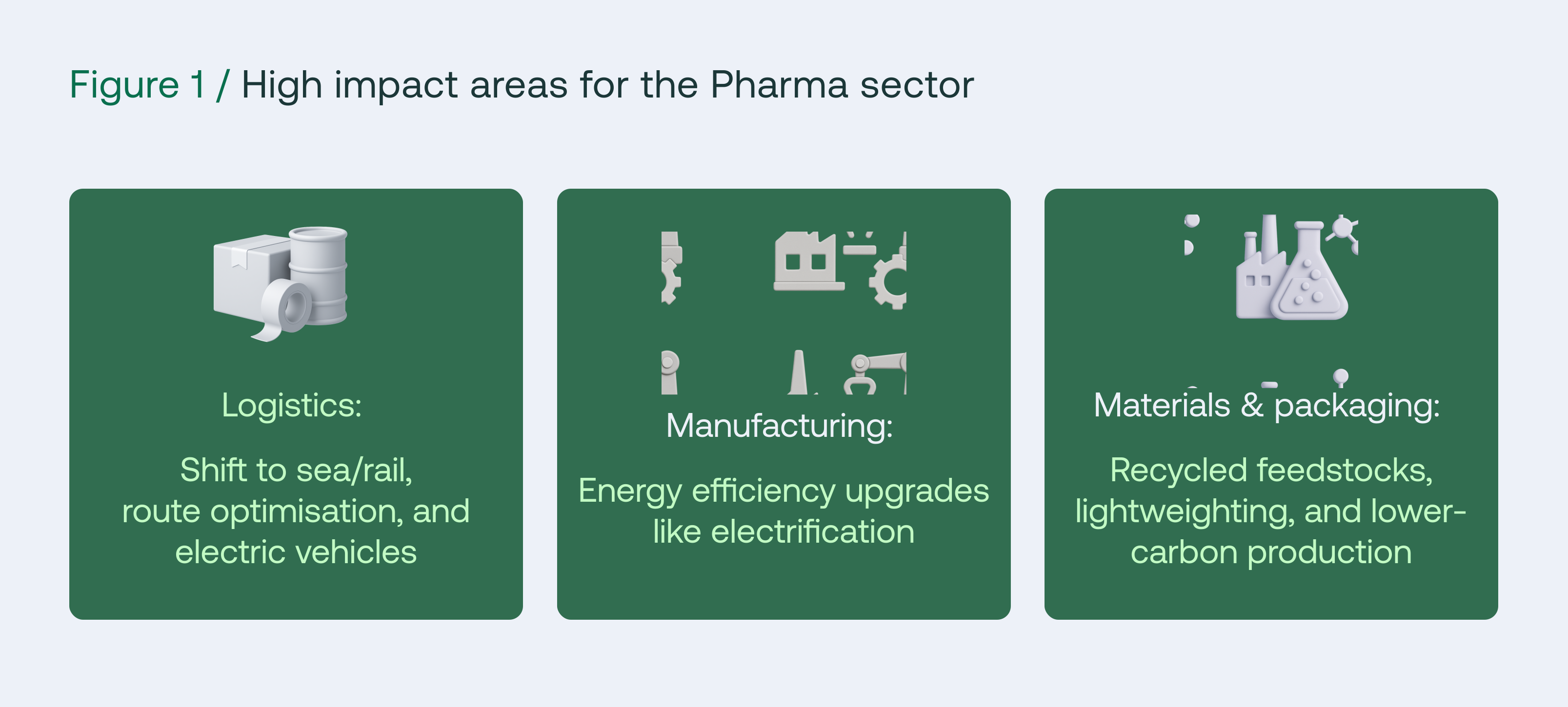
Effective pharma supplier engagement cascades through clear expectations communicated consistently across the value chain. Accessible training programmes build critical capabilities, particularly in high-risk API manufacturing regions.
Assessment tools like EcoVadis scorecards and the development of decarbonisation roadmaps track tangible progress. Incentives, including preferred long-term contracts, recognition awards, and renewable energy co-investments, align supplier sustainability with corporate ESG goals.
Product carbon footprint (PCF) analysis transforms decarbonisation from high-level corporate reporting into actionable product-level insights. While traditional inventories provide strategic direction, PCFs reveal exactly where materials and processes drive emissions. PAS 2090 establishes pharma-specific standards as procurement teams increasingly demand supplier-level transparency.
These complementary tools serve distinct but interconnected purposes:
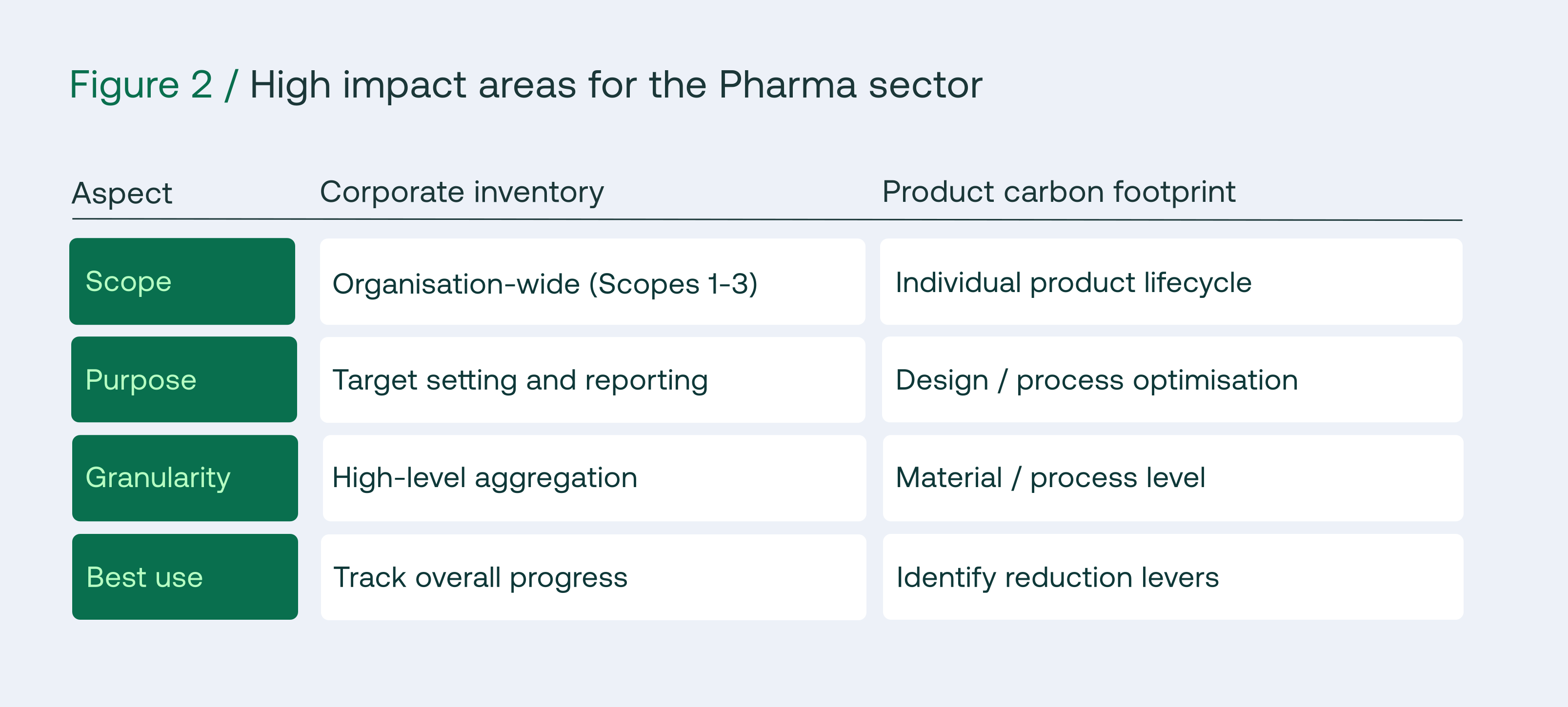
This structured approach delivers results through three phases: collecting primary supplier data to establish accurate baselines, mapping emissions hotspots by specific materials and processes, then implementing targeted redesigns and supplier collaboration that drive measurable carbon reduction across product portfolios.
Human rights and decarbonisation converge around shared foundational elements that demand integrated execution:
Pharma leaders execute through coordinated cross-functional strategies:
ESG has evolved from simple reporting to core business strategy. This shift drives long-term resilience and market leadership. Human rights and decarbonisation define pharma’s biggest supply chain challenges. These priorities connect across global value chains. They demand smart execution at every level.
Leadership commitment makes the difference. Integrated governance creates clear accountability. Authentic supplier collaboration builds real progress. Transparency earns stakeholder trust. Continuous improvement ensures long-term success. Sector leaders who master these priorities today set tomorrow’s standards.
As a pure-play sustainability and climate consultancy, Nexio Projects supports pharma organisations across critical ESG areas. Our team of climate consultants are trained to cover solutions such as net zero and decarbonisation, product sustainability analysis including PCF/LCA, and comprehensive supplier engagement programmes. Moreover, our experts can provide your organisation with EcoVadis assessment support, covering multiple sustainability pillars for transparent documentation.
Ready to advance your ESG journey?
Contact Nexio Projects for tailored guidance and subscribe to our newsletter for pharma-specific insights, regulatory updates, and emerging ESG trends.