A response to Dopper’s: To B or not to B
June 3, 2022


The chemical sector faces mounting environmental pressures, evolving regulatory demands, and heightened stakeholder expectations. Companies in the sector must undergo a holistic transformation to remain competitive – addressing its extensive emissions, hazardous substances, and resource inefficiences. Understanding these ESG trends, and acting decisively, will them to take the lead in sustainability.
The chemicals industry ranks among the highest industrial emitters, with Scope 3 emissions accounting for approximately 75–90% of total greenhouse gas emissions, driven largely by upstream raw material production and downstream product use and disposal (1).
Key contributors across the sector include:
Growing regulatory and investor focus on full value chain transparency and achieving net zero is pushing chemical companies to engage suppliers on emissions reporting and collaborate on lower-carbon sourcing strategies. Industry initiatives such as the Together for Sustainability (TfS) framework support improved data consistency and supplier comparability, accelerating progress from compliance to emissions reduction and sustainability leadership (1). Nexio Projects supports chemical clients through precise carbon accounting and supplier engagement programmes, advancing from compliance to leadership stages.
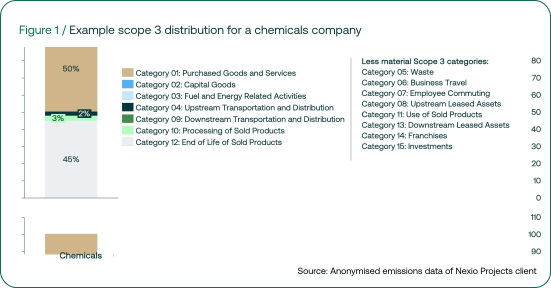
In the chemicals industry, a large share of Scope 3 emissions often comes from Category 1: Purchased Goods and Services, due to the carbon-intensive production of feedstocks, solvents, and other intermediate chemicals. A significant portion can also arise from Category 12: End-of-Life Treatment of Sold Products, reflecting downstream impacts when products are disposed of, frequently through emissions-intensive methods such as incineration.
Smaller but still relevant contributions typically come from Category 4: Upstream Transportation and Distribution and Category 10: Processing of Sold Products, linked to logistics and how customers further process chemical intermediates. This distribution is indicative for the sector but can vary for companies with specific product portfolios and business models.
Circularity is increasingly redefining chemical production by reducing reliance on virgin raw materials, improving resource efficiency, and minimising waste across processes and product lifecycles (2).
Recent industry analysis highlights urgent actions to scale circularity, including improved waste segregation, eco-friendly product design, process optimisation, and supportive policy frameworks to enable recycling infrastructure (2). Strengthening circular practices not only reduces environmental impact but also enhances supply security and cost resilience across chemical value chains.
Find out more how we help with product sustainability.
As regulatory scrutiny intensifies, non-compliance can result in market access restrictions, while proactive alignment strengthens investor confidence and customer trust (3). Integrating regulatory requirements into ESG strategy is becoming a critical differentiator across the sector.
Non-compliance risks market exclusion for commodity chemicals, while alignment boosts investor appeal (3). Our reporting guides and gap analyses help chemical clients interoperate frameworks effectively across maturity stages.
Read our reporting guide to learn more about various global frameworks.

Beyond emissions, ESG performance in the chemicals industry increasingly depends on robust product stewardship throughout the lifecycle—from synthesis and formulation to downstream use and disposal (3).
Effective product stewardship reduces environmental and health risks while mitigating legal and reputational exposure linked to legacy contamination and non-compliance (3).
Chemical manufacturers face escalating physical and transition climate risks that threaten operational continuity and financial performance, from extreme weather disrupting production sites to rising carbon costs affecting energy-intensive processes (4).
Physical risks include flooding, heat stress on reactors and cooling systems, and water scarcity impacting processing and effluent treatment. Scenario analysis under different climate pathways indicates potential 10–20% revenue impacts from downtime, energy price volatility, or raw material disruptions in energy-intensive operations (4).
Organisations embedding climate risk management into ESG strategy are better positioned to safeguard operations, manage transition risks, and capture value from increasingly climate-resilient product offerings (4,5).
Watch our on-demand session on tackling climate risk for a resilient business.

Forward-thinking companies embed climate risk into ESG strategy, hedging with green hydrogen contracts and turning vulnerabilities into premium ‘climate-resilient’ product lines. Nexio Projects leverages data-driven insights to unlock these opportunities across multiple sustainability stages.
ESG challenges in the chemicals industry are multifaceted and demand trusted partnerships built on deep technical knowledge and close collaboration. Years of working alongside a wide range of chemical companies have equipped Nexio Projects with sector-specific insights and tested methodologies to drive meaningful sustainability improvements.
The cases below will showcase some of these success stories, demonstrating how co-created strategies and tailored ESG roadmaps can unlock measurable impact across different product portfolios, geographies, and value chains.

Nexio Projects partnered with COUNT Energy Trading to complete their EcoVadis Assessment and craft their Annual Sustainability Report. Operating in the petrochemical trading sector with limited upstream control, COUNT sought external certification to validate sustainability efforts for customers. Our targeted EcoVadis review, strategic insights, and report support secured a Gold Medal, enhancing transparency across their value chain and boosting internal confidence and ambition.
“Nexio Projects provided comprehensive guidance on our EcoVadis assessment, helping us to continue making progress on our sustainability journey.”
– Ricardo Cordeiro de Sousa, Sustainability Officer at COUNT Energy Trading

Nexio Projects partnered with Orion Engineered Carbons to complete their EcoVadis assessment and pinpoint priority ESG areas like Scope 3 and product stewardship. As a global specialty carbon black leader, Orion sought a score reflecting its sustainability efforts while deepening internal methodology understanding. Our guidance on submission, documentation, and gap analysis elevated their rating from Silver to Gold, enhancing transparency across their value chain and boosting team awareness and motivation.
“Nexio Projects delivers on time and on budget. I have no hesitation in recommending them and the next project is already in the pipeline.”
– Jochen Rother, Head of Corporate Sustainability at Orion Engineered Carbons

The chemicals sector is one of our main markets and a cornerstone of our expertise at Nexio Projects. We support numerous chemical companies, from specialty producers to global commodity players, with tailored solutions in ratings & certifications like Gold/Silver medals and readiness programmes, reporting readiness like CSRD/ESRS compliance and double materiality assessments, and climate solutions that lead the sector’s ESG agenda.
Our team delivers excellence in sustainability KPIs and climate action. Namely, circular business strategies like Scope 3 deep dives including product carbon footprints and supplier data platforms, climate risk assessments like TCFD-aligned scenario analysis, and data management such as granular emissions inventories and PCF standardisation, creating substantial carbon reduction.
Across 25+ sectors, we create real impact: elevating ratings, unlocking premium markets, and future-proofing against reporting like CBAM, circular economy practices, scope emissions and more. As a top-ten boutique ESG consultancy by Verdantix and top sustainability consultancy by consultancy.nl, we turn chemicals ESG from compliance burden into strategic advantage, driving resilience, innovation, and leadership.
Ready to elevate your ESG journey? Speak to our experts for tailored chemical sector strategies.
Subscribe to our newsletter for ESG insights.