 4 practical steps to implement ISO20400
September 22, 2022


The request arrived as a line item in a supplier qualification form. A key enterprise customer, a manufacturer reporting under CSRD, required verified product environmental data from all strategic suppliers. Global warming potential per functional unit. Third-party verified. Comparable across alternatives.
Most supply chain directors can answer a cost, lead-time, or quality question within hours. An Environmental Product Declaration (EPD) request, asking for independently verified, life cycle-based environmental data for a specific product, exposed a gap that hours could not close.
That gap is widening. Corporate sustainability reporting obligations are expanding, regulatory pressure on product-level environmental claims is intensifying, and the demand for verified EPD data is moving from occasional request to standard procurement practice. For supply chain directors managing supplier relationships and product portfolios across EU and UK markets, understanding what an EPD is, who is requesting it, and what is driving that demand in 2026 is no longer optional context. It is supply chain intelligence.
An Environmental Product Declaration quantifies the environmental impacts of a specific product across its full life cycle: from raw material extraction through manufacturing, distribution, use, and end-of-life treatment. It is produced in accordance with ISO 14025 and for ,construction products, EN 15804:2022+A2:2019/AC:2021, registered with a recognised programme operator, publicly searchable, and independently verified. (4)
Three characteristics distinguish an EPD from a marketing claim or a self-assessment:
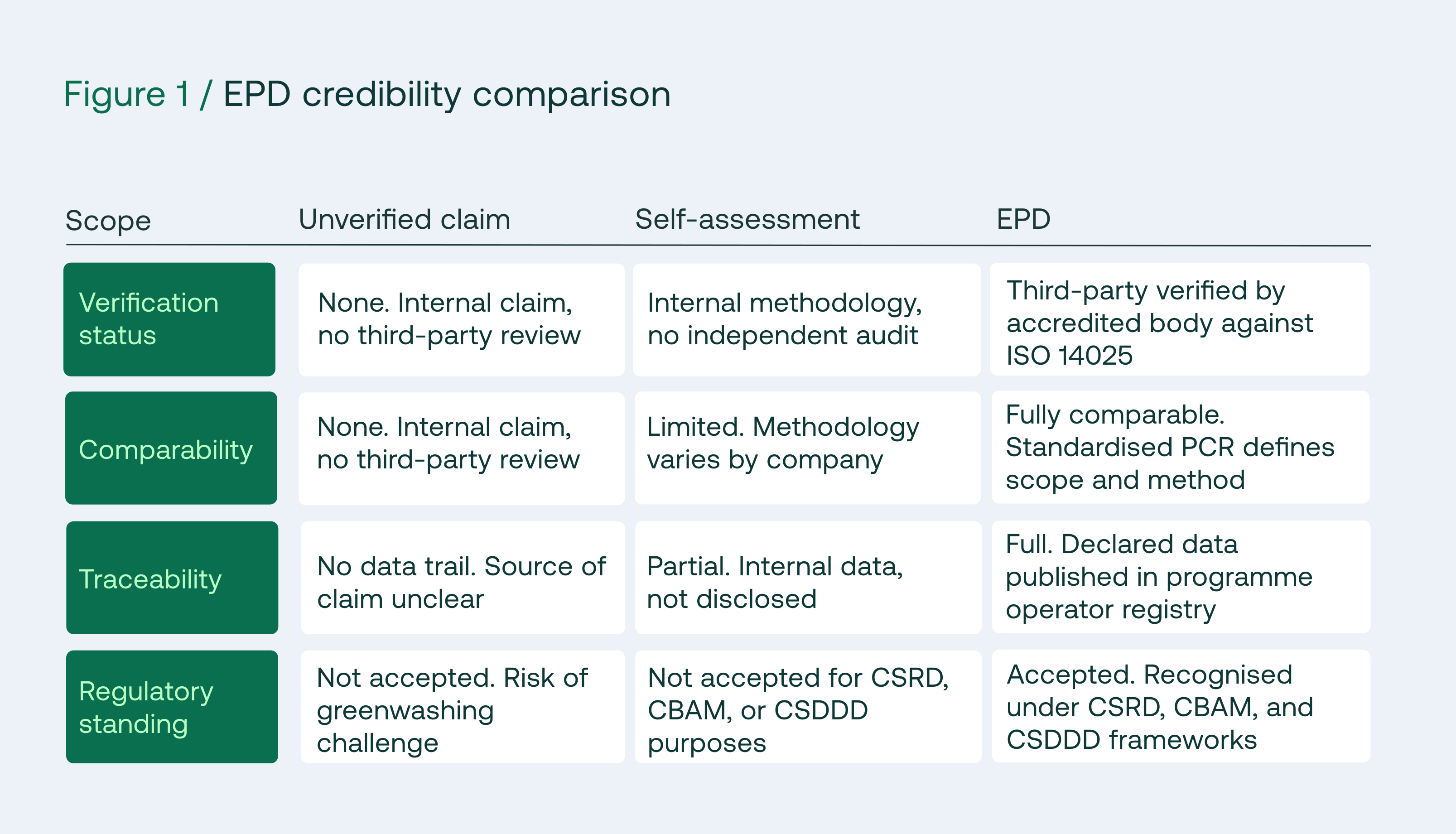
The International EPD® System surpassed 18,000 valid registered EPDs in 2025, with 9,395 new EPDs published in that year alone. (1) Construction currently accounts for 86% of registrations by volume. Growth is accelerating fastest in metals, textiles, and electronics, the categories where regulatory and commercial pressure is landing simultaneously.
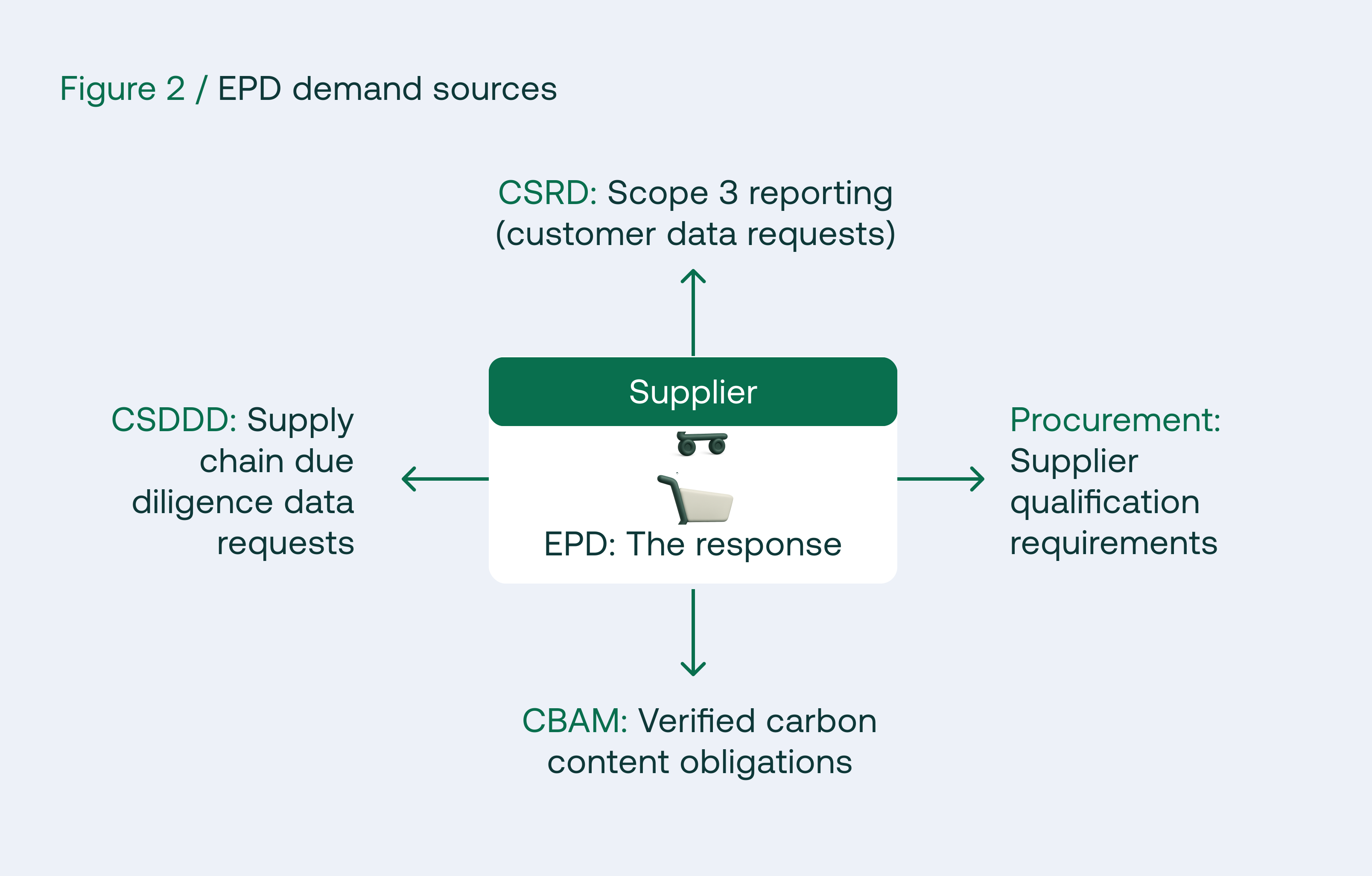
The sources of EPD demand are multiplying and converging on supply chain directors from several directions at once.
Companies with CSRD obligations must report Scope 3 Category 1 emissions from purchased goods and services. Data quality requirements under ESRS E1 are pushing companies away from spend-based estimates toward activity-based lifecycle data from suppliers. An EPD provides the GWP per functional unit that enables a customer to calculate their own upstream emissions with credible, auditable data. For supply chain directors, the implication is direct: your EPD data is your customer’s Scope 3 answer and increasingly, the condition on which they retain you as a supplier.
Public and private procurement in construction, infrastructure, and manufacturing increasingly lists a valid EPD as a supplier qualification requirement. Research in the Netherlands indicates that the absence of an EPD can cost suppliers up to 14% of procurement market share in public tenders. (5) Absence is not a neutral position. It is a disqualification risk in an active process.
The Carbon Border Adjustment Mechanism (CBAM) applies to steel, aluminium, cement, fertilisers, hydrogen, and electricity exported to the EU. From January 2026, EU importers must hold CBAM certificates corresponding to the verified embedded carbon of imported goods. (10) Suppliers in these categories that cannot provide verified GHG data are creating direct financial liability for their EU customers. That liability translates quickly into supplier qualification decisions.
The commercial pressure on EPDs reflects a regulatory convergence that is compressing timelines across sectors simultaneously.
For companies within the CSDDD first wave (EU companies with more than 5,000 employees and over €1.5 billion in global turnover, and non-EU companies with over €1.5 billion in EU net turnover) national transposition deadlines begin in July 2026. (9) These companies have a direct legal obligation to identify and address environmental impacts across their supply chains. EPD and LCA data is the most credible evidence base for demonstrating that this due diligence has been conducted on purchased goods. A supply chain without verified product environmental data is a CSDDD compliance gap waiting to be identified in audit.
For companies outside the first wave: CSDDD-obligated customers will pass data requests downstream through their supplier due diligence programmes. The legal obligation falls on the customer; the commercial pressure lands on the supplier. In both cases, verified product environmental data is what the request requires.
The ESPR Working Plan, adopted April 2025, confirms delegated acts for textiles, steel, aluminium, tyres, and electronics between 2026 and 2029. (3) The Digital Product Passport, ESPR’s central compliance mechanism, requires machine-readable lifecycle and sustainability data accessible via QR code or equivalent data carrier. EPD data is expected to feed directly into DPP infrastructure as sector-specific delegated acts are adopted. Companies building EPD programmes now are building DPP compliance architecture at the same time.
The ECGT Directive prohibits generic environmental claims without verifiable, recognised evidence from September 2026. (2) “Eco-friendly,” “sustainable,” “green,” “low-carbon”, used without verification, become legal liabilities. An EPD is the instrument that backs a specific, auditable product-level environmental claim. Without one, environmental marketing language is exposure.
Manufacturers of construction products must disclose third-party-verified GWP data via EN 15804-compliant EPDs from 2026. Full lifecycle impact reporting across all categories becomes mandatory by 2030. (7) For construction material manufacturers and their supply chains, this obligation is immediate and active.
An EPD is not a document that sustainability teams produce for annual reporting. In 2026, it is the evidence base for commercial relationships, the response to customer procurement requirements, and the compliance infrastructure behind four converging regulatory obligations.
Supply chain directors who recognise this are not waiting for a mandatory deadline to force the issue. They are building verified product environmental data into their supplier engagement frameworks now. Using it to retain key customer relationships, secure market access, and position ahead of competitors whose product-level environmental data remains unverifiable.
Nexio Projects guides organisations through this process, from initial scope definition and life cycle assessment through EPD registration and supply chain data integration. As a registered LCA practitioner under the International EPD® System, we bring both technical rigour and commercial understanding to every engagement. The goal is not compliance as an end point. It is moving from compliance to positive impact.
Nexio Projects is a registered LCA practitioner under the International EPD® System. As a top boutique sustainability consultancy, named by Verdantix, our experts know the right questions to ask, and the optimal strategies across sectors.
Explore our product sustainability and net zero & decarbonisation services. Contact our team to scope your EPD programme, identify the applicable Product Category Rule, and build a timeline aligned with your customer and regulatory deadlines.
Subscribe to our monthly newsletter for practical guidance, case studies, and the latest updates on carbon measurement and circular economy.