 Towards net zero: UAE climate law and the shift in the Middle East’s ESG reporting
February 18, 2026



The bar for EcoVadis excellence keeps rising. In 2025, we worked with hundreds of clients navigating their EcoVadis assessments, and we’ve seen firsthand how the landscape is shifting. Companies that once comfortably maintained their medals are now finding themselves challenged by increasingly rigorous requirements and a more competitive field.
The reality? The EcoVadis assessment has evolved from a compliance checkbox into a genuine measure of the maturity of a company’s sustainability management system. And whilst this evolution brings challenges, it also presents opportunities for organisations that are prepared to adapt and improve strategically.
Based on insights from our February 2026 webinar and our work as EcoVadis’ number one global partner, we’re sharing the critical learnings and upcoming changes you need to know to maximise your EcoVadis score this year.
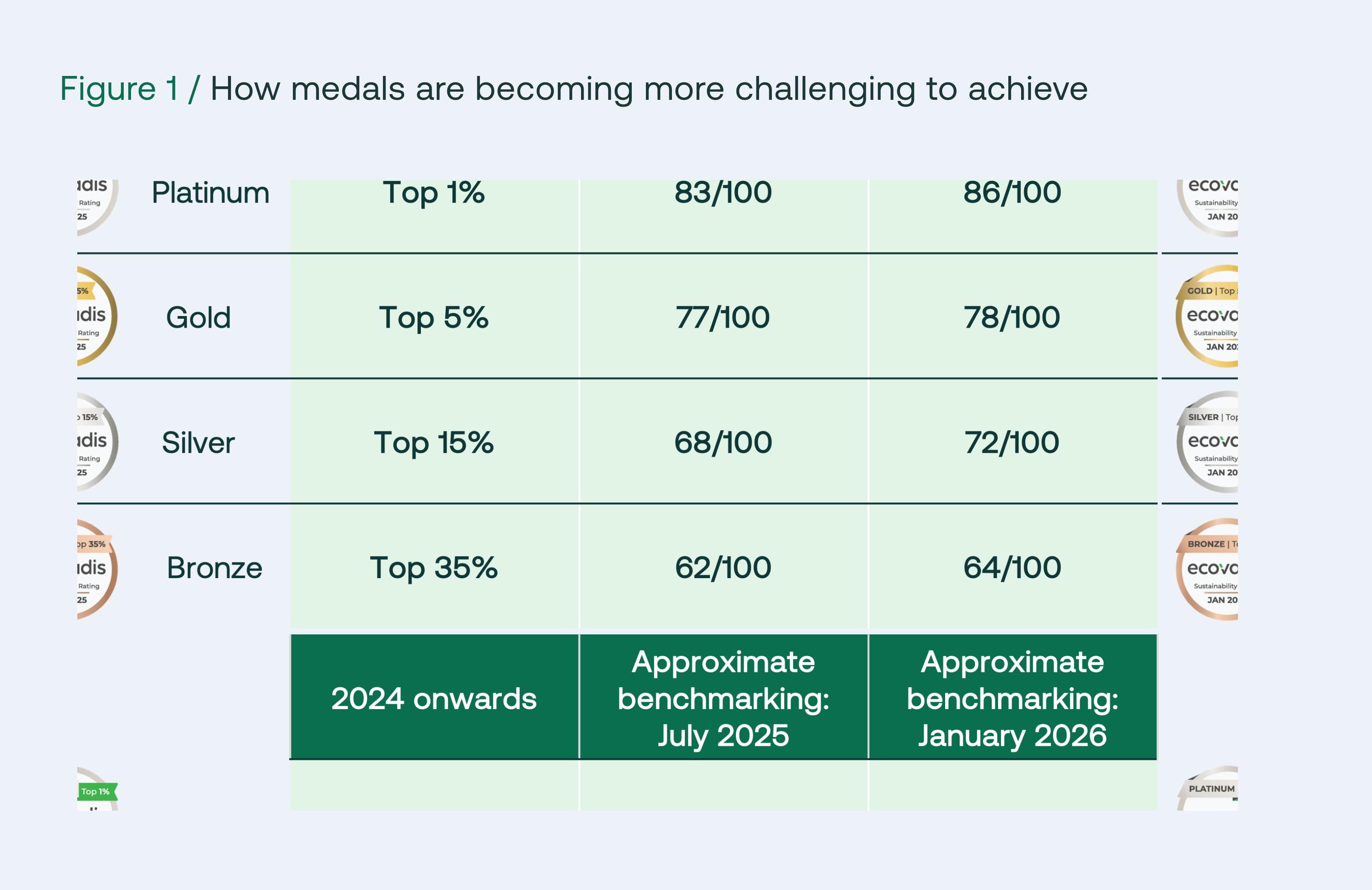
Since EcoVadis transitioned to a percentile-based system in 2024, achieving and maintaining medals has become progressively more challenging. Rather than fixed score thresholds, medals are now awarded to top performers over the previous 12 months. This means you’re not just competing against a static benchmark, you’re competing against every other company improving their sustainability practices.
The numbers tell a compelling story. Between July 2025 and January 2026, the threshold for achieving a silver medal increased from 68 out of 100 to 72 out of 100, a four-point jump in just six months. For gold, the bar rose from 77 to 78 points. These shifts reflect a fundamental truth: companies across industries are enhancing their sustainability management systems, and the competition for medals intensifies each assessment cycle*.
*Note: The numbers mentioned are based on Nexio Projects’ internal benchmarking and have not directly been verified by EcoVadis
Simply replicating your previous EcoVadis assessment strategy won’t deliver the same results. To maintain your current medal, you must demonstrate measurable improvement. To advance to a higher medal, you need to showcase substantial progress across multiple indicators.
One of the most frequent — and costly — mistakes we encountered in 2025 was scoping misalignment. Many organisations lose valuable points because their documentation doesn’t match the actual scope EcoVadis is assessing.
Understanding the three assessment scopes is essential:
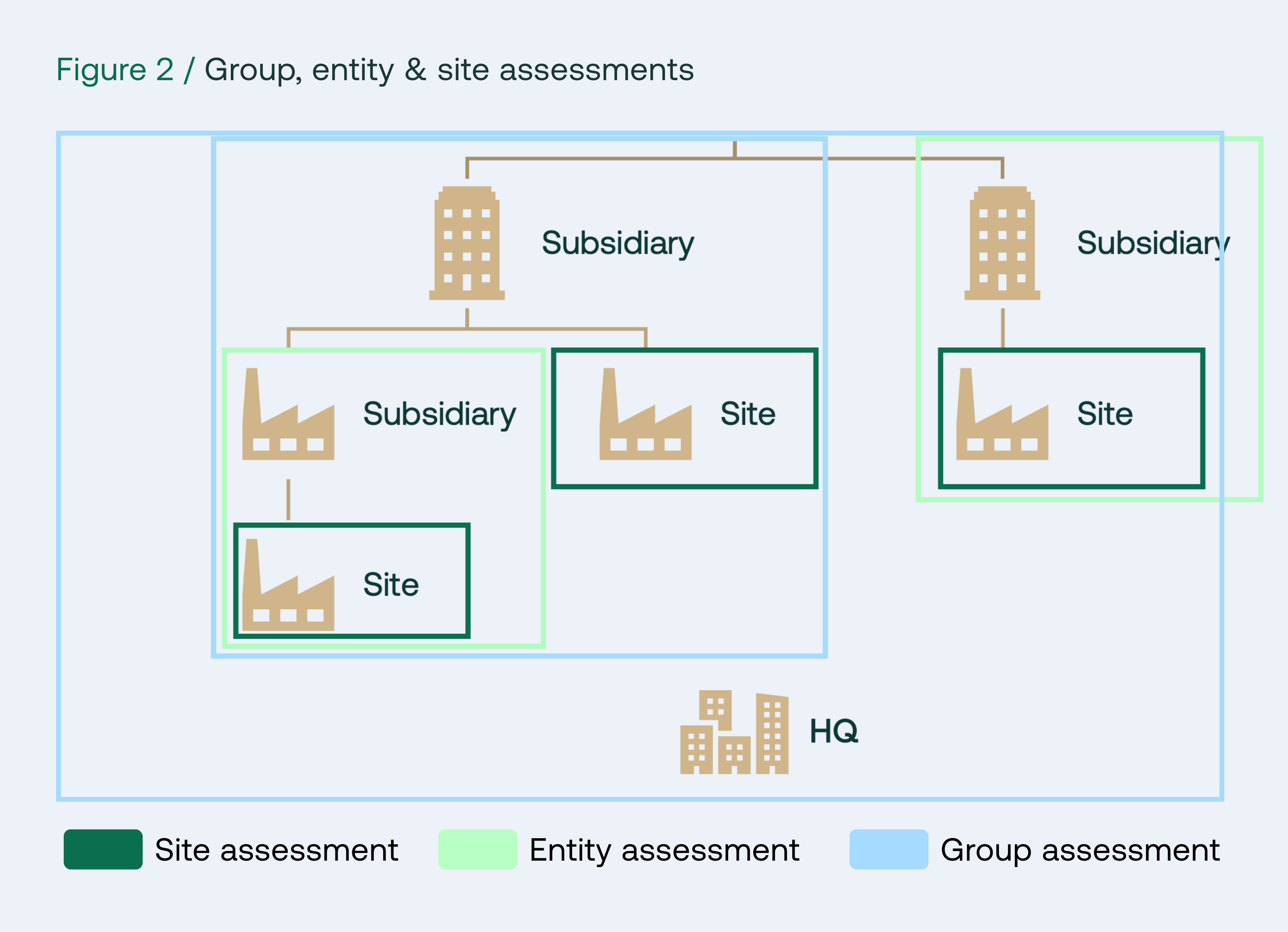
Scoping affects scoring in critical ways. If you’re conducting a group assessment but submit policy documents covering only one subsidiary, those documents will be rejected, resulting in low policy scoring. Similarly, if only certain subsidiaries within your group hold certifications — say, two out of ten have ISO 45001 — you’ll receive low coverage scoring because only 20% of your operations are covered.
The solution? Ensure clarity on your assessment level before beginning. For any company changes, including mergers or acquisitions, inform EcoVadis immediately. Remember that your documentation must align perfectly with your chosen scope.
Reporting accounts for 14% of your overall EcoVadis score, yet many organisations struggle to maximise this indicator. In 2025, we saw EcoVadis raise the bar significantly, making public disclosure and comprehensive sustainability reports the minimum requirement for high scores.
To achieve an advanced or outstanding reporting score, organisations now need:
The timeline for developing robust reporting processes shouldn’t be underestimated. Creating a comprehensive sustainability report typically requires three to four months. External assurance processes require additional lead time. Our advice? Initiate your sustainability reporting process well in advance of your EcoVadis certification period.
For many organisations, particularly smaller companies, formal certifications such as ISO standards can be costly and challenging to achieve. Here’s the good news: sustainability-related audits can score in place of certifications under specific conditions.
To qualify, your audit must meet several criteria. It cannot contribute to gaining a certification; it must be a standalone audit. It must cover more than 30% of your total operations. The audit topics must relate to sustainability criteria EcoVadis deems material for your organisation. Finally, you must submit the complete audit report, conducted by a qualified or accredited external auditor.
Valid third-party audits include Sedex SMETA (which aligns closely with EcoVadis methodology), amfori BSCI, or TfS for chemicals companies. Even second-party audits, such as customer-driven supplier audits, can be valid if conducted by a qualified external auditor. Whilst this is typically less than what a certification could contribute (e.g. ISO14001 on environmental management systems contributes 100 points), it represents a viable alternative when certifications aren’t feasible.
However, a critical caveat: if your audit report contains major or minor non-conformities, this can backfire. EcoVadis may decline to award points for that topic or pillar, or worse, reflect these negative findings in your 360 Watch indicator, reducing your score across the corresponding indicator.
EcoVadis is continuing its materiality customisation pilot in 2026. Organisations in specific industries, including pharmaceutical manufacturing, plastics production, electronics, and certain agricultural sectors, will receive questions asking whether certain environmental issues are material to their operations.
Currently, this pilot covers topics such as water, air pollution, product use, product end- of- life, and customer health and safety. If you determine a topic isn’t material, you can opt out, and all related questions will be deactivated in your assessment.
How to prove a topic isn’t material:
Provide a comprehensive materiality assessment that includes:
A word of caution: If EcoVadis detects contradictory information such as 360 Watch findings indicating the topic is material, or evidence in your other documentation of processes related to the excluded criterion, they will reactivate the topic during the assessment process.
EcoVadis has refined its approach to assessing the severity of 360 Watch findings by introducing a new mitigating and aggravating factor: stakeholder consensus. This reflects the level of certainty expressed by relevant, credible stakeholders regarding the adverse nature of a finding.
This adjustment addresses situations where negative effects are potential or disputed rather than definitively established. Higher consensus among stakeholders results in higher severity scoring, whilst low or uncertain consensus helps avoid over-penalisation of organisations.
Practically, this means EcoVadis now conducts more thorough reviews of external opinions before assigning severity levels to controversial findings. You can anticipate upcoming findings through the ‘Live News’ function on your EcoVadis platform and should verify that any findings accurately reflect your organisation’s scope and responsibilities.
EcoVadis now formally recognises the EFRAG VSME standard for sustainability reporting. This simplified EU framework for micro, small, and medium-sized enterprises outside CSRD scope offers a practical entry point for organisations beginning their sustainability reporting journey.
Watch our session on the VSMEs to learn more about how they can be leveraged.
EcoVadis awards different scores based on the level of VSME adoption. Reporting aligned with the VSME Basic Module can achieve up to 75 out of 100 points (provided other reporting criteria are met), whilst reporting aligned with both the Basic and Comprehensive Modules can reach the full 100 points.
This recognition is particularly relevant for organisations operating in or maintaining significant supply chain activities within the EU, offering a streamlined path to building a strong EcoVadis submission whilst meeting emerging European reporting expectations.
As you prepare for your EcoVadis assessment this year, focus on three strategic priorities:
Watch our session about DMA learnings and best practices to start your materiality analysis with the right mindset.

The pathway to EcoVadis excellence isn’t about gaming the system. It’s about genuinely strengthening your sustainability management practices and demonstrating that progress through compelling evidence. As standards continue rising, organisations that embrace this opportunity for meaningful improvement will find themselves not just achieving better scores, but building more resilient, responsible operations.
Stay tuned for Part 2 of this series, where we’ll dive into the most pressing questions from our webinar’s live Q&A session, providing detailed answers to help you navigate specific challenges in your EcoVadis journey.
Recognised by Verdantix as one of the top 10 boutique ESG consultancies globally, Nexio Projects is committed to upholding the highest standards of social and environmental performance. As EcoVadis’ leading strategic partner, we guide organisations through the entire assessment process and help improve scores year on year.
Whether you need support with assessment completion, gap analysis, roadmap implementation, materiality assessments, or sustainability reporting, our team brings deep expertise across all EcoVadis pillars and indicators. On average, we help clients achieve a 13.8-point improvement in their first assessment with us, often the difference between medal levels.
Download our guide to have a more detailed look into these learnings and changes!
You can also subscribe to our newsletter for monthly EcoVadis and ESG updates. In need of support? Contact us to book a free consultation with our experts.